The 90-day owner: how base-hopping rewrote luxury real estate
Knight Frank's 2026 data shows top UHNWIs spend under 90 days per home. Developers betting on full-time owners are designing for the wrong buyer.
An investment banker who owns four homes, Manhattan, Palm Beach, Aspen, and a Provençal farmhouse outside Aix, recently confessed to her wealth manager that she had not slept more than nine consecutive nights in any of them in 2025. She is not unusual. According to Knight Frank's Wealth Report 2026, a growing share of ultra-high-net-worth owners now spend fewer than 90 days per year in any single residence. The report calls them "base-hoppers." For luxury real estate, the implications are seismic.
The industry still designs, prices, and pitches homes as if buyers intend to inhabit them. They do not. The 2026 luxury buyer is renting time from a portfolio of addresses, and the developer who understands this is selling something fundamentally different from the developer who does not.
The data behind the great decoupling
Knight Frank's 2026 figures, published in March, sketch a market that has detached from mainstream economics. The global UHNWI population reached 713,626 individuals, a 32% jump since 2021. Roughly 89 new UHNWIs enter the cohort every day. Prime residential prices across the world's top 100 markets rose 3.2% on average, modest at first glance, until you compare it with the broader real estate slowdown across mid-market segments in the same period.
The decoupling has geographic fingerprints. Tokyo led the world at +58.5%, propelled by a weak yen that turned Japanese new-builds into a dollar-denominated value play. Dubai's Emirates Hills delivered villa price growth of 11.33% in Q1 2026 alone. Palm Beach County saw a 21.1% jump in high-end single-family transactions year-over-year. Aspen, conversely, fell off a cliff, March 2026 closed sales were down 50% from the prior year. Wealth did not vanish. It moved.
The movement is the point. The buyer who would have bought Aspen in 2024 bought Palm Beach in 2026. The buyer who bought Palm Beach in 2026 will buy Lisbon in 2027. None of them are unpacking.
What the ultra-mobile buyer actually wants
Owning four homes used to signal a particular kind of ostentation: the ski chalet, the city pied-à-terre, the beach house, the country estate. The implication was use, you went to each one. The 2026 portfolio is different. It is optionality. The buyer wants access to four cities, not residence in four cities. The difference between those two postures changes every spec sheet.
Five buyer requirements now dominate any honest conversation with developers and architects working in the prime segment:
- Turnkey arrival. The owner lands at 11 p.m. with a partner, two children, and a dog. The pantry must be stocked, climate dialed in, and a private chef on standby. Anything that breaks this choreography is a defect.
- Operational delegation. When the home is empty 275 days a year, someone must manage it. Branded hospitality operators, Aman, Rosewood, Four Seasons, Six Senses, exist for this reason. Not for the sheets.
- Yield optionality. A significant minority of buyers want the option to short-let when absent. Branded operators provide this through hotel-managed pools. The economics rival traditional rental income with fraction of the friction.
- Concierge intelligence. The threshold has moved from "we can book a table" to "we know your wine preferences, your trainer's schedule, your father's blood pressure medication, and we've coordinated with your other three homes". This is data infrastructure, not hospitality.
- Architectural restraint. Ultra-mobile owners do not want to relearn a house. Floor plans across a portfolio increasingly converge on familiar logic, primary suite east, kitchen open to terrace, office adjacent to entry. The home should feel like coming home, not like checking into a hotel.
Free resource
Market data does not sell on its own
The guide shows how to turn market reading into a brand thesis buyers understand.
Download the guide →Tool for this topic
Launch Diagnostic
Six dimensions, 0 to 100 score: product, brand, sales, marketing, financial structure and experience, with bottlenecks and opportunities.
Run diagnostic →The central thesis: stop designing for residents
The luxury real estate industry built its playbook on a buyer who no longer exists in meaningful numbers at the top of the market. The 2026 trophy buyer is not moving in. She is plugging in. Every design choice, every amenity stack, every marketing image needs to answer one question: what does this home do for the owner when the owner is not here?
The home is no longer the destination. It is the infrastructure that lets the destination happen.
This reframes the entire luxury pipeline. Penthouse views matter less than penthouse logistics. The wine cellar is a vanity unless someone is cycling the bottles. The chef's kitchen is a museum unless a real chef is staged through it. A $40 million unit with operational gaps is now worth less than a $32 million unit with operational discipline, and the spread widens with time, because secondary buyers also calibrate against operational quality.
Knight Frank's data shows the "great decoupling" is not just price. It is intent. Developers in Dubai, Singapore, and increasingly Lisbon have understood this. They sell management contracts as primary product and apartments as the wrapper. Developers in markets still anchored to the residential paradigm, including parts of New York and most of Europe outside the resort belts, are losing the 2026 ultra-mobile buyer to operators they consider competitors but should consider templates.
Practical implications for developers and brand teams
If you are positioning a project for the 2026 UHNWI buyer, four moves matter more than they did 24 months ago:
- Sell the operating system, not the unit. Lead the pitch with how the building runs when the owner is in Lisbon. Show the maintenance, the housekeeping cycle, the security protocol, the integration with private aviation logistics. The view sells itself; the operation does not.
- Build for the absentee owner's anxiety. Smart-home dashboards, remote-managed climate, leak sensors, security feeds with human review, predictive maintenance, these are not gadgets. They are the reason a buyer chooses your tower over the one across the street.
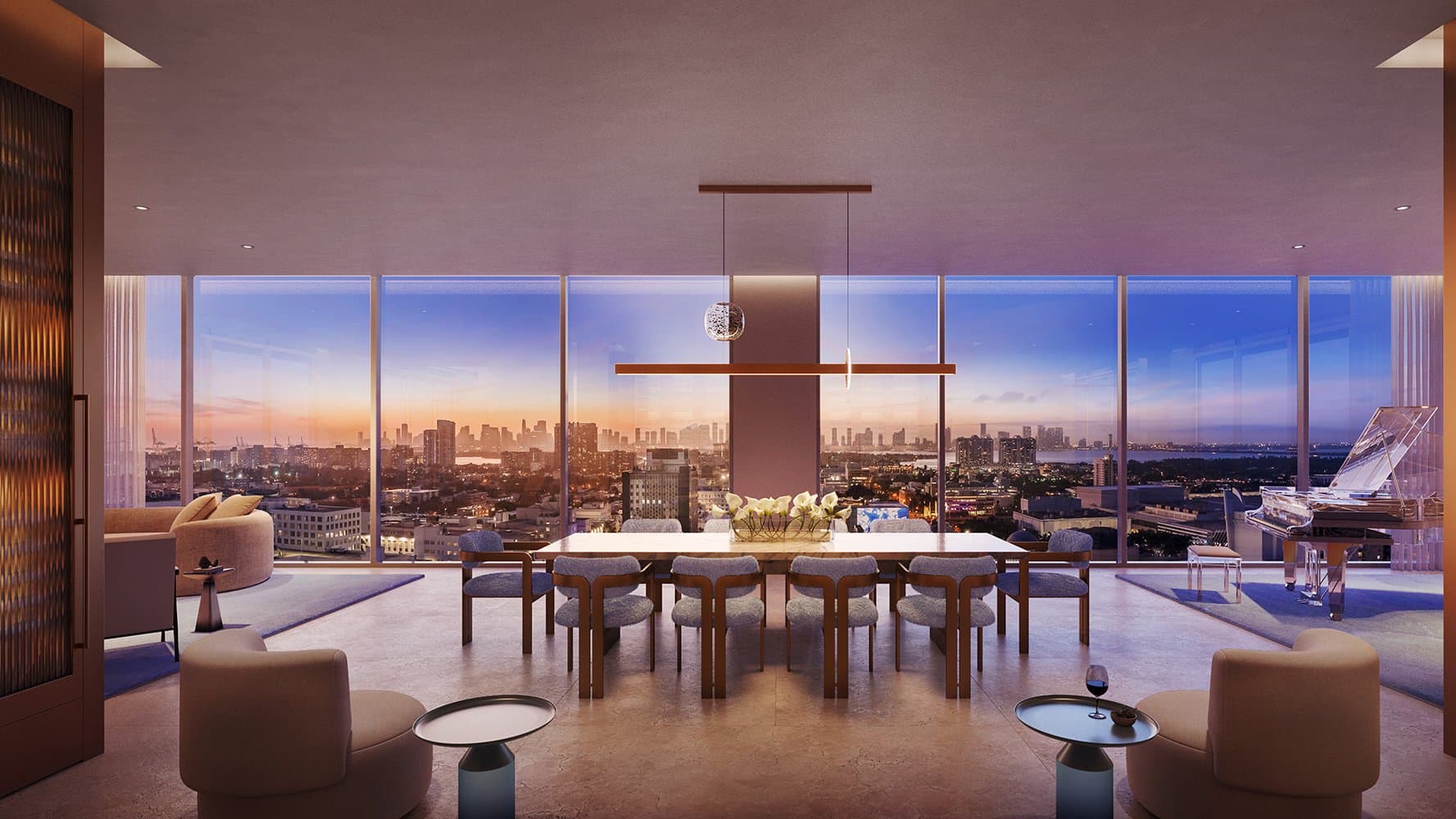
- Design the arrival, not the brochure. Most marketing focuses on tour-day impressions. The 2026 buyer cares about the night they land tired with a family. Stage that scenario. Film it. Sell it. TBO's architectural visualization and brand storytelling for ultra-luxury real estate increasingly centers on the absentee-arrival sequence, because that is the moment the product proves itself.
- Compete on global interoperability. If your buyer owns four homes, your building must talk to the other three, shared concierge data, transferable preferences, integrated travel planning. The next generation of branded residences will operate as networks, not as standalone properties.
The closing question
For decades, the luxury real estate industry believed it sold homes to people who would live in them. That belief is now empirically wrong at the top of the market. The owner of a $50 million residence in 2026 is more likely to be its operator's client than its inhabitant. The buildings that understand this become networks. The buildings that resist it become time capsules.
The Wealth Report data points one way: 89 new UHNWIs enter the global pool every day, and each of them shops the world. The question for every developer reading this is not whether they will buy. It is whether they will buy from you, or from the team three blocks over that has already redesigned the entire customer journey around the fact that the customer is never going to be home.
Sources
Innside Imob is TBO's newsletter, with analysis on branding, architecture and high-end real estate. Subscribe here →
For the rest of our sector indicator tracking, see the real estate market section.
Next step
Reading the market is the start. Turning it into product and brand is the work.
Talk to TBO →You may also like
Turnkey luxury: why UHNW buyers pay 33% to skip renovation
UHNWIs grew by 89 per day for five years. They now pay 33% extra for move-in-ready luxury, and refuse to wait for renovation.
Super-prime rentals: the UHNW pivot from ownership
London's super-prime rentals jumped 58% in 2025 as UHNWIs traded ownership for flexibility. Here is what this means for US developers.
Branded residences 2026: the global luxury land grab
Branded residences are set to nearly double to 1,747 schemes by 2032, with a 33% price premium. Inside luxury real estate's fastest land grab.