Branded residences hit 910 schemes in the 2026 supercycle
Branded residences reached 910 schemes worldwide in 2025, up 19%, with a 33% price uplift. Inside the 2026 luxury real estate supercycle.
By the end of 2025, the world counted 910 branded residences schemes, luxury homes carrying the name of a hotel, fashion house, or design brand. That figure, published in the Savills Branded Residences Report 2025/2026, represents a 19% jump in a single year, up from 764 schemes in December 2024. A further 837 projects are already contracted through 2032. The math is blunt: the segment is on track to nearly double, to 1,747 schemes, inside a decade.
This is not a trend. It is a structural reordering of how the top of the housing market manufactures value. For most of real estate's history, a home was worth its land, its build quality, and its address. The branded residence adds a fourth variable that none of those can replicate on their own, a name that an operator is contractually obligated to defend.
The Knight Frank Wealth Report 2026 frames the scale: global luxury home prices rose 3.2% across 2025, with Tokyo up 58.5% and Dubai up 25.1%, and the firm projects more than 1,000 live branded schemes worldwide by 2030. The brand, in other words, has become an asset class.
A branded residence is a luxury home developed in partnership with a hotel, fashion, automotive, or design brand, which lends its name, design codes, and service operations in exchange for a licensing fee, and sells for more as a result.
The global context: a $30 billion segment goes mainstream
The branded residences market is now a $30-billion-plus annual segment with institutional-grade investment appeal. What started as a handful of hotel-flagged towers in gateway cities has globalised at speed. Asia-Pacific expanded 55% over five years, driven by Vietnam, India, and Thailand. The Middle East and North Africa surged 187%. By 2032, Savills projects that no single region will command more than a quarter of global supply, the signature of genuine globalisation, not a localised bubble.
The geography of leadership is clear. Dubai now ranks first by inventory, with 64 completed projects and 87 more planned. Miami sits second, with 48 completed and 55 planned, and remains North America's deepest, most liquid market. New York holds third place, with Aman alone offering more than 20 residences on Fifth Avenue. São Paulo, London, Cairo, Istanbul, Bangkok, and Phuket round out the leaderboard, a list that would have been unthinkable a decade ago.
The brands themselves are sprinting. Six Senses and Mandarin Oriental posted pipeline growth of 233% and 214% respectively heading into 2026. The Ritz-Carlton and Four Seasons, the two largest operators, each aim for roughly 70 projects by 2026, up from just over 40 in 2021. Capital is following: the Aman-branded project in Miami secured a $464.5 million loan, one of the largest construction financings the sector has seen.
Who is buying, and why
The buyer profile has shifted decisively toward what the industry now calls the wellness universe. Ultra-high-net-worth purchasers are prioritising private green space, sports infrastructure, spa facilities, and integrated nature over raw square footage. Sustainability and wellness have crossed the line from nice-to-have to non-negotiable, with developers deploying renewable energy and low-carbon materials as table stakes rather than differentiators.
Three forces are driving demand. First, a global flight to quality: in a volatile macro environment, affluent buyers want turnkey, professionally operated assets with no renovation risk. Second, mobility: the rise of the multi-base owner means a recognisable brand standard in Dubai, Miami, and London is worth more than a bespoke one-off. Third, the trust mark, when it comes time to sell, the brand name validates the asking price for the next buyer.
The performance data explains the conviction. Over the five years to 2026, branded residences delivered roughly 65% capital appreciation, consistently outpacing the broader luxury market. The pipeline is also tilting toward resorts (54% versus 46% urban) and standalone developments (33% versus 67% mixed-use), a sign that the model has outgrown its hotel-lobby origins.
Why do buyers pay a 33% markup for branded residences?
Savills calculates a 33% average global markup over comparable non-branded luxury homes, and it has held remarkably steady year over year. Buyers pay it for three things a generic tower cannot guarantee: enforced design and construction standards, hotel-grade service operations, and a resale trust mark that protects the asking price for the next owner.
The markup is not uniform. It scales with brand strength and market maturity, ranging from roughly 20% in established cities to more than 50% in emerging ones. In Miami, branded units trade at 30% to 65% more per square foot than comparable Class A condos, with project-level figures running from Cipriani Brickell at +35% to the Four Seasons Surf Club at +72%, and Aman Miami projected near +90%. The name is doing measurable financial work.
Free resource
Market data does not sell on its own
The guide shows how to turn market reading into a brand thesis buyers understand.
Download the guide →Tool for this topic
Launch Diagnostic
Six dimensions, 0 to 100 score: product, brand, sales, marketing, financial structure and experience, with bottlenecks and opportunities.
Run diagnostic →The thesis: the brand is the invitation, not the conclusion
Here is the part the market is still learning. A brand markup is a promise of future performance, and promises can be broken. The 2026 buyer is far more discerning than the 2018 buyer who bought on the logo alone. Execution, service culture, amenity design, and long-term operational credibility now decide whether a branded scheme keeps its uplift or quietly loses it.
The brand is the invitation, not the conclusion. A licensing plaque in the lobby buys a buyer's attention for one transaction; only operational delivery earns the markup on the second sale, the third, and the tenth.
There is an honest counterargument worth naming. For a practical primary-residence buyer who cares mainly about location, layout, and finish, a non-branded Class A+ tower in the same neighbourhood typically delivers around 90% of the experience at 60% of the all-in cost. The branded markup is rational only when the brand's service and resale protection justify the surcharge, and that is a calculation, not an article of faith.
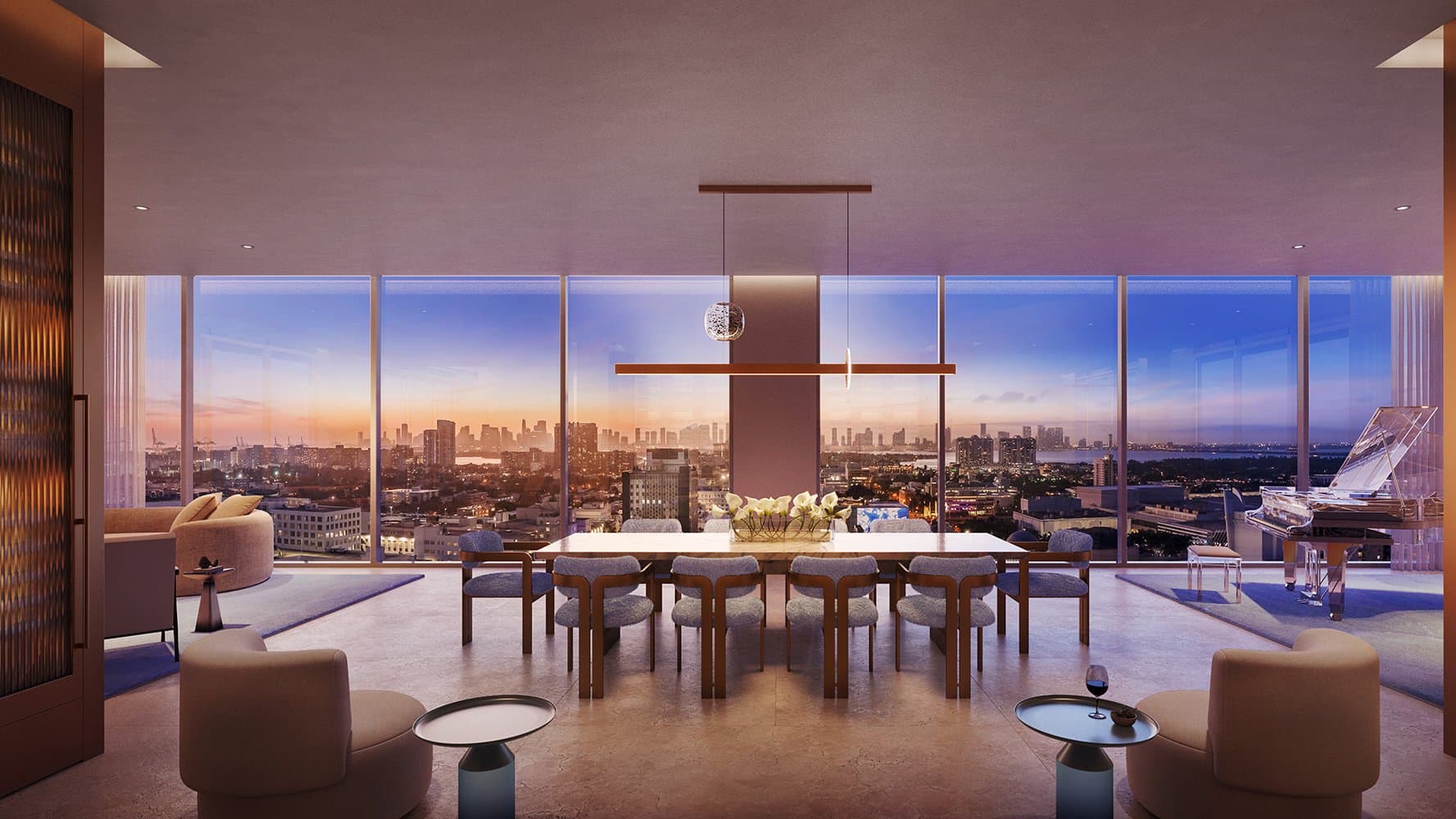
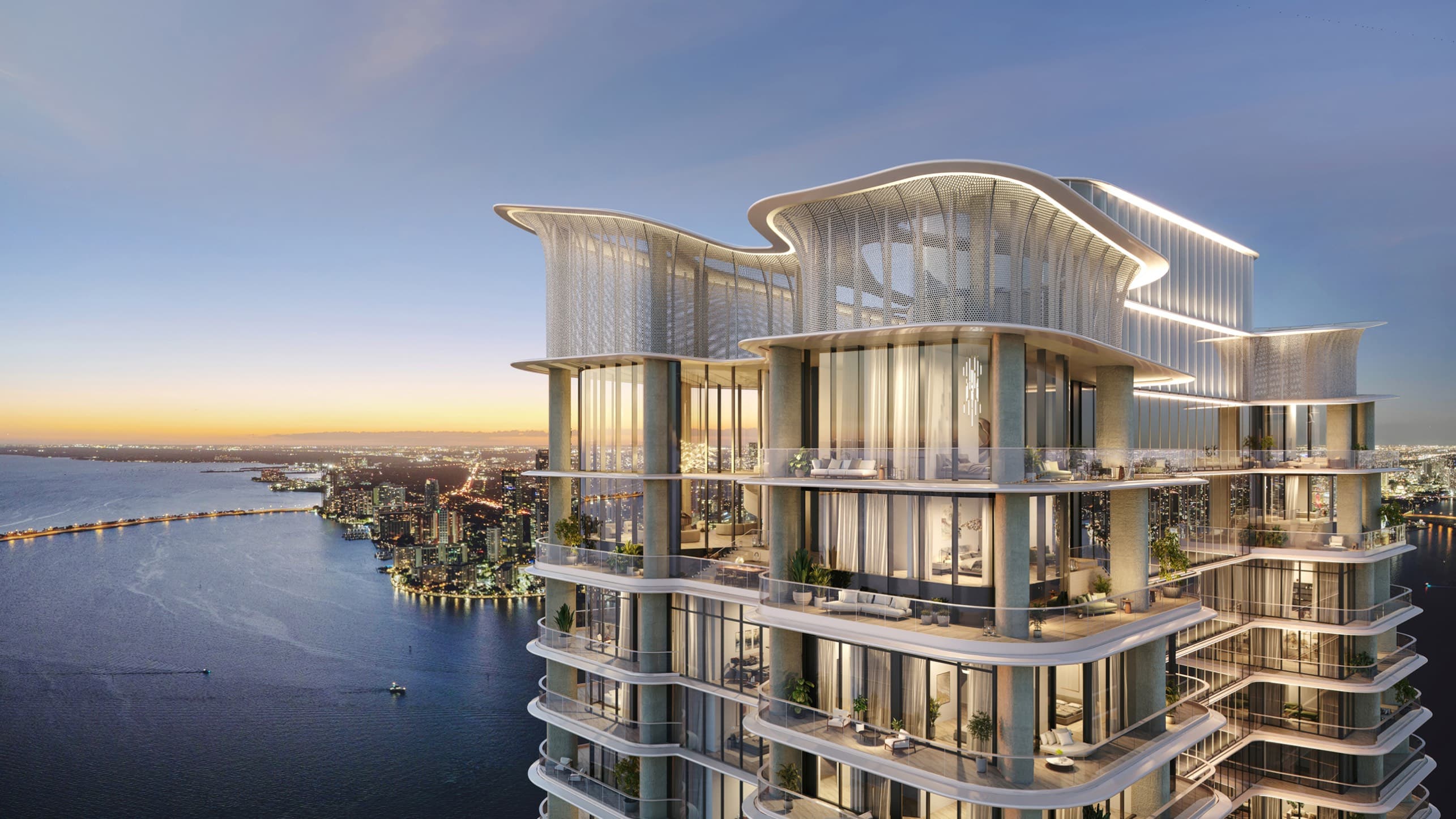
For developers, the implication reshapes the marketing brief entirely. A branded residence is sold on narrative coherence: the story of the brand, the building, and the life inside must align without a single false note. That is why the best schemes invest as heavily in architectural visualisation that sells the lifestyle as they do in the structure itself. The render is where the buyer first believes the promise.
Practical implications for developers and buyers
Whether you are building or buying into the branded model in 2026, five priorities separate the assets that hold their markup from those that erode it:
- Underwrite the operator, not just the logo. A weak operating agreement turns a strong brand into a liability. Scrutinise the service standards the brand is contractually bound to deliver.
- Favour mature markets for liquidity, emerging ones for upside. Miami and Dubai offer deep resale comps; emerging markets offer higher markups but thinner exit data.
- Treat wellness and sustainability as core, not amenity. Buyers in 2026 audit the green and wellness credentials. A spa is no longer a differentiator; it is the baseline.
- Read the resale history before the brochure. A brand's second-sale performance reveals whether the markup is real or aspirational.
- Match the brand to the buyer's mobility. For multi-base owners, a globally recognised standard compounds value; for a single-home buyer, a bespoke Class A+ tower may win on cost.
For buyers comparing options, the discipline is simple: demand the operating agreement, examine resale data, and price the total cost of ownership rather than the headline figure. A clear-eyed reading of luxury real estate starts by separating the brand's promise from its proven delivery.
Are branded residences a good investment in 2026?
The short answer is yes, for the right buyer in the right market. Branded residences delivered around 65% capital appreciation over five years and carry a resilient 33% value uplift. But returns concentrate in mature markets with deep resale data and operators that genuinely deliver. The brand reduces risk; it does not eliminate the need for due diligence.
| Project / benchmark | Market | Price uplift vs. comparable Class A |
|---|---|---|
| Savills global average | Worldwide | +33% |
| Cipriani Brickell | Miami | +35% |
| Four Seasons Surf Club | Miami | +72% |
| Aman Miami (projected) | Miami | ~+90% |
| Emerging markets range | MENA, Asia | +50% and above |
Closing
The branded residences supercycle is, at heart, a bet on trust. In a market where ultra-wealthy buyers can build anything they imagine, the scarcest commodity is not land or finish, it is the confidence that someone else will maintain the promise after the keys change hands. The brand sells that confidence by the square foot.
The schemes that endure will be the ones where the name on the door and the experience behind it are the same thing. Everywhere else, the logo will keep selling the first unit, and the resale market will quietly do the auditing the brochure forgot to mention. For developers ready to make the promise real, TBO architectural visualisation and real estate branding is where the story gets built before the building does.
Frequently asked questions
What is a branded residence?
A branded residence is a luxury home developed in partnership with a hotel, fashion, automotive, or design brand. The brand licenses its name, design standards, and often its service operations to the developer in exchange for a fee. The result is a residence that carries a recognised name and, typically, hotel-grade amenities and management, and sells at a measurable markup over comparable unbranded homes.
How much more do branded residences cost?
Savills calculates a 33% average global markup over comparable non-branded luxury homes, stable year over year. The figure varies by brand and market, from roughly 20% in established cities to more than 50% in emerging ones. In Miami, branded units trade at 30% to 65% more per square foot than comparable Class A condos, with individual projects reaching +72% or higher.
Which cities have the most branded residences in 2026?
Dubai leads globally with 64 completed projects and 87 planned, followed by Miami with 48 completed and 55 planned. New York ranks third, with São Paulo, London, Cairo, Istanbul, Bangkok, and Phuket completing the top markets. By 2032, Savills projects no single region will hold more than a quarter of global supply, reflecting genuine globalisation of the segment.
Do branded residences hold their value better than unbranded luxury homes?
Historically, yes. Over the five years to 2026, branded residences delivered roughly 65% capital appreciation, outperforming the broader luxury market, and the brand acts as a trust mark that validates resale pricing. The advantage is strongest in mature markets with deep resale comparables. In thinner emerging markets, the markup is higher but the exit data is less proven.
Are branded residences worth the markup?
It depends on the buyer. For multi-base owners and investors who value turnkey quality, service, and resale protection, the markup is often justified. For a primary-residence buyer focused on location and layout, a non-branded Class A+ tower in the same area can deliver around 90% of the experience at roughly 60% of the all-in cost. The brand is the invitation, not the conclusion.
Sources
Innside Imob is TBO's newsletter, with analysis on branding, architecture and high-end real estate. Subscribe here →
For our analysis of pricing, absorption and supply by market, see our real estate market coverage.
Next step
Understanding the cycle before your competitor means launching better positioned.
Talk to TBO →You may also like
Branded residences 2026: why the brand is the asset
Branded residences hit 910 schemes in 2025, up 19% YoY. Why developers pay to put a hotel name on the door, and what the 33% premium really buys.
Branded residences 2026: the global luxury land grab
Branded residences are set to nearly double to 1,747 schemes by 2032, with a 33% price premium. Inside luxury real estate's fastest land grab.
Branded residences in 2026: the price of a name
Branded residences will reach 910 schemes in 2025 and 1,747 by 2032. What the brand actually adds to a home — and where developers get it wrong.