Dubai luxury real estate in 2026: the split market
Dubai luxury real estate hit a record $5.1bn in $10M+ sales in H1 2026, even as supply surges. Why the prime market decoupled from the rest.
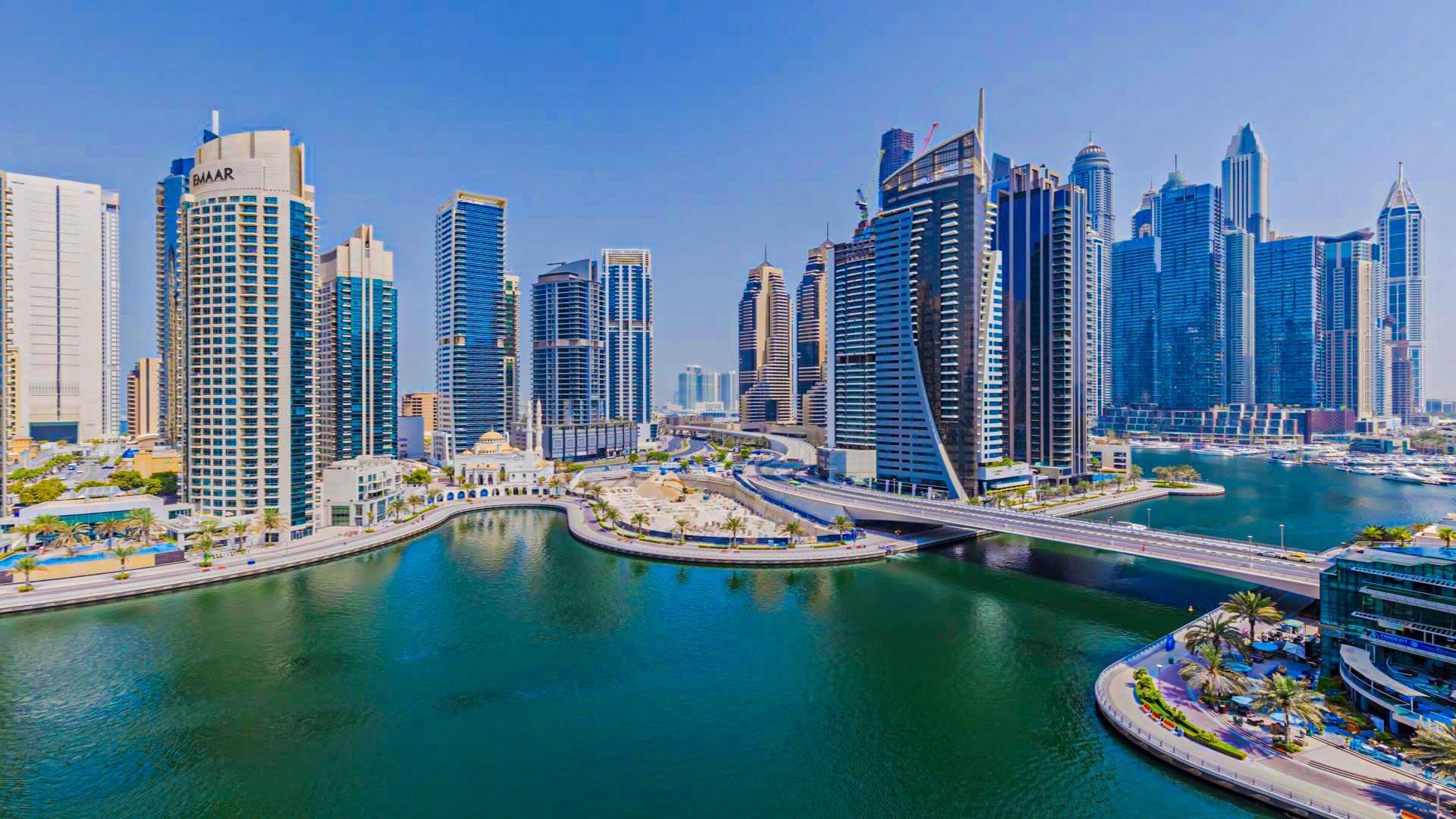
There is a number that captures Dubai's peculiar moment better than any forecast. In the first half of 2026, the city recorded 296 home sales above US$10 million, together worth roughly $5.1 billion, a fresh record for a market that has spent five years breaking its own. The figure, published by Knight Frank, lands at the exact moment when skeptics insist the boom is due to end. That tension between record demand at the top and a wall of new supply below defines Dubai luxury real estate in 2026.
The easy story is the crash narrative, and it is not entirely wrong. Dubai is delivering more homes than at any point in its history. The harder, more useful story is that the prime and super-prime segments have decoupled from the broader market, drawing global wealth that behaves by different rules than the mid-market. Understanding that split is the difference between reading a headline and reading the market.
Is Dubai luxury property in a bubble in 2026?
Not at the top of the market, and that distinction matters. The ultra-prime segment above $10 million is driven by cash buyers relocating wealth, not by leveraged speculation, which makes it structurally more resilient than the mid-market. The genuine oversupply risk sits in mass-market off-plan inventory, where a delivery wave could soften prices while trophy assets keep setting records.
According to the Knight Frank Wealth Report, global prime residential prices rose 3.2% over the year, with Dubai up 25.1% and Tokyo leading at 58.5%. Dubai's growth is remarkable not because it is the fastest, but because it has been sustained for so long against constant predictions of reversal. A market that keeps confounding the bears usually has demand fundamentals the bears are not pricing in.
Dubai's prime market is no longer a regional story about oil wealth and expatriate demand. It has become a clearing house for global capital in motion, and capital in motion does not check the local supply chart before it moves.
What counts as prime real estate in Dubai?
Prime property in Dubai refers to the top 5% of the market by value, typically branded residences, beachfront villas, and penthouses in a handful of established districts. The names recur: Palm Jumeirah, Emirates Hills, Downtown, and Dubai Marina for waterfront apartments. What unites them is scarcity of land and a buyer profile measured in nine figures of net worth rather than mortgage capacity.
Free resource
Brand platform: the foundation every branded residence sells on
In Dubai's prime segment, the name on the tower is the asset. See the framework TBO uses to build a real estate brand platform that commands a price premium.
Download the guide →The supply wave: how much is coming, and does it matter?
The scale of new construction is real and should not be dismissed. Analysts tracking pipeline deliveries expect roughly 41,000 units in 2025 and a further surge into 2026, a jump that some in the market frame as an 80% increase in supply across 2025-2026. On a simple supply-and-demand model, that much inventory should cool prices.
But the model misses where the supply lands. The bulk of new units target the mid-market in emerging districts, not the beachfront plots where prime demand concentrates. You cannot manufacture more Palm Jumeirah frontage, and no amount of off-plan delivery in the outer city changes the scarcity of a Downtown penthouse. The result is a two-speed market that a single average price index cannot describe.
Where should buyers look in Dubai in 2026?
The map of demand is shifting toward a new coastline. Established prime districts hold their scarcity value, but the growth story has moved to areas where masterplanned supply meets waterfront ambition. Engel & Völkers identifies the emerging hotspots for 2026 as Palm Jebel Ali, Emaar Beachfront, The Oasis, Dubai South, and Dubai Islands.
- Palm Jebel Ali: the second, larger palm, positioned as the next generation of ultra-prime waterfront.
- Emaar Beachfront: branded coastal towers bridging established prime and new supply.
- The Oasis: a low-density luxury villa community targeting end-user wealth.
- Dubai South: the long bet on the city's expansion axis around the airport and logistics core.
- Dubai Islands: a masterplanned archipelago courting both investors and lifestyle buyers.
Tool for this topic
Launch Diagnostic
Six dimensions, 0 to 100 score: product, brand, sales, marketing, financial structure and experience, with bottlenecks and opportunities.
Run diagnostic →Why global capital keeps choosing Dubai
The pull factors are structural, not seasonal. No property tax, no capital gains tax on residential sales, a golden visa tied to real estate investment, and a geographic position within a few hours' flight of most of the world's wealth. When CNBC mapped what one million dollars buys in prime markets worldwide, Dubai consistently offered more space per dollar than New York, London, or Hong Kong, a value gap that funnels relocating wealth toward the emirate.
Regional and geopolitical uncertainty has, counterintuitively, reinforced the flow. The record $5.1 billion in luxury sales came despite regional tension, underscoring Dubai's role as a perceived safe harbour for mobile capital. For developers and brand builders, that is the defining fact of the market: the buyer is global, comparison-shopping across continents, and choosing Dubai on a blend of tax, lifestyle, and brand.
What the split market means for developers
For anyone building or marketing at the top of this market, the strategic lesson is to refuse the average. The developer who prices a prime asset off a citywide index will either leave money on the table or misjudge absorption. The one who understands that ultra-prime buyers purchase a name, a view, and a story, not a price per square foot, captures the premium the record numbers describe. This is where positioning stops being marketing overhead and becomes part of the asset's value, a theme we develop across the TBO real estate market hub and in our work on brand strategy for luxury developments.
Frequently asked questions
Will Dubai luxury property prices fall in 2026?
The consensus among major advisers is that mass-market and off-plan segments face the most correction risk from the supply wave, while ultra-prime remains resilient. Prime beachfront and branded residences are constrained by land scarcity and cash-buyer demand, which insulates them from the leverage-driven swings that hit the broader market.
Do foreigners need residency to buy property in Dubai?
No. Foreign nationals can buy freehold property in designated areas without prior residency, and a qualifying real estate investment can itself lead to a golden visa. This open-access framework is a core reason Dubai attracts globally mobile buyers who face tighter restrictions in London, Sydney, or Vancouver.
What is driving the record luxury sales in Dubai?
A combination of tax advantages, relative value per dollar, golden-visa incentives, and Dubai's positioning as a safe harbour for capital during regional and global uncertainty. The buyers at the top are relocating wealth rather than trading leverage, which is why sales above $10 million kept setting records through the first half of 2026.
Are branded residences worth the premium in Dubai?
In the prime segment, the brand is a large part of what the buyer is purchasing. Branded residences typically command a meaningful price premium over comparable non-branded units and tend to hold value better in resale, because the name signals a standard of service and design that ultra-prime buyers pay to be certain of.
Next step
In a market where the buyer is global and comparison-shopping across continents, the brand is what closes the sale.
Talk to TBO →Cover image: LuxuryProperty.com