Luxury real estate lifestyle marketing in 2026
Why luxury real estate lifestyle marketing sells a serviced life, not square footage — and why branded residences command a 25-30% premium.
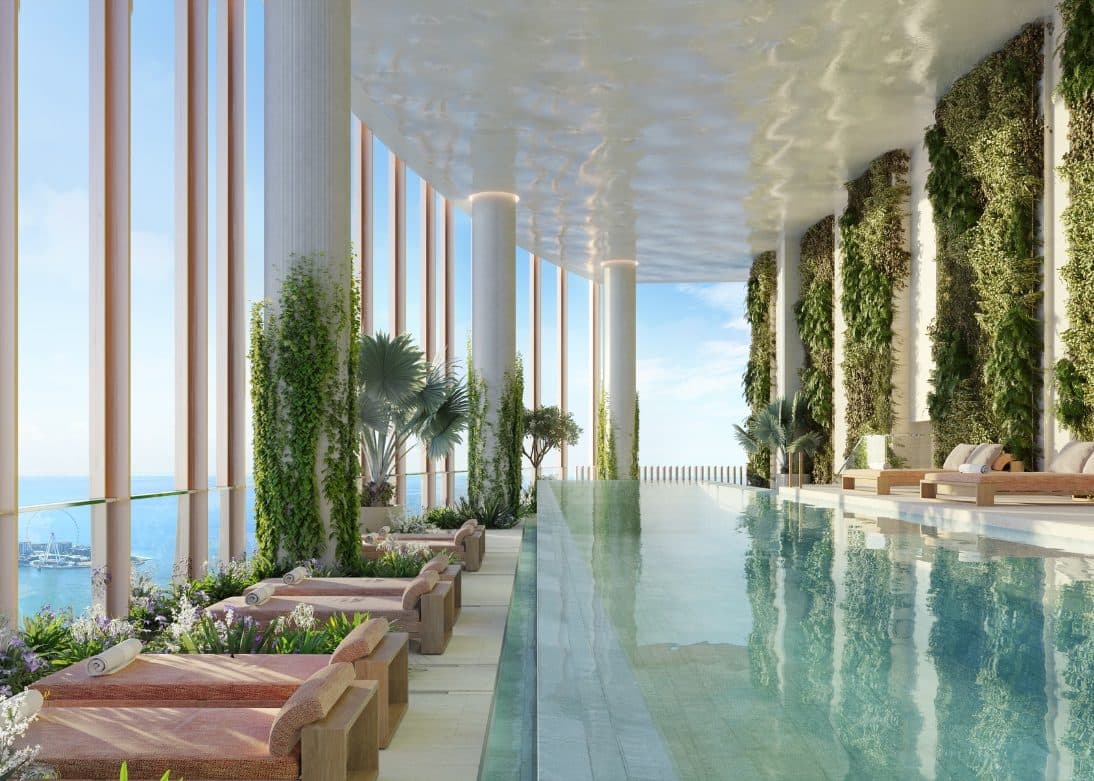
Walk into the sales gallery of any new branded residence, a Four Seasons tower in Miami, an Aman in Tokyo, a Mandarin Oriental in Dubai, and notice what the broker talks about. Not the slab, not the ceiling height, not the price per square foot. They talk about the spa membership, the resident concierge, the private chef on call, the school placement service, the lawyer who handles your visa. The apartment is almost an afterthought. As one Lisbon-based broker put it bluntly: the property is the simplest part of the deal.
That sentence is the whole thesis of luxury real estate lifestyle marketing. At the top of the market, you are no longer selling a home. You are selling a serviced life, and the home is merely the access key to it. The developers and agencies that understand this are quietly running away with the segment. The ones still leading with floor plans and finishes are competing on price, which in luxury is the fastest way to lose.
Luxury real estate lifestyle marketing is the practice of positioning a high-end property as the entry point to a curated lifestyle and a 360° service package, concierge, wellness, hospitality, advisory, relocation, rather than as a physical asset measured in square footage. The product is the experience of ownership, not the title deed.
What is luxury real estate lifestyle marketing?
It is the deliberate shift from selling space to selling a serviced existence. Instead of leading with size, view, and finish quality, the narrative leads with what life looks like inside the brand: the daily ritual, the staff, the access, the community, and the protection, legal, fiscal, logistical, that comes attached. The physical unit becomes the least interesting part of the offer.
This is why the fastest-growing corner of global real estate is branded. The hospitality operator does not just lend a logo; it imports an entire service apparatus that buyers already trust. The market has noticed: in the Gulf, analysts now argue that branded residences in the UAE have become a distinct asset class, and in Asia, Thailand's branded residence market has crossed THB 205 billion (USD 6.4 billion) in launched supply. People are not paying that premium for drywall.
Free resource
A brand platform that sells more than square footage
If the product is the lifestyle, the brand has to carry it. This guide shows how to build the brand platform that lets a development command a premium instead of competing on price.
Download the guide →Why do branded residences command a premium?
Because buyers are paying for the service layer and the trust that comes with a known brand, not for the construction. Branded schemes consistently sell at a premium over comparable non-branded stock, a gap that Knight Frank's research on branded residences has tracked at roughly 25% to 30% in many markets. The premium is, in effect, the capitalized value of the lifestyle and the services that follow the buyer for the life of the asset.
What is actually being sold, in order of what closes the deal:
- The service stack: concierge, housekeeping, security, valet, in-residence dining and wellness, the operator's hospitality DNA, made permanent.
- The advisory wrap: for cross-border buyers, the visa, the tax structure, the lawyer, the accountant, the school. The transaction is a relocation, not a purchase.
- The community and access: who else lives there, what doors the address opens, what membership it confers.
- The brand's promise of continuity: the assurance that the building will be run, maintained, and protected to a standard the buyer already knows.
- The home itself: necessary, beautiful, and, as the broker said, the simplest part.
| Dimension | Selling square footage | Selling a serviced lifestyle |
|---|---|---|
| Primary message | Size, view, finish | Daily life, service, access |
| Basis of competition | Price per square foot | Brand and experience |
| Buyer's real question | What do I get? | Who will I become? |
| Pricing power | Discount-led | Premium-led |
The home is the simplest part
For the cross-border buyer, the apartment is rarely the hard problem. The hard problems are the visa, the tax exposure, the schooling, the banking, the sense of safety in an unfamiliar jurisdiction. The operators winning this market sell the solution to all of that, and let the residence ride along as the visible token of it. This is why the most sophisticated developers now staff their sales teams with relocation advisors, not just brokers, and why the marketing leads with belonging rather than dimensions. Industry observers are already warning developers to look past the hype toward long-term operational viability, because a lifestyle promise you cannot operate is a brand you will eventually break.
At the top of the market, you do not sell a home. You sell a serviced life, and the apartment is merely the key that unlocks it.
The strategic consequence is uncomfortable for many developers: if the product is the lifestyle, then the brand is the product. A commoditized building with a forgettable identity has nothing to capitalize, so it falls back on the one lever it has left, price. A building with a brand platform strong enough to carry a service promise can charge for the promise. That is the entire game, and it is why real estate marketing at this tier is indistinguishable from brand-building. For more on how positioning translates into pricing power, the rest of the TBO blog and our branding and positioning services go deeper.
Frequently asked questions
What is luxury real estate lifestyle marketing?
It is the practice of marketing a high-end property as the entry point to a curated lifestyle and a 360° service package, concierge, wellness, advisory, relocation, rather than as a physical asset measured in square footage. The product becomes the experience of ownership, with the residence itself as the access key.
Why do branded residences sell at a premium?
Because buyers pay for the service layer and the trust of a known operator, not the construction. Knight Frank has tracked branded-scheme premiums of roughly 25% to 30% over comparable non-branded stock, effectively the capitalized value of the lifestyle and services attached to the home.
Is the property really the least important part of a luxury sale?
For cross-border and ultra-prime buyers, often yes. The hard problems are visas, tax structuring, schooling and safety; the apartment is comparatively simple. Winning developers sell the solution to the whole relocation and let the residence serve as the visible token of it.
What does this mean for developers without a strong brand?
It means they compete on price, which in luxury erodes margin and signals weakness. If the product is the lifestyle, the brand must carry it. Without a brand platform strong enough to support a credible service promise, there is nothing to capitalize, and discounting becomes the only lever left.
Next step
If the lifestyle is the product, the brand has to be strong enough to sell it, that is where positioning becomes pricing power.
Talk to TBO →Cover image: BRESI. Branded Residences
You may also like
Branded residences 2026: why the brand is the asset
Branded residences hit 910 schemes in 2025, up 19% YoY. Why developers pay to put a hotel name on the door, and what the 33% premium really buys.
US luxury real estate 2026: a two-speed market
US luxury real estate in 2026 is not booming or busting. It is splitting. Why the exceptional clears, the ordinary stalls, and brand decides.
Branded residences 2026: the global luxury land grab
Branded residences are set to nearly double to 1,747 schemes by 2032, with a 33% price premium. Inside luxury real estate's fastest land grab.