Branded residences in 2026: the price of a name
Branded residences will reach 910 schemes in 2025 and 1,747 by 2032. What the brand actually adds to a home — and where developers get it wrong.
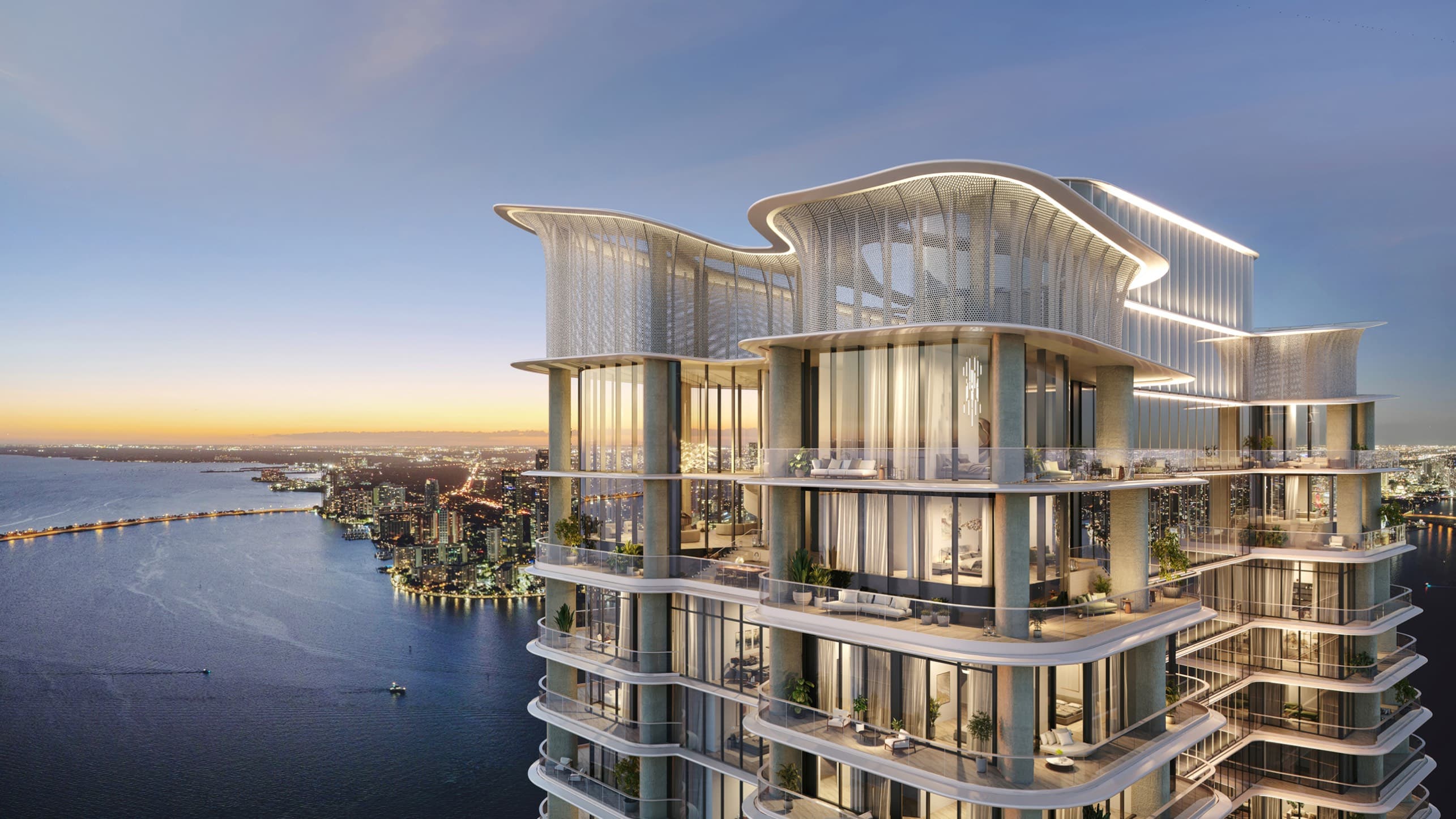
In December 2024 there were 764 branded residence schemes on the planet. By the end of 2025 that number is set to reach 910, and by 2032 the sector is projected to add another 837 projects for a global total of 1,747, close to a doubling in under a decade. What began as a Miami curiosity, a hotel lending its name to a lobby, has become a pipeline spanning more than 90 countries and one of the few corners of real estate still growing at double digits.
The figures come from the Savills Branded Residences 2025/2026 report, which pegs 2025 expansion at 19% year on year. Twenty-five countries are launching their first branded residential project this year alone. The question for developers is no longer whether the model works, it plainly does, but what the brand is actually worth, and how much of that value is real.
What is a branded residence?
A branded residence is a home developed with a hospitality, fashion, or design brand that lends its name, design standards, and service to a building in exchange for a fee and long-term exposure. The buyer acquires the real estate and the brand's operating promise together. An Aman residence is not just an apartment near an Aman hotel; it is a unit built to Aman's specification and, often, serviced by Aman's staff.
That bundle is the entire proposition. Strip out the housekeeping, the concierge, the design code and the resale story, and you are left with concrete and a logo. The best schemes make the brand inseparable from the building. The weakest treat it as a sticker, which is precisely where the value leaks out.
The 2026 map: Asia overtakes, the Gulf accelerates
The center of gravity has moved east. Asia's branded residences market has reached roughly 1.3 trillion baht across 50,025 units, growing 30.3% year on year, according to the C9 Hotelworks Asia Branded Residences Market Review 2026. Thailand alone accounts for 26% of that supply, 13,124 units worth around US$6.4 billion, led by Bangkok and Phuket, with a Porsche Design Tower averaging US$15 million a unit.
The Gulf and Europe are compounding fast behind the same brands. Marriott, the largest single operator in the category, reports its branded residential portfolio has grown 23% in Europe and 59% across the Middle East and Africa since 2023, and it now names India among its most important growth markets, The Economic Times reports.
| Market | Scale (2026) | Growth |
|---|---|---|
| Global schemes | 910 (from 764 in 2024) → 1,747 by 2032 | +19% in 2025 |
| Asia (all) | ~1.3tn baht, 50,025 units | +30.3% YoY |
| Thailand | US$6.4bn, 13,124 units, 26% of Asia | +13.3% YoY |
| Marriott (Europe) | Portfolio up 23% since 2023 | double-digit |
| Marriott (Middle East & Africa) | Portfolio up 59% since 2023 | double-digit |
Are branded residences a good investment?
Usually, with caveats. Branded units command a price uplift over comparable non-branded homes, often quoted at 25% to 35%, though the real figure is highly local. Savills notes that established cities with mature demand show the lowest variation in that uplift, meaning the safest markups are also the least spectacular. The name buys stronger resale demand, rental yield, and a service standard; it also carries fees, and it can dilute if the brand overextends.
The brand does not create value by appearing on the door. It creates value only when the buyer believes the building will behave like the brand, and keeps behaving like it a decade later.
Tool for this topic
Launch Diagnostic
Six dimensions, 0 to 100 score: product, brand, sales, marketing, financial structure and experience, with bottlenecks and opportunities.
Run diagnostic →Hotel brands vs the fashion-and-auto invasion
The 2025 pipeline added 39 new hotel brands and 19 new non-hotel brands, per Savills, the clearest sign yet that the category has outgrown hospitality. Aman, Ritz-Carlton, Mandarin Oriental and Bulgari still anchor the top tier, but Missoni, Fendi, Porsche and Bentley are now selling homes on the strength of identity rather than room service.
The trade-off is structural. Hotel brands bring operating muscle, they know how to run a building and keep a service promise for thirty years. Fashion and design brands bring desire and a coherent aesthetic world, but rarely the back-of-house to sustain it. The schemes that work pair a strong identity with a real operator behind it. The ones that stumble borrow prestige and forget who empties the bins.
Free resource
A brand platform, before the branded residence
A logo on a lobby is not a strategy. See how to build the positioning, territory and narrative that make a name worth paying for.
Download the brand platform guide →Where developers get the brand wrong
The most expensive mistake in the category is treating the brand as decoration rather than architecture. A name lent to a marketing campaign, applied to a lobby, and forgotten in the floor plan produces a residence that looks branded and feels generic, the gap buyers detect at the second viewing and punish at resale. The brand has to be present in the layout, the materials, the amenity logic and the story, or it is just a licensing line item.
This is a brand strategy problem long before it is a marketing one. The developers who win the uplift are those who define the brand's territory and narrative first, then let it govern the product, not those who bolt a logo onto a finished building. Real estate branding done well is invisible as branding and unmistakable as coherence.
Latin America is the early market
The region is where the curve is steepest and the supply thinnest. Savills projects the branded residences pipeline across Brazil and Mexico to grow by around 270% through 2031, and CBRE already ranks São Paulo among Latin America's leading branded markets. For developers in São Paulo, Mexico City or Miami's Latin-facing towers, the lesson from Asia is that early, disciplined brand-building beats late, expensive brand-buying. More context on the category sits in the TBO editorial hub.
Frequently asked questions
What is the difference between branded and non-branded residences?
A branded residence carries a named brand's design standards, service and identity, usually with an operator behind it; a non-branded luxury home does not. The difference shows up in price, resale demand and the consistency of the living experience over time.
Are branded residences worth the extra cost?
Often, when the brand is backed by a real operator and a coherent product. The uplift reflects stronger resale, rental demand and service. It is least worth it when the brand is a sticker on an otherwise ordinary building, where the markup evaporates on resale.
Who operates a branded residence?
In hotel-branded schemes, the hotel operator typically runs the building and its services. In fashion or design-branded projects, the brand licenses its identity and a third party often handles operations, a split that makes the choice of operating partner as important as the name on the door.
Do branded residences hold their value?
The strongest schemes in mature cities hold and grow value with lower volatility, per Savills. The risk is concentrated in emerging markets and over-licensed brands, where an oversupplied name can erode the very uplift it was bought for.
Next step
The brand premium is earned in the product, not the campaign. That starts with a brand platform.
Talk to TBO →Cover image: MILLION Luxury
You may also like
Branded residences 2026: why the brand is the asset
Branded residences hit 910 schemes in 2025, up 19% YoY. Why developers pay to put a hotel name on the door, and what the 33% premium really buys.
Branded residences 2026: the global luxury land grab
Branded residences are set to nearly double to 1,747 schemes by 2032, with a 33% price premium. Inside luxury real estate's fastest land grab.
Branded residences hit 910 schemes in the 2026 supercycle
Branded residences reached 910 schemes worldwide in 2025, up 19%, with a 33% price uplift. Inside the 2026 luxury real estate supercycle.