Data center real estate: 2026's hottest asset class
Data center real estate is 2026's most contested asset class. Why AI demand, power scarcity and private capital are rewriting the map.
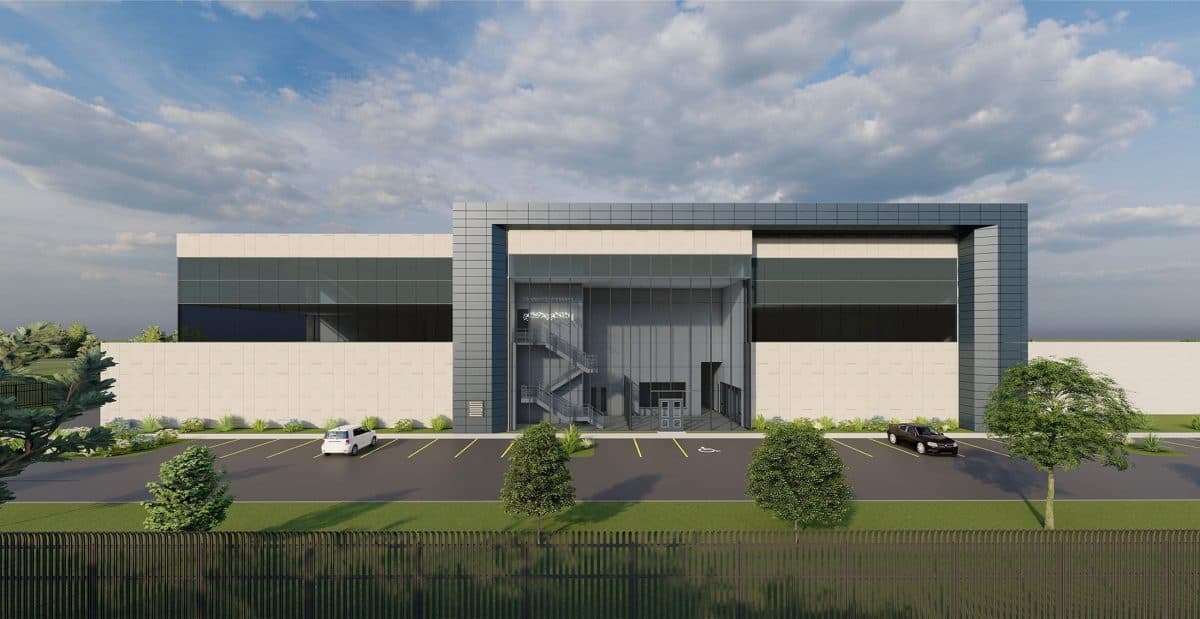
Data center real estate has quietly become the most contested asset class in the world. In 2026, the buildings that house the machinery of artificial intelligence are absorbing more institutional capital, more electricity and more political friction than any office tower, mall or luxury tower on the planet. The scale is hard to overstate: according to JLL's 2026 Global Data Center Market Outlook, nearly 100 gigawatts of new capacity will be added between 2026 and 2030, enough to double the global footprint in half a decade.
This is no longer a niche corner of "alternative" real estate. It is the front line where technology, energy policy and private equity collide. And for developers, investors and city planners, the questions it raises in 2026 are the same ones that will define the next real estate cycle.
Are data centers a good real estate investment?
Data centers are, in 2026, one of the strongest risk-adjusted plays in commercial real estate, but only where power is available. Demand from AI and cloud computing is outstripping supply, pushing rents and construction costs up simultaneously. The binding constraint is no longer land or capital; it is access to the electrical grid, which is why site selection now begins with a utility, not a broker.
The numbers behind that claim are unusual for real estate. CBRE's 2026 U.S. Real Estate Market Outlook describes a market where vacancy sits near record lows and pre-leasing routinely reaches 100% before a building is finished. When tenants sign leases years before a slab is poured, the asset behaves less like property and more like infrastructure.
The scarcest thing in real estate in 2026 is not a corner lot in Manhattan. It is a megawatt with a grid connection.
Why capital is stampeding into digital infrastructure
The defining transaction of mid-2026 made the trend concrete. In late June, CNBC reported that Digital Realty took a $3.5 billion stake in Blackstone's Virginia data centers, a single deal that would rank among the largest office or retail portfolio trades of any recent year, now routine in digital infrastructure.
Private capital is the engine. Goldman Sachs expects private markets to play a growing role in financing the build-out, as the capital intensity of hyperscale campuses exceeds what public REITs and bank debt can supply alone. The result is a structural shift: pension funds and sovereign wealth are underwriting server halls the way they once underwrote logistics and multifamily.
Here is the definition worth isolating:
Digital infrastructure real estate: purpose-built facilities, data centers, network hubs and their power and cooling systems, whose value derives not from location amenity but from proximity to fiber, cheap electricity and low-latency demand. It trades on utility contracts and uptime, not on curb appeal.
How to invest in data center real estate
Exposure to the sector comes in tiers, each with a different risk profile. Investors entering in 2026 generally choose among five routes:
- Public REITs: the most liquid entry, through listed operators that own and lease facilities at scale.
- Private equity and infrastructure funds: direct stakes in development pipelines, increasingly the dominant capital source.
- Development and build-to-suit: the highest return and highest risk, gated by land, power and permitting.
- Adaptive reuse: converting obsolete industrial or retail assets, a bridge strategy where power is available but greenfield is not.
- Ancillary real estate: the housing, logistics and power infrastructure that a data center campus pulls into its orbit.
The table below frames the trade-offs of the two most common routes for real estate investors:
| Route | Liquidity | Main constraint |
|---|---|---|
| Public data center REITs | High | Priced-in growth; correlated to tech equities |
| Direct development / build-to-suit | Low | Grid access, permitting, multi-year lead times |
The constraint nobody priced in: power and place
The industry's growth story now runs straight into a wall of watts. The World Economic Forum has flagged the energy and water intensity of AI-era facilities as the defining sustainability challenge of the build-out, a single hyperscale campus can consume as much electricity as a mid-sized city.
That intensity is turning into local resistance. Communities that once courted server farms for tax revenue are now organizing against them over electricity prices, water use and noise. The politics of the megawatt, who pays for grid upgrades, whose rates rise, is becoming as decisive as any zoning fight. For developers, the lesson mirrors what luxury housing learned long ago: a project that ignores its host community's costs eventually pays them back with interest.
Free resource
Entering a new asset class? You need a brand platform first.
Developers moving into contested categories win capital and tenants on positioning, not just yield. See how a brand platform builds that case.
Download the guide →What data centers mean for the rest of real estate
The gravitational pull of digital infrastructure is reshaping markets that have nothing to do with servers. Where data centers cluster, Northern Virginia, Phoenix, Dallas, and emerging hubs across the Gulf and Southeast Asia, they lift industrial land values, strain housing supply and reorder the priorities of local power grids. The asset class is no longer a tenant of real estate; it is a force that bends the market around it.
For the broader industry, that creates both a threat and a template. The threat is competition for land, power and capital. The template is discipline: an asset class that underwrites on contracts, uptime and utility economics rather than on optimism. As explored across our editorial coverage of market trends, the categories that win in a tighter capital environment are the ones that can prove, not merely promise, their returns. That same rigor is what our branding and visualization work for developers brings to more traditional assets.
Frequently asked questions
How profitable is owning a data center?
In 2026, well-located data centers post some of the strongest yields in commercial real estate, driven by demand outstripping supply and near-full pre-leasing. Profitability, however, is highly site-dependent: without secured power and grid capacity, even a fully leased project can stall before it generates a dollar.
What is the largest data center REIT?
The sector is dominated by a small group of listed operators that own and lease facilities globally, with market capitalizations rivaling major office and retail REITs. Their scale reflects how quickly digital infrastructure has moved from an alternative sector to a core institutional allocation.
Why are data centers facing local opposition?
Opposition centers on electricity prices, water consumption and grid strain. A single hyperscale campus can draw as much power as a mid-sized city, and residents increasingly resist projects they believe raise their utility bills or deplete local resources, turning permitting into the sector's chief bottleneck.
Is data center demand sustainable, or a bubble?
Underlying demand from AI and cloud computing is real and contracted years in advance, which distinguishes it from speculative cycles. The genuine risk is not demand but delivery: power availability, construction costs and community resistance could constrain supply faster than they deflate it.
The AI boom will be remembered not only for the models it produced but for the buildings it forced into existence. In 2026, the most valuable square meter in real estate is not a penthouse view, it is a slab wired to the grid.
For what changes in product when buyer repertoire changes, see our trends coverage.
Next step
In a tighter market, the assets that win are the ones that can prove their story.
Talk to TBO →Cover image: Stream Data Centers
You may also like
Short-term rental as an asset class in 2026
Short-term rental as an asset class matured in 2026. Why developers now design the yield in before breaking ground.
Luxury senior living in 2026: real estate's quiet giant
Occupancy near 90%, construction at a 2012 low and 73 million boomers aging in: why luxury senior living is 2026's most resilient real estate bet.
AI search blackout: luxury real estate ranks last in 2026
Luxury real estate ranks last among industries in AI search visibility. Branded residences capture 78% of recommendations. The window to fix this is 24 months.