Luxury senior living in 2026: real estate's quiet giant
Occupancy near 90%, construction at a 2012 low and 73 million boomers aging in: why luxury senior living is 2026's most resilient real estate bet.
In May 2026, a health-care REIT paid roughly $425 million for just three senior living communities. The buyer was not chasing volume. It was buying scarcity. Across the United States, senior housing occupancy is closing in on 90% while new construction sits at its lowest level since 2012, and the math of that gap is quietly rewriting one of real estate''s most overlooked asset classes.
For years, senior living was the wallflower of institutional portfolios, operationally messy, reputationally fragile, hard to underwrite. In 2026 it reads differently. A demographic wave that has been visible for decades is finally arriving at the door, and the supply built to meet it never came. The result is a rare thing in real estate: durable demand meeting structural scarcity.
Is senior housing a good investment in 2026?
Senior housing is among the most resilient real estate bets of 2026. Occupancy reached 89.5% in the first quarter, the 19th consecutive quarter of gains, while new units under construction hit their lowest level since 2012. With inventory growth at just 0.4% and 73 million boomers aging in, demand structurally outruns supply, compressing risk and supporting rents.
That is the thesis in one paragraph, and the data behind it is unusually clean. According to the National Investment Center for Seniors Housing and Care (NIC), occupied senior housing units passed 637,000 in the first quarter of 2026, adding more than 3,000 in a single quarter even as almost nothing new broke ground.
The scarcity engine: demand up, cranes down
Senior living is the term for age-restricted residential real estate spanning independent living, assisted living and memory care, distinct from ordinary multifamily because it bundles hospitality, services and, in many cases, health care into the rent. In 2026, every layer of that stack is running short of supply.
The numbers are stark. Independent living occupancy averaged 91% in the first quarter of 2026, with assisted living at 87.9%, according to NIC MAP data reported by Greystone''s Q1 2026 senior housing outlook. Year-over-year inventory growth fell to 0.4%, a record low. Cautious lenders, high construction costs and the long memory of pandemic-era distress have kept new development frozen precisely as the customer base explodes.
| Metric | Q1 2026 | Signal |
|---|---|---|
| Overall occupancy | 89.5% | 19th straight quarterly gain |
| Independent living occupancy | 91% | Effectively full in prime markets |
| Assisted living occupancy | 87.9% | Rising, room to run |
| Inventory growth (YoY) | 0.4% | Record low, supply frozen |
| Occupied units | 637,000+ | +3,000 in one quarter |
Free resource
The brand platform behind a new luxury category
A resilient asset class still has to be sold. See how a rigorous brand platform positions a high-end residential product for buyers who are comparing lifestyles, not floor plans.
Download the guide →Why the money is chasing the top of the market
The capital flowing in is not spreading evenly. It is concentrating at the luxury end, and for a coherent reason: the wealthiest cohort of retirees in history is arriving with the balance sheets to pay privately, insulating operators from the reimbursement risk that haunts the middle of the market. That is why the $425 million deal reported by Senior Housing News targeted three luxury communities rather than a sprawling budget portfolio.
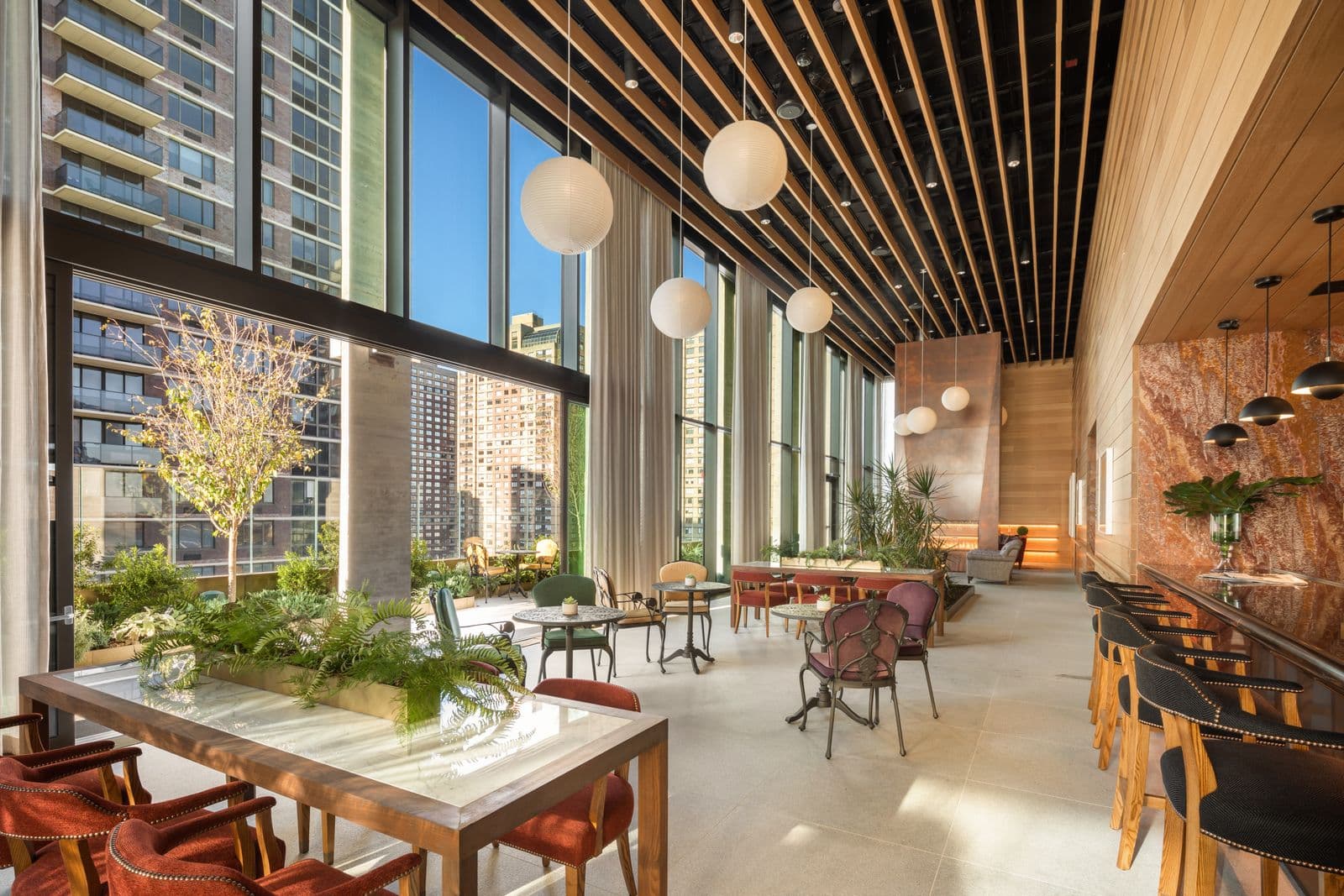
Design is following the money. A generation of new luxury communities looks less like a care facility and more like a resort or a members'' club, with chef-led dining, wellness centers, art programming and architecture that lands in the pages of shelter magazines. UBS Asset Management frames senior living as scalable, resilient and socially impactful, with the United States leading global transaction volumes. The old euphemisms are gone; the category now competes on lifestyle.
Tool for this topic
Launch Diagnostic
Six dimensions, 0 to 100 score: product, brand, sales, marketing, financial structure and experience, with bottlenecks and opportunities.
Run diagnostic →What is the most expensive senior living, and does it work?
The priciest luxury communities in the US now command entrance fees in the seven figures plus monthly service charges rivaling a fine hotel, targeting affluent buyers who treat the move as a lifestyle upgrade rather than a last resort. These continuing care communities pool health risk while delivering resort-grade amenities, and their near-full occupancy suggests the model has genuine demand behind the price tag.
Skeptics have a fair point: staffing costs are punishing, care liability is real, and a downturn could soften the paydown of those entrance fees. But the PwC and ULI Emerging Trends in Real Estate outlook has moved senior housing steadily up its rankings, on the logic that demographics are the one variable a recession cannot cancel. People do not stop aging when rates rise.
Senior living is the rare asset class where the demand curve is already written into census tables. The only open question is who builds the supply, and whether they build it with dignity or just with margin.
The branding problem nobody underwrites
Here is what the spreadsheets miss. The hardest part of luxury senior living is not the cap rate; it is the story. Buyers, and, crucially, their adult children, are choosing where a parent will spend a final chapter. That decision is emotional, high-stakes and brand-driven in a way few real estate categories can match. A community that markets itself as a warehouse for the old will sit empty next to one that sells belonging, purpose and a life worth moving toward.
This is where developers routinely underinvest. They spend fortunes on the building and pennies on the positioning, then wonder why lease-up stalls. The operators winning the luxury tier treat brand as infrastructure, on par with the wellness center and the kitchen. For a fuller view of how we read residential markets and positioning, the TBO blog and our real estate market hub track the data and the narrative side by side.
What developers should take from 2026
- Underwrite the demographic tailwind. With inventory growth at 0.4% and boomers aging in, demand is the most predictable variable on the page.
- Build for the payer. The private-pay luxury tier insulates operators from reimbursement risk and commands the strongest rents.
- Design like hospitality. The winning communities read as resorts and clubs, not facilities, and compete on lifestyle.
- Treat brand as infrastructure. The buying decision is emotional and family-driven; positioning, not price, breaks the tie.
- Move before the supply thaws. Frozen construction is a window, not a permanent moat. First movers lock in the best sites and mindshare.
Frequently asked questions
What is the 80/20 rule in 55-plus communities?
Under US federal housing rules, an age-restricted community can lawfully limit residency to older adults if at least 80% of occupied units house someone 55 or older. The remaining 20% gives operators flexibility for spouses, caregivers and inherited units without losing the age-qualified exemption.
Is senior housing recession-resistant?
Largely, yes. Demand is driven by age and health rather than the economic cycle, and near-full occupancy in 2026 reflects that. The main risks are operational, staffing costs and care liability, plus softer paydown of entrance fees in a downturn, rather than a collapse in underlying demand.
Why is so little senior housing being built?
Construction hit its lowest level since 2012 because cautious lenders, elevated building costs and the memory of pandemic-era distress have stalled new development. With year-over-year inventory growth at just 0.4%, supply is falling far behind the growth of the older-adult population.
What defines luxury senior living?
Luxury senior living blends resort-grade amenities, chef-led dining, wellness and cultural programming with independent or assisted living care, typically on a private-pay basis. It competes on design and lifestyle, targeting affluent retirees who view the move as an upgrade rather than a necessity.
Next step
A resilient asset class is only as strong as the story that sells it. That is the part most developers underbuild.
Talk to TBO →Cover image: Architectural Digest