Office-to-residential conversion 2026: a reality check
Office-to-residential conversions hit a record 90,300-unit pipeline in 2026, up 28%. Do the economics work — and can they dent the housing shortage?
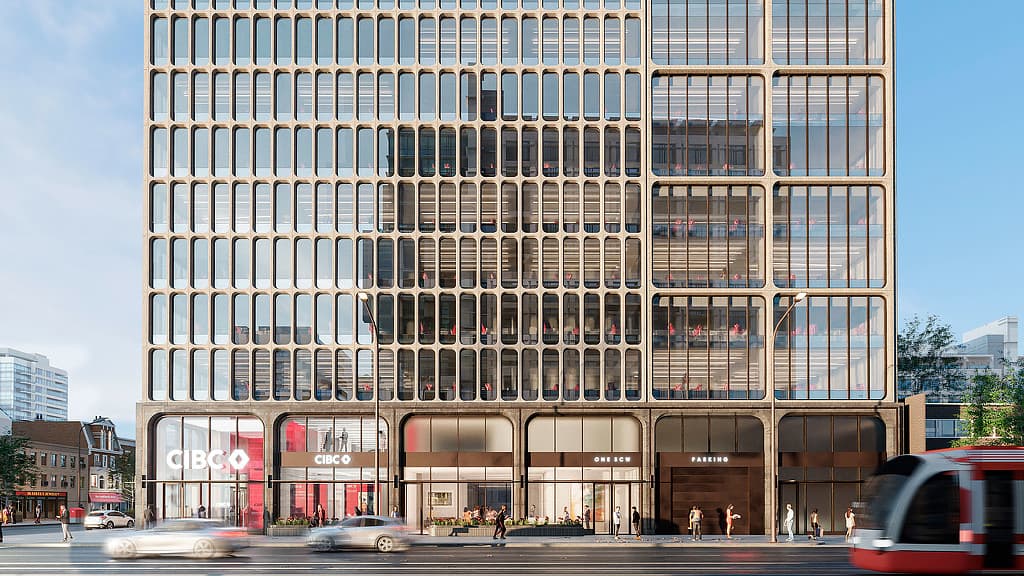
The most repeated idea in American real estate right now is also the most seductive: take the half-empty office towers that the pandemic emptied and the hybrid era never refilled, and turn them into the apartments the country desperately lacks. Two problems solved with one set of keys. The pipeline suggests the industry believes it. At the start of 2026, the United States had 90,300 apartment units in office-to-residential conversion projects, a 28% jump year over year, the largest adaptive-reuse pipeline ever recorded.
The Urban Land Institute expects the pace to accelerate through 2026, pushed by high office vacancy and a structural housing shortage. The story writes itself. The arithmetic does not.
Office-to-residential conversion is the adaptive reuse of an obsolete commercial building into housing, re-plumbing, re-cladding and re-planning an office floor plate so it can hold apartments that meet residential code for light, air and egress. It is not new construction in a recycled shell; it is closer to surgery, and like surgery, the patient has to be a candidate.
Does office-to-residential conversion actually solve the housing shortage?
At the national scale, not yet. A 90,300-unit pipeline is real, but the United States is short several million homes; conversions are a meaningful local instrument, not a macro cure. Where they matter most is in specific downtowns, Manhattan, Boston, Chicago, San Francisco, where they recycle dead square footage, return residents to emptied cores and rebuild the tax base, one tower at a time.
The local numbers are genuine. Manhattan alone has roughly 3,000 conversion units underway, and Boston has approved close to 1,800 apartments through its conversion program since 2023. Those are neighborhoods, not a national fix, but for a city watching its central business district hollow out, a neighborhood is the whole game.
Which buildings can actually be converted?
Far fewer than the skyline suggests. The constraint is geometry. Residential code wants every bedroom near a window; office towers built after the 1970s are deep, with vast floor plates and cores that leave a dark, unusable interior once you carve out apartments. The best candidates are older, slimmer pre-war buildings with operable windows and shallow depth, exactly the stock that is scarcest. JPMorgan's own guidance on what makes a property a strong conversion candidate reads like a list of reasons most towers are not.
- Floor-plate depth: shallow enough that apartments reach natural light, usually under 12 metres from window to core.
- Window operability and grid: a façade that can deliver light and air to individual rooms.
- Vacancy and price: a building empty enough, and cheap enough, that the basis pencils out.
- Plumbing risers and structure: a core that can absorb dozens of new wet stacks without gutting the frame.
Free resource
The art-directed CGI playbook for selling off-plan
A conversion is sold years before it is finished, the apartment exists only as an image. This guide shows how directed renders turn an empty office floor into a believable home buyers commit to.
Download the guide →Do the economics work?
Only with help. A conversion competes with two alternatives: leaving the office empty, or demolishing and building new. It wins when the acquisition basis is low and the subsidy stack is deep. The Reddit and trade chatter around recent deals is blunt about it, on many projects, a little over half the cost is carried by a combination of historic tax credits, C-PACE financing and local conversion incentives. Take those away and most pro formas collapse.
That is why policy, not architecture, is the real accelerant. New York's tax abatement for conversions, Boston's fee and tax program, and a growing list of state and city credits exist precisely because the unsubsidised math rarely closes. The design firm Gensler has built a screening model to test thousands of buildings for conversion viability, and routinely finds that only a fraction clear the bar on physical grounds before cost even enters the conversation.
| Factor | Favours conversion | Favours demolition / new build |
|---|---|---|
| Building age | Pre-war, slim floor plate | Post-1980, deep floor plate |
| Acquisition basis | Distressed, low price per foot | Repriced but still high |
| Subsidy stack | Credits + C-PACE + abatement | Little or no incentive |
| Speed to market | Faster, shell already stands | Slower, full ground-up timeline |
| Design freedom | Constrained by existing frame | Full, but at higher cost and carbon |
There is a quieter argument that does not show up on the pro forma: carbon. Keeping a building's structure avoids the embodied emissions of demolition and new concrete, a point the Pew Charitable Trusts raises in favour of converting obsolete offices into smaller co-living units. As embodied-carbon rules tighten, reuse may move from a tax play to a compliance one.
Conversion is not a housing strategy; it is a downtown strategy that happens to produce housing, and it only works where geometry, basis and subsidy line up at once.
What developers get wrong about marketing a conversion
The buyer of a converted apartment is buying a thing that does not yet exist, inside a building they associate with cubicles. That is a branding problem before it is a sales problem. A successful conversion has to do what new construction does, invent a residential identity from a commercial address, and it has to do it through imagery, because there is no decorated unit until late in the build. This is where adaptive reuse meets the broader real estate market playbook: the product is sold on a promise that has to be made visible. The developers who struggle are the ones who market the deal, the tax abatement, the location, instead of the life. The ones who win sell the apartment.
Frequently asked questions
Is converting an office cheaper than building new?
Sometimes, but not reliably. The shell and core already exist, which can save time and some structural cost, but residential systems, plumbing, HVAC, façade, often have to be rebuilt entirely. Conversions usually win on speed and on subsidy access, not on raw construction cost.
How long does an office-to-residential conversion take?
Typically faster than ground-up development because the structure stands, but timelines still run two to four years from acquisition to lease-up once design, permitting and the gut renovation are accounted for. Policy approvals for incentives are frequently the long pole.
Why don't more offices get converted if vacancy is so high?
Because high vacancy is not the same as conversion-ready. Most vacant towers are too deep, too modern, or priced too high relative to the subsidised math. The buildings that pencil out are a narrow slice of the empty inventory.
Next step
A conversion lives or dies on whether buyers can picture the home inside the old office. That is a branding and visualisation problem, and it is ours.
Talk to TBO →Cover image: Gensler
You may also like

Office-to-residential conversion: the risk repriced
A Midtown conversion buckled in July 2026. At $500 per gross square foot, office-to-residential conversion math was already thin. Now lenders are rereading it.
Build-to-rent in 2026: the new front in the housing war
Build-to-rent went from 2.7% to 7% of single-family starts — then Washington moved to curb it. Why the 2026 housing fight gets the target wrong.
Luxury senior living in 2026: real estate's quiet giant
Occupancy near 90%, construction at a 2012 low and 73 million boomers aging in: why luxury senior living is 2026's most resilient real estate bet.