Real estate tokenization in 2026: the $4T question
Deloitte sees tokenized real estate reaching $4T by 2035. In 2026 the plumbing—Chainlink, Caliber, custody—finally caught up. A grounded reality check.
On 2 July 2026, Caliber (Nasdaq: CWD) announced it was moving its real estate fund tokenization onto Chainlink's compliance and distribution infrastructure. A few months earlier, Forbes was mapping how tokenization opens new paths to property ownership and income. The story real estate has told itself about blockchain for a decade, someday, is quietly becoming a present-tense sentence.
Someday now has a number attached. The Deloitte Center for Financial Services projects that US$4 trillion of real estate could be tokenized by 2035, up from less than US$0.3 trillion in 2024, a compound annual growth rate of 27%. That is not a crypto-newsletter fantasy; it is a Big Four firm putting a decade-long curve on the record. The question for 2026 is no longer whether tokenization happens, but which parts of it are real and which are still marketing.
What is real estate tokenization?
Real estate tokenization is the process of representing ownership of a property, a loan, or a fund on a blockchain as digital tokens. Each token stands for a fractional share of the underlying asset and its income. Instead of one deed held by one owner, the asset is divided into many transferable units that can, in principle, be bought, sold, and settled in minutes rather than weeks.
The appeal is easy to state and hard to deliver. Fractional ownership lowers the entry ticket, so an investor can hold a slice of a building rather than the whole thing. Programmable settlement compresses transactions that traditionally involve escrow agents, title companies, and days of paperwork. And a secondary market for tokens promises liquidity to an asset class famous for having almost none.
How does real estate tokenization work?
In practice, a tokenized deal moves through a predictable sequence. The mechanics matter, because most of the risk hides in the gap between the token and the thing it claims to represent:
- Structuring: the property is placed inside a legal wrapper, typically a special purpose vehicle, that actually holds title.
- Issuance: tokens representing equity or debt in that vehicle are minted on a blockchain, each mapped to a defined ownership share.
- Compliance: investor eligibility, KYC, and transfer restrictions are enforced in code, increasingly through infrastructure like Chainlink's.
- Distribution: tokens are sold to qualified investors, and rental income or interest is paid out on-chain.
- Secondary trading: where regulation allows, tokens change hands on a compliant marketplace.
Deloitte splits the $4 trillion into three streams, which tells you where the momentum actually is: tokenized loans and securitizations could reach US$2.39 trillion by 2035, private real estate funds roughly US$1 trillion, and land or development assets around US$500 billion. Note what leads, not beachfront condos sold token by token, but the unglamorous machinery of debt and funds, where institutions already understand the product.
Tokenization does not make a bad building good. It makes a good building liquid. The asset still has to be worth owning before the wrapper is worth anything.
Free resource
A tokenized offering still has to be sold, and that means a brand.
Fractional or not, investors buy a story before they buy a share. Our brand platform framework maps how a real estate offer builds the trust a token cannot manufacture on its own.
Download the guide →Tool for this topic
Launch Diagnostic
Six dimensions, 0 to 100 score: product, brand, sales, marketing, financial structure and experience, with bottlenecks and opportunities.
Run diagnostic →Why 2026 is the plumbing year
Earlier tokenization waves failed on infrastructure, not vision. The 2026 shift is that the boring layers, custody, compliance, and institutional rails, finally exist. BlackRock's BUIDL, the largest tokenized money-market fund, proved that the world's biggest asset manager will hold real value on public blockchains. Chainlink has become the connective tissue between off-chain legal reality and on-chain tokens. And listed operators like Caliber are wiring real estate funds into that stack rather than building bespoke systems that never scale.
This is why the credible action is institutional. JLL and other commercial real estate advisors now discuss tokenization as a capital-markets tool, not a speculative sideshow. When the plumbing is shared and regulated, tokenization stops being a way to gamble on property and starts being a cheaper way to finance and trade it.
What are the benefits of real estate tokenization?
Stripped of hype, the benefits are concrete and mostly operational:
- Access: fractional units lower the minimum investment, widening the pool of eligible buyers.
- Liquidity: a compliant secondary market can turn a ten-year hold into a tradable position.
- Efficiency: programmable settlement cuts intermediaries, cost, and time.
- Transparency: ownership and cash flows are recorded on an auditable ledger.
Can you actually buy tokenized real estate today?
Yes, but with caveats that separate the informed buyer from the burned one. Regulated platforms already offer tokenized real estate to qualified and, in some jurisdictions, retail investors. The catch is that a token's liquidity depends entirely on a functioning market for it, and many of those markets are thin. Custody, regulatory clarity, and what happens in a default remain the three unresolved problems Deloitte itself flags. A token that cannot be sold is just an expensive spreadsheet entry.
What is the future of real estate tokenization?
The honest forecast is uneven. Loans, funds, and institutional vehicles will tokenize first and fastest, because the buyers are sophisticated and the assets are already financialized. Direct tokenization of individual homes, the version that gets the headlines, will lag, held back by regulation and the simple fact that most people still buy a home to live in, not to trade. Over the next decade the technology will fade into the background, the way electronic trading did for stocks: invisible, assumed, and the reason the market moved faster than anyone expected.
For developers and brands, the strategic point is subtle. Tokenization changes how property is financed and traded, not why someone wants to own it. The trends shaping real estate keep returning to the same truth: the wrapper is new, the need for a compelling asset and a credible story is not. That is where the work of positioning and marketing a development begins, and where our market analysis keeps its focus.
Frequently asked questions
Is tokenized real estate the same as a REIT?
No. A REIT is a company that owns a portfolio and issues shares; tokenization can represent a single asset, a loan, or a fund directly on a blockchain, often with faster settlement and lower minimums. A REIT is a structure; tokenization is a technology that can be applied to many structures.
What are the biggest risks?
Deloitte highlights three: custody of the underlying asset, regulatory uncertainty, and unclear default scenarios. Add thin secondary-market liquidity, which can trap investors in tokens they cannot sell at a fair price.
Which assets are tokenizing fastest?
Loans and securitizations lead, projected at US$2.39 trillion by 2035, followed by private funds near US$1 trillion. Direct residential tokenization remains the smallest and slowest segment.
Do I need cryptocurrency to invest?
Not necessarily. Many regulated platforms let investors buy tokenized real estate with fiat currency; the blockchain runs underneath the transaction rather than requiring the buyer to hold crypto directly.
Next step
However a property is financed, it still has to be positioned, named, and sold to a human being.
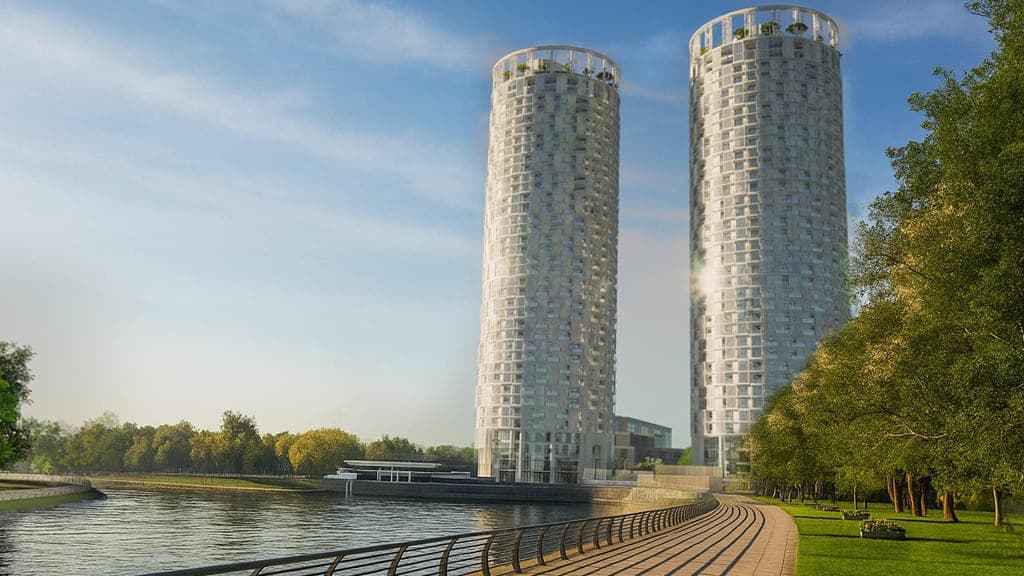
Talk to TBO →Cover image: Green World Towers Islamabad
You may also like
Data center real estate: 2026's hottest asset class
Data center real estate is 2026's most contested asset class. Why AI demand, power scarcity and private capital are rewriting the map.
Manhattan luxury real estate roars back in 2026
Manhattan luxury real estate is roaring back in 2026, $10M+ contracts up 80% even as NYC passes a pied-à-terre tax. Why trophy demand is policy-proof.
US luxury real estate 2026: a two-speed market
US luxury real estate in 2026 is not booming or busting. It is splitting. Why the exceptional clears, the ordinary stalls, and brand decides.