Build-to-rent in 2026: the new front in the housing war
Build-to-rent went from 2.7% to 7% of single-family starts — then Washington moved to curb it. Why the 2026 housing fight gets the target wrong.
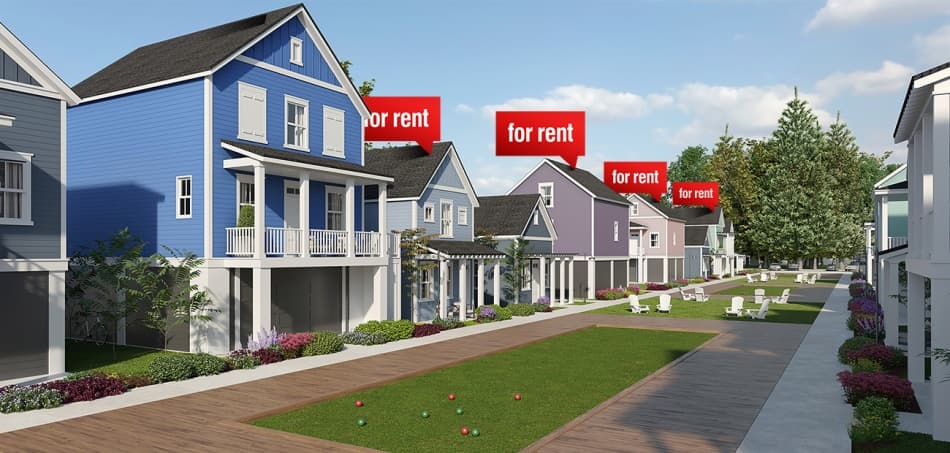
In June 2026, the U.S. Senate advanced the 21st Century ROAD to Housing Act, a bipartisan package that, among other things, moves to restrict private-equity and institutional buyers from scooping up single-family homes. The political target was Wall Street landlords. But the collateral damage may land on build-to-rent: the fastest structural shift in American housing, and arguably the only segment quietly adding new rental supply at scale.
That irony sits at the center of the 2026 housing debate. For four years, build-to-rent was the industry's favorite growth story. Now it is a political piñata. Understanding the difference between the two things lawmakers keep conflating is the whole game.
Build-to-rent (BTR) is the practice of constructing single-family homes, detached houses or townhomes in cohesive communities, specifically to be leased rather than sold. Unlike scattered-site investors who buy existing homes off the resale market, BTR developers add brand-new housing stock that would not otherwise exist.
The numbers behind build-to-rent's rise
BTR went from a rounding error to a structural category in under a decade. According to the National Association of Home Builders, single-family built-for-rent now holds roughly a 7% four-quarter share of single-family starts, well above the 2.7% historical average from 1992 to 2012. As of mid-2025, the top 100 U.S. metros had more than 90,000 BTR units in the active pipeline, with national builders like D.R. Horton standing up dedicated rental divisions.
The demand driver is brutally simple: households that want a yard, a garage and a good school district but cannot, or will not, buy at a mortgage rate near 6.5%. BTR sells the single-family lifestyle without the down payment. In a country where the lock-in effect froze the resale market, a new house you can rent today is, for millions, the only door that opens. This is the rental-side mirror of the same affordability squeeze we covered in how US homebuilders are courting the first-time buyer.
Why did build-to-rent cool in 2025 and 2026?
The short answer: money got expensive and politics got loud. After a record run, single-family built-for-rent starts fell to about 68,000 in 2025, down 19% from roughly 84,000 in 2024, per NAHB data. The slide continued into 2026, with the first quarter delivering around 14,000 starts versus 19,000 a year earlier, squeezed by financing costs and a wave of competing multifamily supply.
Layered on top is regulatory risk. As the NAHB's Eye on Housing analysis shows, the cooldown is real and measurable. Even so, Northmarq expects supply-side pressures to ease through 2026, which supports rents. The wildcard is Washington: the CNBC report on the Senate housing bill makes the headwind explicit, and capital that fears restriction simply waits.
Is build-to-rent the villain Washington thinks it is?
In practical terms, no, and the distinction matters. The policy anger is aimed at institutional investors buying existing single-family homes and pulling them off the for-sale market, which can squeeze first-time buyers. Build-to-rent does the opposite: it adds new homes. Penalizing both with one blunt rule risks cutting supply precisely where the country needs it most.
The Terner Center at UC Berkeley flagged exactly this tension in its comments on the bill's BTR provisions. A preliminary NAHB estimate puts roughly 40,000 new rental homes a year at risk from the proposed rules. The Bipartisan Policy Center's breakdown of the final deal shows lawmakers wrestling with that line between speculation and supply, a line easy to draw in a press release and hard to draw in statute.
BTR is a brand business disguised as a real estate business
Here is the part the spreadsheets miss. A build-to-rent community does not compete on square footage alone. It competes on the promise of a managed lifestyle, maintenance handled, amenities shared, neighbors curated. That promise is a brand, not a floor plan. The communities that lease up fastest are the ones a renter can name, trust and picture themselves inside before they ever tour.
The build-to-rent operators who win the next cycle will not be the ones with the lowest cost of capital. They will be the ones renters can name, communities that feel like a brand people choose, not a spreadsheet they happen to live in.
This is why brand strategy belongs in the BTR underwriting model, not the marketing afterthought. Lease-up velocity and resident retention are downstream of how recognizable and trusted the community is, a discipline TBO treats as brand and marketing strategy, not signage.
What developers and operators should do now
- Separate your story from Wall Street's: communicate clearly that you build new supply rather than buying existing homes, the policy narrative will reward the distinction.
- Underwrite for brand, not just yield: lease-up velocity and retention follow from how recognizable and trusted the community is.
- Treat the community as a product with a name: identity, tone and resident experience should be designed, not improvised.
- Build for the renter-by-choice: the household that could buy but chooses to rent is the highest-value tenant, design and message to them.
- Hedge policy risk with location: the regulatory map is not national; markets and municipalities vary widely.
Free resource
The Brand Platform Guide for residential developments
A build-to-rent community lives or dies on whether renters can name it. This guide shows how to build the brand foundation that drives lease-up and retention.
Download the guide →Build-to-rent vs. institutional home-buying: not the same thing
The single most important table in the 2026 housing debate is the one no headline prints. The two activities lawmakers lump together actually move in opposite directions:
| Dimension | Institutional SFR (scattered-site) | Build-to-rent (purpose-built) |
|---|---|---|
| Source of homes | Buys existing homes on the resale market | Builds new homes |
| Effect on for-sale supply | Removes inventory buyers compete for | Adds net new housing stock |
| Form | Dispersed across neighborhoods | Cohesive, managed communities |
| Policy framing (2026) | Primary target of restrictions | Collateral risk if rules are blunt |
| Renter proposition | A house to rent | A branded lifestyle to belong to |
For a fuller view of how supply, rates and demand are reshaping the cycle, see our real estate market hub.
The U.S. needs millions more homes than it has. Build-to-rent is one of the few mechanisms actually adding to that number rather than reshuffling it. If 2026 ends with policy that punishes the builders along with the speculators, the country will have solved an optics problem and deepened a supply one. The renters waiting on a yard and a lease won't read the difference in the bill, they'll feel it in the listings that never get built.
Frequently asked questions
What exactly is build-to-rent?
Build-to-rent (BTR) refers to single-family homes, detached houses or townhomes, constructed specifically to be leased rather than sold, usually in cohesive, professionally managed communities. The key distinction is that BTR adds brand-new housing supply, unlike investors who buy existing homes off the resale market.
How big is the build-to-rent market in 2026?
Single-family built-for-rent holds about a 7% share of single-family starts, up from a 2.7% historical average, per NAHB. Roughly 68,000 BTR homes started in 2025 (down 19% from 84,000 in 2024), and the top 100 metros had more than 90,000 units in the active pipeline as of mid-2025.
Why is Washington trying to restrict build-to-rent?
The 21st Century ROAD to Housing Act aims to curb institutional investors from buying single-family homes and removing them from the for-sale market. The complication is that the same rules can catch build-to-rent developers, who add new homes rather than removing existing ones, putting an estimated 40,000 new rental units a year at risk.
What are the disadvantages of build-to-rent?
For renters, BTR often costs more than a comparable mortgage payment and builds no equity. For developers, it carries higher financing exposure and rising political risk. Critics argue it can compete with first-time buyers for land and lots, though it adds net new supply rather than subtracting from existing stock.
Is build-to-rent a good investment in 2026?
The short answer: selectively. Northmarq and others expect supply-side pressures to ease through 2026, which supports rents, but financing costs and regulatory uncertainty remain real. The operators most likely to outperform are those building recognizable, well-managed community brands rather than competing on price alone.
Next step
If renters can't name your build-to-rent community, lease-up will always cost more than it should.
Talk to TBO →Cover image: National Association of REALTORS®
You may also like

Short-term rental as an asset class in 2026
Short-term rental as an asset class matured in 2026. Why developers now design the yield in before breaking ground.

The ROAD to Housing Act: what changes for developers
The 21st Century ROAD to Housing Act became law in July 2026. What its 43 provisions actually change for developers, investors and homebuyers.
US housing affordability 2026: the first-time buyer crisis
First-time buyers hit a 44-year low of 21% share in the US market. With rates at 6.53% and prices up 60% in six years, here is the math for 2026.