US homebuilders 2026: winning the first-time buyer
Big US homebuilders are buying the entry-level market in 2026 with rate buydowns resale sellers cannot match. How the incentive economy works.
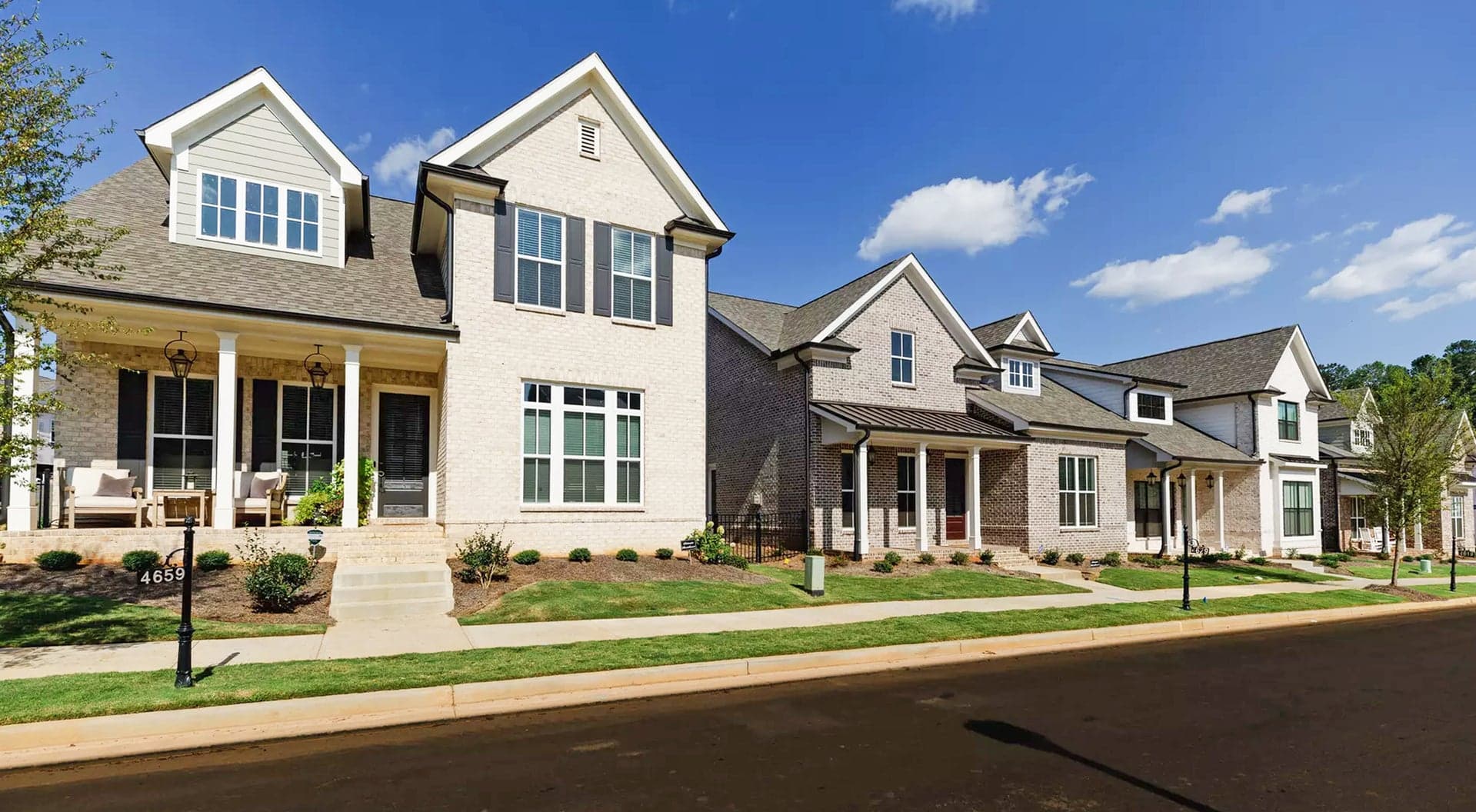
The strangest number in the US housing market of 2026 is not a mortgage rate or a home price. It is this: the median resale home now costs more than the median newly built one. That inversion, new construction undercutting existing inventory, when new homes have historically carried a 10% to 15% premium, is the clearest signal yet of how completely the largest US homebuilders have rewritten the rules of the entry-level market. They are not waiting for affordability to return. They are manufacturing it, one rate buydown at a time.
For the first-time buyer who spent two years priced out by 7% mortgages and frozen resale supply, the most affordable path to a front door in 2026 increasingly runs through a builder's sales office, not a listing agent's open house. Understanding why means understanding the incentive economy that production builders have built around the entry-level segment.
A mortgage rate buydown is a financing concession in which the seller, here, the homebuilder, pays upfront to lower the buyer's interest rate, either permanently or for the first two to three years, cutting the monthly payment without cutting the headline price.
The 2026 backdrop: a market thawing, slowly
The broader market is finally moving again. According to the National Association of Realtors' May 2026 Existing-Home Sales report, sales rose 3.2% both month-over-month and year-over-year, to a seasonally adjusted annual rate of 4.17 million. Inventory climbed to 1.55 million units, a 4.5-month supply, and the Housing Affordability Index improved to 105.6, up from 97.5 a year earlier.
But the headline price tells the harder story. The median existing-home price hit $429,300 in May 2026, a 1.3% annual gain and the 35th consecutive month of year-over-year increases. With 30-year fixed mortgage rates hovering around 6.65%, the math still strands most first-time buyers on the resale side of the market. NAR's own forecast projects home sales jumping 14% across 2026, a recovery, but an uneven one, gated by regional affordability.
This is the gap the builders walked into. Resale sellers, ordinary homeowners, cannot subsidize a buyer's mortgage. Production builders, sitting on scale, balance sheets and captive lending arms, can. That single asymmetry is reshaping where entry-level demand goes.
Why is new construction cheaper than resale in 2026?
The short answer: builders are spending heavily to make it that way. In 2026, roughly 65% of builders are offering incentives and about 32% have cut prices outright, with the average reduction near 6%. Those concessions, rate buydowns, closing-cost help, price trims, pull the effective cost of a new home below comparable resale stock, inverting the usual new-build premium and turning new construction into the value play for budget-constrained buyers.
The dominant player makes the strategy concrete. D.R. Horton, the country's largest homebuilder, posted a 27% quarter-over-quarter jump in housing starts and used its scale to fund buydowns that private sellers simply cannot match, according to HousingWire's analysis of Horton's dominance. CEO Paul Romanowski has told investors the company raised incentives and expects them to stay elevated through fiscal 2026, concentrated in FHA segments, where Horton captures the lion's share of first-time buyers.
The cost of buying the entry-level market
This share is not free. In the second quarter of 2026, Lennar, the second-largest US builder, spent an average of 12.9% of each home's final sale price on incentives such as rate buydowns, and its lending arm layered on down-payment assistance of up to 5%, as Fast Company reported on Lennar's stretched affordability math. Those concessions compress margins and dent net income, a trade the giants are willing to make to hold volume and grab market share.
Not everyone reads the trade as sustainable. Fitch Ratings shifted its 2026 US homebuilder outlook to "deteriorating," per National Mortgage News, warning that incentive-fueled volume masks thinning profitability. The buydown economy, in other words, is a bet, that rates fall before margins do.
The production builder has become the most aggressive mortgage subsidizer in America. In 2026, the entry-level buyer is no longer choosing between new and used, they are choosing between a seller who can rewrite their interest rate and one who cannot.
What this means for builders and marketers
For anyone selling new homes into this market, or marketing on behalf of those who do, the 2026 playbook is specific:
- Lead with the payment, not the price. The buydown changed the unit of competition from sticker to monthly cost. Every ad, landing page and sales script should speak in payments.
- Make the incentive legible. Buyers do not understand a 5/1 buydown intuitively. The brand that explains the math clearly converts the one that buries it in fine print.
- Target the FHA first-time cohort deliberately. This is where Horton and Lennar are winning. Win it with positioning, not just price.
- Protect the brand while you discount. Heavy incentives can cheapen perception. Strong real estate marketing strategy keeps a development desirable even as it competes on financing.
Free resource
The paid-media playbook for real estate launches
When the whole market competes on incentives, your media and messaging decide who actually shows up. The framework we use to turn payment-led offers into qualified buyer traffic.
Download the guide →Should first-time buyers choose new construction in 2026?
In practical terms, often yes, but with eyes open. In 2026, builder incentives can make a new home cheaper to own month-to-month than a comparable resale, thanks to rate buydowns and closing help no private seller can offer. The catch: temporary buydowns reset after two or three years, so the durable question is whether the buyer can carry the payment once the subsidy expires.
| Factor | New construction (2026) | Resale |
|---|---|---|
| Rate buydown available | Yes, builder-funded | Rare; seller can't subsidize |
| Effective price vs. median | Often below resale | Median $429,300, near record |
| Incentive prevalence | ~65% of builders offering | Limited to price cuts |
| Main risk | Buydown expiry; payment reset | Affordability at full rate |
For a fuller view of the entry-level path, see our first-time homebuyer affordability guide and the broader real estate market hub.
Frequently asked questions
What is a mortgage rate buydown?
It is a concession where the seller pays upfront to lower the buyer's mortgage rate. A permanent buydown cuts the rate for the full loan term; a temporary one (such as a 2/1 or 3/2/1) reduces it for the first years before it steps back to the note rate. In 2026, builders fund these to keep monthly payments affordable without slashing the listed price.
Are builder incentives worth it for buyers?
Frequently, yes, especially rate buydowns and closing-cost help, which can lower the true cost of ownership below a comparable resale home. The key is to model the payment after any temporary buydown expires and to confirm the home's price is competitive on its own, since incentives sometimes offset an inflated base price.
Which builders dominate the entry-level market in 2026?
D.R. Horton leads decisively, capturing the largest share of first-time and FHA buyers and posting a 27% quarter-over-quarter rise in housing starts. Lennar follows as the second-largest builder, spending nearly 13% of each sale price on incentives. Both use scale and captive lending arms to out-subsidize smaller builders and resale sellers.
Will mortgage rates fall in 2026?
As of mid-2026, 30-year fixed rates sit around 6.65%, below year-ago levels but near the long-term historical average. Most forecasts expect gradual easing rather than a sharp drop, which is precisely why builders are funding buydowns: they are bridging buyers to a lower-rate future that has not fully arrived.
Next step
When every builder competes on the same buydown, the brand and the message decide who wins the buyer. That is the work TBO does for developers selling at scale.
Talk to TBO →Cover image: The Providence Group