Climate risk is now a real estate price variable
Climate risk is now priced into US home values and insurance — with $1.47 trillion at stake. Why resilience is becoming a brand promise developers must own.
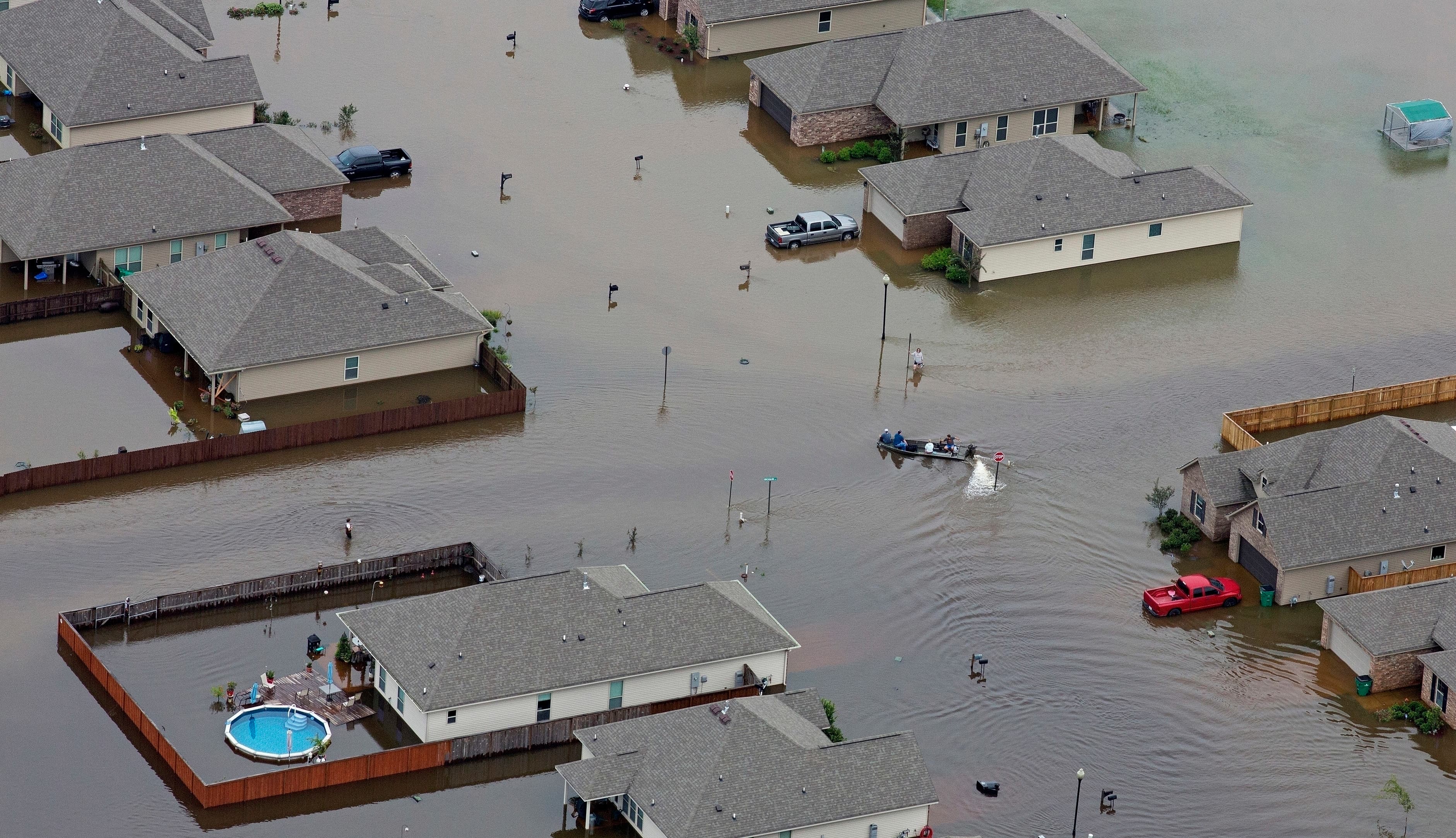
For most of American history, a home's price was a story about three things: location, square footage, and the school district. In 2026, a fourth variable has forced its way onto the spreadsheet, and it is rewriting the other three. Climate risk: flood, fire, wind, and the insurance bill that follows them, is no longer an externality buried in a disclosure form. It is now a line item priced into what a house is worth, how fast it sells, and whether anyone can insure it at all.
The numbers behind this shift are not speculative. First Street, the standard for climate-risk financial modeling, projects that climate-driven insurance increases and population shifts are set to erase roughly $1.47 trillion in US residential real estate value by 2055. That is not a coastal footnote. It is 2.9% of the entire national housing stock, and it is arriving unevenly, neighborhood by neighborhood.
Climate risk, in real estate terms, is the measurable probability that an environmental hazard will damage a property or raise its carrying costs, and it now behaves like any other price variable, discounting exposed homes and rewarding resilient ones.
How climate risk is already repricing the US housing market
The repricing is quiet but real. According to ICE's analysis of the US housing market, two otherwise identical homes can diverge purely on hazard exposure, a property with no flood risk compounding value at roughly 6.3% a year while a high-flood-risk twin trails at 6.0%. A third of a point sounds trivial until you compound it across a 30-year mortgage and a whole zip code.
Insurance is the transmission belt. First Street projects homeowner premiums rising an average of 29.4% over the next 30 years, with the steepest climbs concentrated in specific metros: Miami premiums could rise 322%, Jacksonville 226%, and Tampa 213%. Nationally, home insurance costs have already jumped roughly 66% since 2017, outpacing home-price appreciation. When the cost of carrying a house doubles, its sale price feels the gravity immediately.
Who is moving, and why it matters to developers
Demand is voting with its feet. A 2026 homeownership study from the insurer Kin found that nearly half of American homeowners, 49%, are considering relocating in 2026 because of climate-related concerns, a finding echoed across Realtor.com's reporting on 2026 buyer migration. The California FAIR Plan, the state's insurer of last resort, has gone from 140,000 policies in 2018 to more than 610,000 by mid-2025, and absorbed a roughly $1 billion assessment after the January 2025 Los Angeles fires. Insurability has become a precondition of marketability.
Will climate change affect house prices?
The short answer is that it already has. Climate risk now functions as a discount on exposed homes and a quiet premium on resilient ones, transmitted mostly through insurance cost and availability. As Cotality's research on affordability documents, rising premiums and property taxes are eroding the stability that homeownership once promised, and buyers, newly armed with hazard data, are pricing it in before they make an offer.
The information asymmetry that once protected risky listings is gone. Zillow now surfaces First Street climate-risk scores, flood, fire, wind, heat, and air, directly on for-sale listings, so a buyer sees a property's hazard profile before they see the kitchen. The disclosure that sellers once buried is now the first thing a shopper reads.
Why climate risk is a branding problem, not just an actuarial one
Here is the part the spreadsheets miss. Once hazard data is universal and transparent, the buyer's decision stops being purely actuarial and becomes emotional: not "what is the flood factor?" but "do I trust that this developer built for the world that is coming?" That is a positioning question, and it is where real estate branding earns its keep.
When every buyer can see the same risk score, the differentiator is no longer hiding the risk, it is the credibility of how you answer it. Resilience is becoming a brand promise, and the developers who name it first will own it.
Developers who treat climate as a compliance nuisance will keep discounting. The ones who treat resilience, elevated construction, hardened materials, insurance partnerships, verified adaptation, as a core part of the product narrative will defend price the way strong brands always have: by making the invisible legible. The Brookings work on managing climate risk in real estate and insurance markets frames adaptation as the next great value driver. We would put it more bluntly: in a transparent-risk market, the brand that explains its resilience wins the buyer who can finally see the danger.
What developers and brokers should do now
Pretending the variable does not exist is the one strategy guaranteed to fail. A defensible response fits in five moves:
- Price the risk before the market does it for you. Underwrite acquisitions with hazard and insurance-cost projections, not just comps. The cheap lot in the flood plain is rarely cheap.
- Build the resilience story into the product, not the disclosure. Elevation, materials, and adaptation are features, market them as such, with verifiable proof.
- Make insurability a sales asset. A pre-negotiated, stable insurance pathway is now a closing tool. Uninsurable is unsellable.
- Lead with the risk score, do not flee it. Buyers will find it on Zillow anyway. Framing it first earns the trust that wins the offer.
- Treat resilience as a brand pillar. The developers who name and own "built for what's coming" will set the category language before competitors do.
Free resource
The Brand Platform Guide
When buyers can see every risk score, your differentiator becomes the story you tell about it. This guide shows how to build a brand platform that turns a hard truth, like climate exposure, into a credible, price-defending promise.
Download the guide →Will home values go down in 2026 because of climate?
Not uniformly, and that is the point. Climate is not crashing the national market; it is splitting it. Resilient, insurable homes in lower-hazard areas keep appreciating, while exposed properties face slower growth, harder financing, and thinner buyer pools. The table below maps how the same variable cuts two ways.
| Factor | High climate exposure | Low exposure / resilient build |
|---|---|---|
| Value trajectory | Slower growth, local discounts | Stable to strong appreciation |
| Insurance | Spiking, non-renewals, last-resort plans | Available and competitively priced |
| Buyer pool | Shrinking as data goes public | Expanding with climate migrants |
| Financing | Harder; lenders demand coverage | Standard underwriting |
| Brand opportunity | Resilience narrative defends price where exposure is real and signals quality where it is not | |
For a deeper look at how brand narrative defends price in volatile markets, see our trends hub and how we approach real estate branding and positioning.
The new disclosure is the new pitch
For a generation, the real estate playbook treated environmental risk as something to soften, footnote, and survive in escrow. That playbook is now a liability. In a market where a buyer's first scroll shows the flood factor next to the asking price, the only durable strategy is to meet the risk in the open and out-narrate it with proof. The house that hides its hazard loses to the one that explains its resilience. Climate stopped being the thing developers manage around. It became the thing they will be measured by.
Frequently asked questions
Will climate change affect house prices?
It already does. Climate risk now acts as a discount on exposed homes and a quiet premium on resilient ones, transmitted mainly through insurance cost and availability. First Street projects climate forces erasing roughly $1.47 trillion in US residential value by 2055, unevenly, with high-hazard metros bearing the steepest losses.
How can I see a home's climate risk on Zillow?
Zillow displays First Street climate-risk scores, flood, fire, wind, heat, and air, directly on for-sale listings. The scores appear in the listing's climate section, letting buyers compare a property's hazard profile before making an offer. That transparency is exactly why sellers can no longer bury environmental risk.
Why are home insurance premiums rising so fast?
Insurers are repricing for a less stable climate. Premiums have risen roughly 66% nationally since 2017 and First Street projects a further 29.4% average increase over 30 years, far more in metros like Miami (up to 322%). Where coverage spikes or disappears, property values feel immediate downward pressure.
How should developers respond to climate risk?
Price hazard into acquisitions, build verifiable resilience into the product, secure a stable insurance pathway, lead with the risk data instead of hiding it, and make resilience a brand pillar. In a transparent-risk market, the credibility of how you answer the risk, not concealment, defends price.
Next step
If your next development has a climate story to tell, and in 2026 most do, the difference between a discount and a premium is how credibly you tell it. That is the brand work TBO does.
Talk to TBO →Cover image: The Hill
You may also like

Wellness real estate in 2026: the trillion-dollar address
Wellness real estate is now a US$548B sector on track to top US$1 trillion. What developers and architects must build to capture the wellbeing premium.
Why US luxury real estate is decoupling in 2026
US luxury home prices hit a record $1.39M as a record share of buyers pay cash. Why the top tier is breaking away from the broader market.

Paid Media for Real Estate Developers: ROAS Starts Before the Ad
Luxury real estate CPL hit $170 in major US metros in 2026. The ROAS battle is decided before the campaign, in narrative, renderings and brand.