Foreign buyers and US luxury real estate in 2026
Foreign buyers spent $56B on US homes as capital flight, not shelter, drives the 2026 luxury market. What developers and brands need to know.
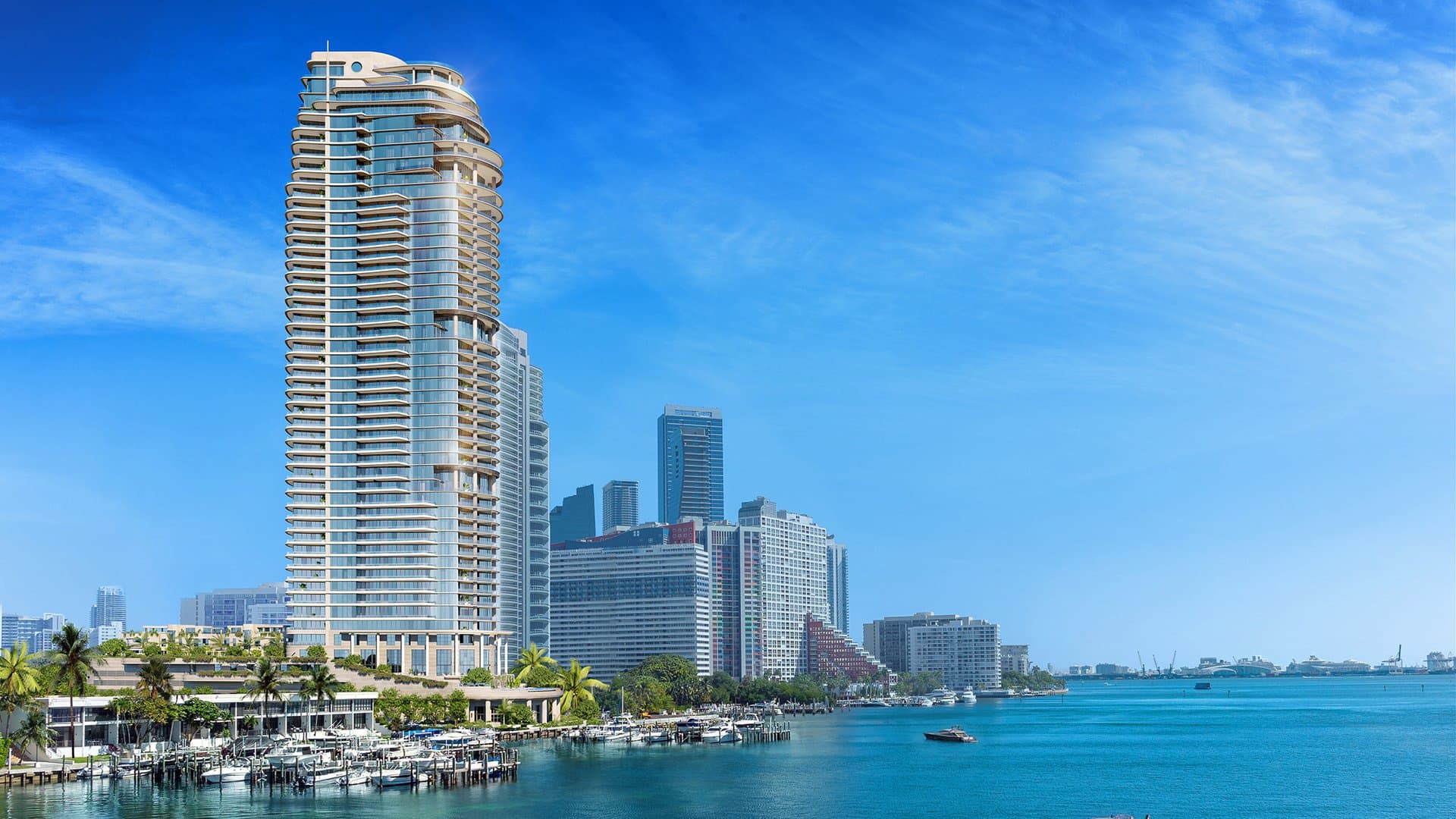
The most important buyer in US luxury real estate in 2026 often does not live in the United States. Foreign buyers purchased roughly $56 billion of existing US homes between April 2024 and March 2025, about 78,100 properties, according to the National Association of Realtors. Behind that number sits a quieter story: for a growing share of these buyers, US property is not a place to live. It is a place to park money.
That distinction reframes the entire category. When a buyer in São Paulo, Bogotá or Lagos wires cash for a condo in Miami, the transaction is less about square footage and more about currency, jurisdiction and the durability of a hard asset. The home is a hedge. Understanding that motive is now the difference between marketing a building and marketing a store of value.
For the cross-border buyer of 2026, a US address is not real estate. It is a passport for capital. The brands that understand this stop selling floor plans and start selling certainty.
Who is actually buying US real estate from abroad in 2026?
The buyer pool is led by Latin America and a handful of high-net-worth hubs. NAR data places Brazil, Colombia, the United Arab Emirates, Nigeria and Israel inside the top ten countries of origin. In Miami, the single largest gateway, buyers from Colombia, Argentina, Mexico, Brazil and Venezuela dominate the foreign share, with Florida the top destination nationwide.
This is not the post-2008 wave of distressed bargain hunting. Today's cross-border buyer is wealthier, pays cash more often, and treats the purchase as portfolio strategy. MIAMI Association of Realtors reported that new-construction units in the city drew buyers from 73 countries late in 2025, a concentration of global capital that no domestic demographic can replicate.
Capital flight is the movement of money out of a country into foreign assets to escape local risk, whether currency devaluation, political instability or tax exposure. In real estate, it shows up as cash purchases of hard assets in stable jurisdictions, where the goal is wealth preservation first and yield or occupancy second.
Why are foreign buyers paying cash for US property?
Because the asset is the point, not the mortgage. A cash purchase converts volatile local currency into a dollar-denominated hard asset in one move, sidesteps high US mortgage rates entirely, and signals the buyer is hedging rather than leveraging. HousingWire notes that favorable long-term positioning, not financing, drives most of this demand.
The motives cluster into a clear hierarchy, and each one points to a different city.
- Currency hedge: trading a depreciating local currency for the dollar. This drives the Latin American flow into Miami above all else.
- Store of value: parking wealth in trophy assets that hold value across cycles, the classic logic of ultra-prime New York and London.
- Residency and lifestyle: golden-visa-era programs that pair a home with a foothold abroad, the engine behind Lisbon and parts of southern Europe.
- Tax efficiency: zero income tax and a fast-growing super-prime market, which is the Dubai thesis.
| Market | What the capital is buying | Typical buyer |
|---|---|---|
| Miami | Dollar hedge against local currency | Latin American family wealth |
| New York | Store of value, trophy asset | Global ultra-high-net-worth |
| Lisbon | Residency plus lifestyle | Capital seeking an EU foothold |
| Dubai | Zero tax, super-prime growth | Mobile international wealth |
Free resource
Selling to a buyer who buys belonging, not square meters
Cross-border luxury buyers choose the brand that signals permanence and trust. See how a brand platform turns a development into a store of value.
Download the guide →What does this mean for developers and brands?
If the buyer is hedging, the product is certainty, and certainty is a branding problem before it is a construction one. The cross-border buyer cannot kick the tires every weekend. They are wiring six or seven figures based on the developer's reputation, the brand's signal of permanence, and the story of belonging that justifies the price. This is precisely why the global branded residences pipeline keeps expanding: an Aman or Four Seasons name does the trust work that a foreign buyer cannot do on the ground.
The strategic implication is uncomfortable for anyone still selling on specs. A granite countertop does not preserve capital; a credible brand does. Developers targeting international demand need positioning, narrative and visual language built for someone who will never see a sales gallery in person. That is brand engineering, and it is the most underpriced line item in luxury development. It is the same discipline that powers serious real estate branding across borders.
Is the de-dollarization trend a threat to this?
It is the necessary caveat. Even as foreign families dollarize personal wealth into US property, some of the world's largest institutional investors are doing the opposite. CNBC reported in May 2026 that the wealthiest investors are pulling reserve allocations out of the dollar in a de-dollarization trade, with gold overtaking US Treasuries as a reserve asset for the first time in three decades.
These two currents are not contradictions, they are different layers of capital. Central banks diversify reserves at the macro level; individual families still want a tangible, dollar-denominated home they can hold and pass on. For developers, the takeaway is to watch the macro signal but build for the human one. Explore more on the global real estate market in our analysis hub.
De-dollarization is a reserve-asset story. Capital flight into a Miami condo is a family story. The luxury market is built on the second, and the second is not slowing down.
Why is Miami the epicenter of cross-border capital?
Because geography, currency and language converge there. Miami sits a short flight from every major Latin American capital, transacts in dollars, and operates in Spanish and Portuguese as fluently as in English. For a family in Buenos Aires or Caracas watching local currency erode, it is the closest stable harbor that still feels like home.
The concentration is structural, not seasonal. Latin American buyers have led Miami's foreign share for years, and the city's pre-construction market runs on this demand, with developers routinely pre-selling towers off-plan to international buyers before breaking ground. That pipeline is why a slowdown in any single economy rarely dents the market: when Argentine demand cools, Colombian or Mexican capital fills the gap. The buyer pool is diversified by design, drawn from a continent's worth of currency and political risk rather than one country's cycle.
Cash is the tell. A high share of these purchases close without a mortgage, which means US interest-rate policy, the single biggest brake on domestic buyers, barely touches them. When the Federal Reserve holds rates high, American demand softens while foreign cash demand holds firm, quietly shifting the luxury market's center of gravity toward the buyer who never needed a loan.
Did golden visas and zero-tax hubs redraw the map?
Yes, and they explain why the flow is no longer just American. Over the past few years, residency-by-investment programs turned property purchases into mobility. Portugal's golden visa era made Lisbon a magnet for capital seeking an EU foothold, and even as the program narrowed, the lifestyle-and-residency thesis kept the city on every cross-border shortlist. Dubai went further, pairing zero income tax with one of the fastest-growing super-prime markets in the world.
The result is a global menu of hedges rather than a single destination. The same buyer who once defaulted to Miami now weighs a dollar asset in Florida against an EU residency in Portugal against a tax-free trophy in Dubai. For developers, this means competing for international capital is no longer a domestic contest. The rival for a São Paulo family's check might be a tower in Lisbon, and the deciding factor is rarely the floor plan. It is which brand makes the buyer feel their capital is safe.
This is also where branding compounds. A development with a credible international brand can charge across all of these markets at once, because the buyer is paying for the signal of permanence, not the local zip code. The weakest competitor in this arena is the well-built but anonymous tower.
Frequently asked questions
Are foreigners buying US homes again?
Yes. After a multi-year decline, foreign purchases stabilized, reaching about $56 billion and 78,100 existing homes in the year ending March 2025 per NAR. Demand is concentrated in cash-heavy luxury segments and in Florida, California and Texas, driven by wealth preservation rather than relocation.
What percentage of US homes are owned by foreign investors?
Foreign buyers represent a small slice of total transactions, typically low single digits of existing-home sales by volume, but a far larger share of the cash luxury market in gateway cities. Their influence is concentrated, not broad, which is why it shapes high-end pricing more than the national median.
Which countries buy the most US real estate?
Recent NAR and Miami data put Latin American nations at the top of the cross-border luxury flow, including Brazil, Colombia, Argentina, Mexico and Venezuela, alongside the United Arab Emirates and other high-net-worth hubs. Florida is consistently the leading destination for these buyers.
Next step
If your buyer is hedging capital from abroad, your brand is the asset they are really buying.
Talk to TBO →Cover image: MILLION Luxury