Data centers are outbidding home builders for land
Data centers are outbidding home builders at up to 50x the county land median. What that does to housing supply, and what residential developers can still control.
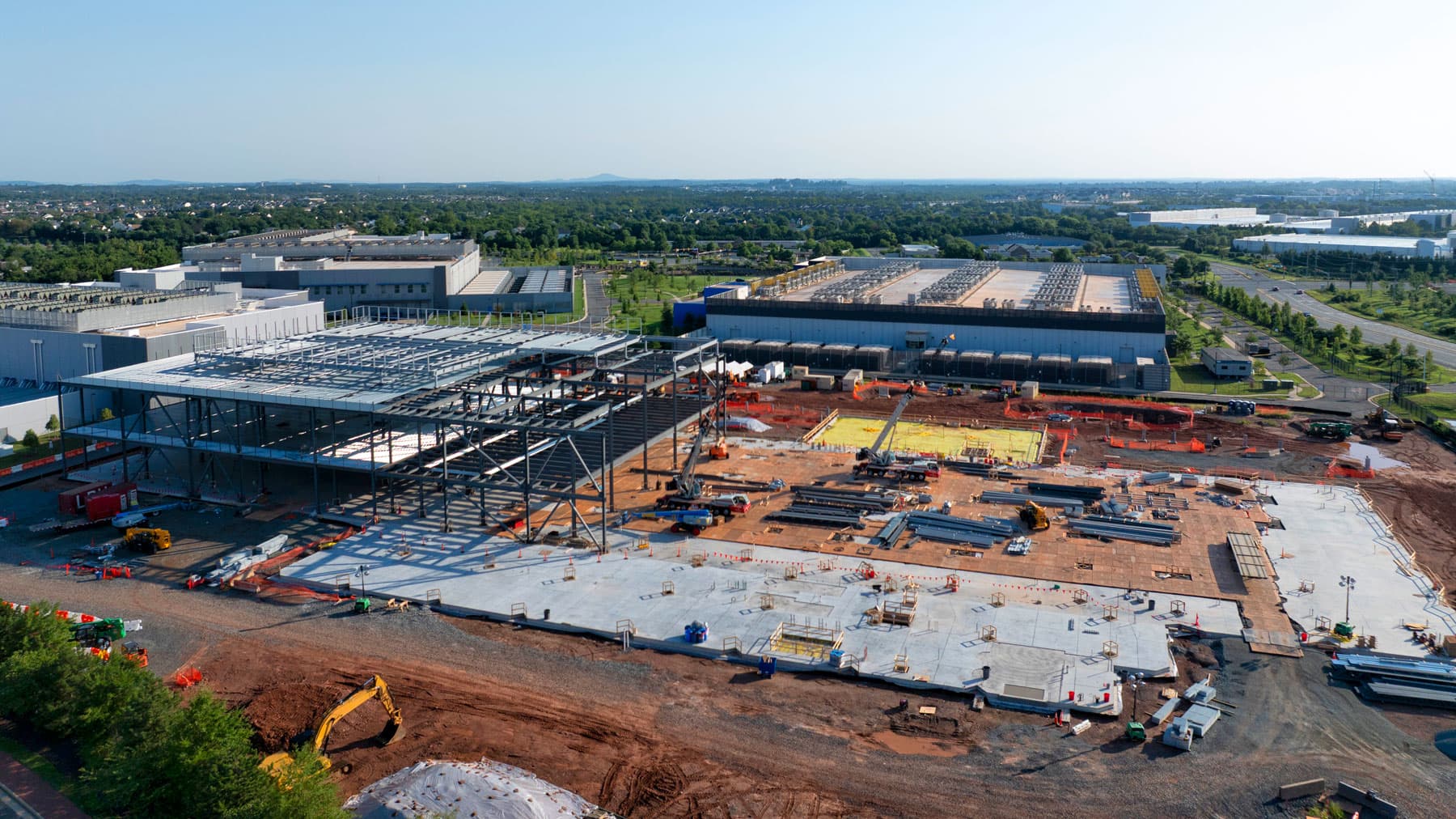
In Loudoun County, Virginia, SDC Capital Partners paid $615 million for 97 acres. That works out to roughly $6.3 million per acre. The median residential land price in the same county, according to a 2025 analysis cited by the National Association of Home Builders, is about $125,000 per acre. Data centers are outbidding home builders by a factor of fifty, and the bidding is not close enough to be called competition.
American housing has spent a decade blaming interest rates, zoning, labor and materials for its supply problem. Those constraints are real and well documented. What is new in 2026 is a bidder that wants the same dirt, answers to a different balance sheet, and never competes for the buyer.
How much do data centers pay per acre?
Between $880,000 and $6.3 million per acre in active markets, against county residential medians closer to $100,000. Amazon paid about $700 million for roughly 189 acres in Prince William County. VanTrust sold about 205 acres in North Las Vegas for $181 million. In parts of Texas, land that traded at $20,000 to $40,000 an acre now clears $350,000.
| Location | Buyer and price per acre | Residential median |
|---|---|---|
| Loudoun County, VA | SDC Capital Partners, $6.3M | $125,000 |
| Prince William County, VA | Microsoft and Amazon, ~$3.75M | $93,750 |
| Fairfax County, VA | Starwood Capital Group, $4M | Not disclosed |
| North Las Vegas, NV | VanTrust sale, ~$880,000 | Not disclosed |
| Route 67, TX | $350,000 (was $20k to $40k) | Not disclosed |
The gap is not a bidding war a builder can win by trimming margin. A residential developer underwrites land as a share of the finished home price. At $4 million an acre, the arithmetic stops working at any density a suburban county will approve. Andrew Clark, a lobbyist for the Home Builders Association of Virginia, told a state hearing in January 2026 that data centers are simply outbidding residential developers across much of Northern Virginia.
In Ashburn, developers reported offers of $4.4 million per acre in 2026 for land already occupied by houses. In Elk Grove Village, Illinois, 55 homes were demolished. The pattern has moved past buying vacant parcels and into buying neighborhoods.
Free resource
When land stops being the differentiator, the brand has to be
If site advantage is priced away by buyers from another industry, positioning becomes the remaining lever. This guide covers how a residential brand platform is built.
Download the guide →Do data centers make housing more expensive?
Indirectly, and through two channels. The first is land: parcels bought for servers leave the residential pipeline permanently. Data centers accounted for 20% to 30% of land development in Loudoun and Prince William counties between 2013 and 2021, a share that has risen by half since. The second is power. ICF projects monthly utility bills rising 15% to 40% by 2030.
The affordability math is unforgiving. NAHB estimates that 65% of US households cannot afford a median-priced new home at $413,595 with a 6% mortgage, and that every $1,000 added to the price of a home prices out roughly 156,405 households. Northern Virginia, the epicentre of the land competition, carries a median home price near $750,000, up 54% over the decade.
Robert Dietz, NAHB chief economist, has framed the constraint plainly, noting that with the builder confidence index below 40 for 15 consecutive months, affordability remains the industry's primary challenge, driven by mortgage rates, costly land, material prices and labour shortages. Land now sits in that list because of a buyer nobody modelled five years ago.
The subsidy nobody prices in
Virginia's sales tax exemption on data center equipment saved operators $2.7 billion between 2015 and 2024, including roughly $1 billion in fiscal 2024 alone. Public policy is discounting the input costs of the bidder that already wins on price. No comparable structure exists for the builder of a starter home on the adjacent parcel.
In July 2026, 23 governors and at least 187 companies, among them 55 utilities and 27 data center developers, signed a voluntary pledge stating that consumers will not shoulder the cost of the build-out and that household electricity bills will fall. Fortune reported that the pledge is non-binding, and Matthew Freedman of the Utility Reform Network observed that several signatories are simultaneously opposing state-level consumer protection bills in California.
A voluntary pledge signed by the party that benefits is not a policy. It is a press release with governors attached.
The second bid: labour
Land is the visible competition. The quieter one is for the people who build. Data center construction work pays an average of $81,800 a year, about $39.33 an hour, roughly 32% above comparable construction work outside the sector, according to Randstad research reported by Fortune. Demand for HVAC engineers is up 67% since late 2022, construction roles 30%, electricians 18%. Randstad puts the overall talent deficit in the hundreds of thousands.
Nobody is drafting these workers. They are choosing the better-paid job, which is the correct decision for them and a structural problem for housing. Fraser Patterson of Skillit described data center budgets as somewhat frothy, and froth in a labour market with a shortage does not create new electricians. It reallocates the existing ones. Jensen Huang has called the AI expansion the largest infrastructure build-out in human history, and infrastructure at that scale draws its trades from somewhere.
This is what makes the land story more serious than a real estate anecdote. Dietz listed costly land and skilled labour shortages as two separate constraints on home building. In the affected metros they are now the same constraint, with the same counterparty on the other side of both. A residential developer bidding on a parcel in Loudoun County is bidding against the entity that is also raising the price of the electrician who would wire the houses.
Where the sources disagree
The size of the shortage this land is being taken from is itself contested. The White House has cited a deficit of 10 million homes. NAHB's own estimate is closer to 1.5 million. That is not a rounding error; it is a difference of nearly seven times, and it matters because the larger figure justifies emergency framing while the smaller one implies a market that could clear with ordinary supply.
The honest reading is that both numbers are constructed from different definitions of household formation and pent-up demand. What neither side disputes is direction. Supply is short, and a well-capitalised industry is now removing developable land from the pipeline faster than policy can respond. CBRE's midyear review of 2026 expects preleasing on data centers under construction to reach 80%, which tells you the demand behind the land buying is contracted, not speculative.
Public opinion has caught up faster than legislation. A Redfin survey found 53% of respondents oppose data centers in their neighbourhoods, and Time documented the spread of organised local resistance through 2026. Community backlash is now a genuine variable in site selection, which is the one force currently slowing the bid.
What residential developers can still control
- Underwrite land competition explicitly. In affected metros, the comparable is no longer the neighbouring subdivision. It is an infrastructure buyer with a different cost of capital.
- Move earlier on optioning. Speed of decision is one of the few advantages a smaller developer retains against a corporate procurement cycle.
- Argue density, with evidence. Higher approved density is the only mechanism that restores residential bidding power per acre.
- Treat proximity as a disclosure item. Noise, traffic and grid infrastructure now shape resale value near large sites, and buyers are researching it.
- Compete on the product, not the parcel. When location advantage is priced away, differentiation moves to design, brand and delivery credibility.
The last point is the uncomfortable one. For thirty years the residential development playbook has treated land as the strategy and everything else as execution. That worked while builders were the highest bidder for dirt in most of the country. In a growing number of metros they are no longer the highest bidder, and the industry is discovering how much of its differentiation was actually a site advantage it purchased.
That shift moves positioning into the place the parcel used to occupy. We follow these forces across our real estate market coverage and in the wider editorial archive, and the brand and launch work that follows from them starts with the product and the positioning, not with the media plan.
FAQ
Why do data centers need so much land?
Scale, power access and buffer. Hyperscale campuses combine large single-storey footprints with substation access, cooling infrastructure and setback from neighbours. Proximity to transmission capacity often matters more than the land price itself, which is why operators overpay for parcels near existing grid infrastructure.
Do data centers raise nearby property values?
Evidence is mixed and local. Landowners who sell capture an extraordinary premium, while neighbours who do not sell face noise, traffic and view impacts that analysts associate with softer resale. The Redfin finding that 53% oppose neighbourhood data centers suggests the market prices the disamenity.
Is this happening outside Northern Virginia?
Yes. Texas, Nevada, Illinois, Georgia and Ohio all show the same pattern at different stages. Northern Virginia is furthest along because it started earliest and concentrated the most capacity.
Will the ratepayer pledge protect household bills?
It carries no legal force. Several states have moved separately to require that data centers bear their own infrastructure costs, which is the mechanism with actual enforcement behind it.
Next step
When the parcel stops being the argument, the brand has to carry the difference.
Talk to TBO →Cover image: Farm Progress
You may also like

Dubai real estate 2026: the crash moved to 2027
Dubai's 2026 handover wave slipped into 2027. What corrected was the resale layer, not the market, and the real test now has a date.
ROAD to Housing Act: the chassis rule matters most
The 21st Century ROAD to Housing Act carries 56 provisions. The one that changes a real cost is a chassis rule, not zoning reform.
Office-to-residential conversion: the steel problem
Office-to-residential conversion was the rare housing consensus. Then columns buckled at 235 East 42nd Street and three New York sites went quiet.