ROAD to Housing Act: the chassis rule matters most
The 21st Century ROAD to Housing Act carries 56 provisions. The one that changes a real cost is a chassis rule, not zoning reform.
The 21st Century ROAD to Housing Act became law on 11 July 2026, after Congress passed it on 23 June. It carries 56 provisions, a bipartisan authorship list running from Elizabeth Warren to Tim Scott, and a description from the Terner Center at Berkeley that most coverage repeated verbatim: the most significant housing legislation in a generation.
The description is defensible. The conclusion most readers drew from it is not. Read the bill by what it actually changes rather than by what it authorizes, and the single most consequential line is not about zoning, financing, or federal land. It is a 1976 manufacturing standard about a steel frame.
What the bill does, in the order that matters
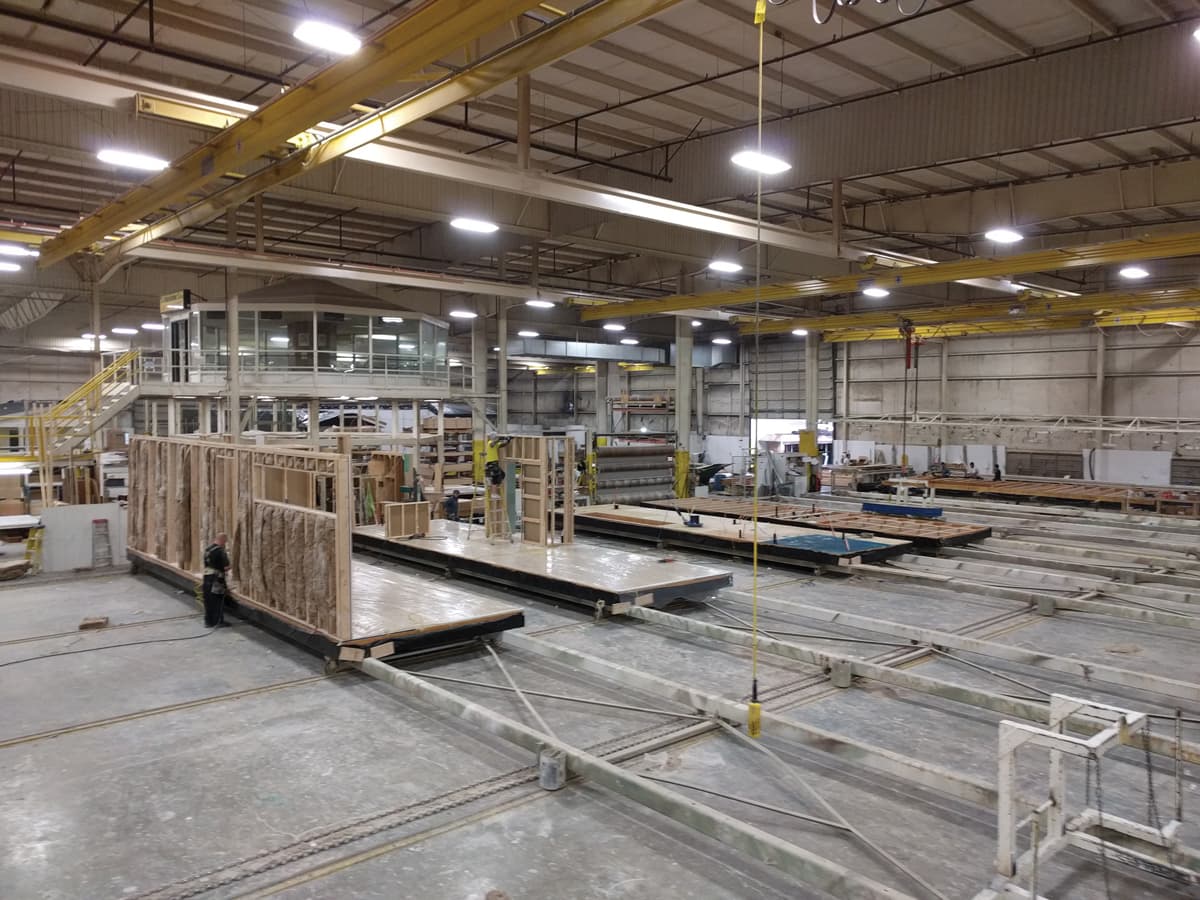
Section 301 removes the permanent chassis requirement for manufactured homes. Under the old HUD code, a factory-built home had to retain the steel frame it was transported on, permanently, even after it was set on a foundation and never moved again. The Niskanen Center estimates removing it cuts $5,000 to $10,000 per home, roughly 10% off the purchase price.
That is the whole mechanism. No appropriation, no matching grant, no local approval. A federal agency stops requiring a piece of steel that stopped serving a purpose the moment the house arrived, and the cheapest housing product in America gets about a tenth cheaper.
Compare that to the provisions that dominated the coverage. Section 208 creates a $200 million annual competitive grant program, running seven years, for jurisdictions that increase housing supply. Section 213, the BUILD Now Act, ties Community Development Block Grant money to production, with bonuses for accelerated homebuilding and modest reductions for lagging grantees. Section 107 directs HUD to develop recommended practices for zoning codes, many of which date to the 1920s.
Each of those is an incentive addressed to a city that remains free to decline it.
Did the ROAD to Housing Act pass the Senate?
Yes. Congress passed the 21st Century ROAD to Housing Act on 23 June 2026, and it became law on 11 July 2026. It was a bipartisan product, with Republican and Democratic sponsors including Tim Scott, French Hill, Elizabeth Warren and Maxine Waters. The final package contains 56 provisions across housing supply, manufactured housing, and federal program reauthorization.
The constraint the bill cannot touch
American housing supply is throttled at the parcel level, by municipal land use rules that the federal government has no authority to override. Washington can fund, condition, advise and nudge. It cannot rezone a lot.
This is not a critique from the bill's opponents. It is the assessment of its most sympathetic analysts. The Terner Center writes that the individual components are mostly technical or narrowly tailored reforms, and that none of them alone will likely change the game for housing supply and affordability. Niskanen, making the case for the bill, concedes it remains far too difficult to build anything other than a single-family home in most of the country.
The federal government cannot rezone a single lot in America. It can only make the alternatives cheaper.
Which is precisely why Section 301 outranks the rest. It does not ask a city council for anything. It changes what a factory can build and what a buyer pays, and it applies in every jurisdiction simultaneously on the day it takes effect.
Provision by provision: what binds and what asks
| Provision | What it changes | Requires local consent? |
|---|---|---|
| Sec. 301, permanent chassis requirement | Removes steel frame mandate; $5,000 to $10,000 per home | No |
| Sec. 102, point-access block buildings | HUD guidance for single-stair buildings up to six storeys | Yes, adoption is local |
| Sec. 107, Housing Supply Frameworks Act | HUD recommended zoning practices | Yes, advisory only |
| Sec. 208, innovation fund | $200m annual competitive grants, seven years | Yes, jurisdictions must apply |
| Sec. 213, BUILD Now Act | Ties CDBG allocations to housing production | Partially, via funding pressure |
| Sec. 212, RAD expansion | Raises programme cap by 100,000 units | No, federal programme cap |
| Sec. 105, FHA pilot | Four-year pilot for mortgages under $100,000 | No |
What is the permanent chassis requirement for manufactured housing?
It was a HUD code rule requiring factory-built homes to keep the steel transport frame permanently attached, even once installed on a site. It added cost and constrained design, particularly for units placed on foundations or used as accessory dwelling units. Section 301 of the ROAD to Housing Act eliminates it.
The stairwell rule that quietly matters
Section 102 directs HUD to issue guidance for point-access block buildings, apartment buildings up to six storeys served by a single stairwell. American codes have required two stairs in most multifamily buildings for decades, a rule applied more broadly here than in any comparable housing market, and one that has quietly shaped what mid-rise housing in the United States can look like.
The second stair consumes floor plate. On a small urban lot it can be the difference between a viable building and no building, because the circulation core eats similar square footage whether the floor holds four units or ten. It also pushes plans toward double-loaded corridors, which is why so much American mid-rise housing consists of near-identical units facing one direction, without cross ventilation or corner light.
Single-stair rules are part of why an apartment building of the same height in Berlin or Copenhagen can hold larger, better-lit family units on a narrower parcel. Several US states and cities moved on this before the federal bill, and Section 102 compels none of them. It gives HUD the job of writing reference guidance that state and local code bodies may then adopt.
That places it firmly in the advisory column of the table above, and it is the sharpest illustration of the bill's structural limit. The provision most likely to improve the design quality of American apartments is one Washington can only recommend.
The quiet consequence for product
Strip the policy language away and the bill is a bet on a specific kind of housing: smaller, factory-built, financed with a mortgage under $100,000, and increasingly placed on lots as accessory units. Section 303 updates FHA lending rules for used manufactured homes serving as ADUs. Section 304 reauthorises the PRICE grants for seven years. Section 105 pilots the small-balance mortgage the market largely abandoned.
None of that is glamorous, and all of it points the same direction. The product that gets cheaper is the product the industry has spent forty years treating as a category of last resort.
Free resource
When the product changes, the positioning has to change with it
Our brand platform guide covers how to reposition a development when unit size, price point and buyer profile all move at once.
Download the guide →For developers and builders, the practical reading order is roughly this:
- Treat Section 301 as a cost input available now, not a policy debate. It changes a bill of materials.
- Assume zoning provisions move at the speed of your slowest city council, and plan pipelines accordingly.
- Watch the Section 105 FHA pilot, because a functioning sub-$100,000 mortgage reopens a buyer segment that has been priced out of financing, not out of housing.
- Read the Section 208 grants as a competitive process with a seven-year window, not as an entitlement.
- Expect the affordability story to be told in product terms, smaller and factory-built, before it is told in supply terms.
The National Association of Home Builders has framed the act as the opening of a broader reform cycle, and the Bipartisan Policy Center has published the clearest section-level accounting of what survived the final negotiation. Both are worth reading against each other, because the gap between them is the gap between authorised and binding.
Frequently asked questions
What is the 21st Century ROAD to Housing Act?
A federal housing package that became law on 11 July 2026, containing 56 provisions across housing supply, manufactured housing standards, zoning guidance, and reauthorisation of programmes including HOME, RAD and CDBG-DR. It was passed by Congress on 23 June 2026 with bipartisan sponsorship.
Does the act override local zoning?
No. It cannot. The act directs HUD to publish recommended zoning practices and ties some Community Development Block Grant funding to housing production, but land use authority remains with states and municipalities. Every zoning provision in the bill operates through incentive or advice.
How much does removing the chassis requirement save?
Between $5,000 and $10,000 per home, roughly 10% of the purchase price of a manufactured home, according to the Niskanen Center. The saving applies without any local approval, which makes it the fastest-acting cost reduction in the package.
What did the final bill leave out?
It appropriates no new money for demand-side programmes such as rental assistance expansion, and it does not address HUD staffing reductions or changes to homelessness policy. The Terner Center notes the components are mostly technical reforms, none of which alone changes the supply picture.
Next step
A cheaper, smaller product is a different brand problem, not the same one at a lower price.
Talk to TBO →Further reading on market structure and positioning in our real estate market hub, across the editorial archive, and in how we approach brand and launch strategy.
Cover image: MHInsider
You may also like
Manhattan ultra-luxury surge: $20M+ contracts up 140%
Manhattan ultra-luxury sales rose 30% YoY to $7.5B in Q1 2026 while the broader market softened. Two markets sharing one zip code.

Dubai real estate 2026: the crash moved to 2027
Dubai's 2026 handover wave slipped into 2027. What corrected was the resale layer, not the market, and the real test now has a date.

Data centers are outbidding home builders for land
Data centers are outbidding home builders at up to 50x the county land median. What that does to housing supply, and what residential developers can still control.