Prime real estate 2026: where global wealth is moving
Prime real estate in 2026 is splitting: Tokyo and Dubai surge while US luxury cools. Where the wealthy are buying, and why the map just redrew itself.
Every single day in 2026, roughly 89 people cross the US$30 million threshold and join the ranks of the ultra-wealthy. They are not buying the same homes their predecessors did, and they are not buying them in the same cities. Prime real estate, the top echelon of the residential market, has stopped behaving as one global asset class and started splitting into winners and laggards that sit on opposite ends of the performance table.
The clearest signal of that split came this spring. According to the Knight Frank Wealth Report 2026, Tokyo led the world with a 58.5% jump in prime residential prices in 2025, and Dubai followed at 25.1%. Over the same window, North America's prime markets fell by an average of 0.9%. The wealthy are getting wealthier, but the geography of where they put that money has been redrawn.
Prime residential real estate is the top 5% of a market by value, meaning the homes that ultra-high-net-worth individuals buy for residence, status, and capital preservation. It is measured globally by indices such as Knight Frank's Prime International Residential Index (PIRI 100) and the Savills Prime Residential World Cities benchmark, both of which track price performance across the world's leading luxury markets.
The 2026 map: surging East, cooling West
The PIRI 100 rose an average of 3.2% year over year in 2025, outperforming mainstream housing for the second consecutive year. But the average hides a violent divergence. The Middle East led all regions at 9.4%, Latin America and the Caribbean followed at 4.7%, while Asia-Pacific (3.6%) and Europe (3.3%) posted steady gains. North America was the only region in the red.
Manila ranked third globally with a 17.5% rise, and India's tech capital, Bengaluru, climbed 32 places to become the eighth fastest-growing market on the back of a 9.4% increase. The story of 2026 prime real estate is, increasingly, a story told in Tokyo, Dubai, Manila, and Bengaluru, rather than in the traditional Western trophy markets.
That is not to say the West collapsed. Savills reports that prime values across its 30 world cities rose 1.8% in 2025 and are forecast to grow a further 1.3% in 2026, with Seoul leading after a 14.3% surge and Singapore recovering to 2%–3.9% growth. Resilient, yes. But the engine of luxury price growth has moved decisively eastward and toward the Gulf.
Who is buying, and why they are mobile
The demand side explains the map. The global UHNWI population reached 713,626 in early 2026, up from 551,435 five years earlier, an addition of 162,191 new ultra-wealthy individuals in half a decade. North America holds 37% of that population, Asia-Pacific almost 31%, and Europe just over 25%, per Knight Frank's wealth sizing model.
More important than the count is the mobility. The Henley Private Wealth Migration Report projects that as many as 165,000 millionaires could relocate in 2026, the largest migration of private wealth on record. The UAE remains the world's leading magnet, drawing a net inflow of nearly 10,000 millionaires, propelled by the Golden Visa, zero personal income tax, and Dubai's infrastructure.
When the wealthy move, they buy. Every golden-visa relocation, every family office shifting its base, is a prime purchase waiting to happen in the destination city, which is precisely why Dubai's prime prices ran 25.1% in a single year while several Western markets stalled.
Where are the wealthy buying in 2026?
The short answer: they are buying in tax-efficient, supply-constrained hubs that double as wealth-migration destinations. Dubai, Tokyo, Seoul, Manila, and select Asian and Gulf cities are absorbing the bulk of new prime demand, while traditional US trophy markets cool. Mobility, not just money, now sets the direction of luxury price growth.
Branded residences are the connective tissue across all of these markets. The number of branded residential schemes was set to reach 910 by the end of 2025 (19% annual growth), with the global total projected to hit 1,747 by 2032, according to the Savills Branded Residences report. A relocating buyer in an unfamiliar city trusts a Four Seasons or Aman nameplate before they trust the local market. The brand is the shortcut to confidence.
Why is US luxury softening while the East surges?
In practical terms, the US prime slowdown is driven by transaction volume rather than any loss of wealth. Douglas Elliman's Q1 2026 results show gross transaction value falling to $8.6 billion from $9.9 billion a year earlier, with closed deals dropping below 4,400. American wealth is still being created; it is simply transacting less, as rates and pricing keep sellers and buyers apart.
| Region | Prime price growth 2025 | 2026 signal |
|---|---|---|
| Middle East | +9.4% | Strongest; UAE wealth magnet |
| Latin America & Caribbean | +4.7% | Resilient |
| Asia-Pacific | +3.6% | Tokyo, Seoul, Manila lead |
| Europe | +3.3% | Steady, supply-constrained |
| North America | -0.9% | Volume slowdown, not wealth loss |
The takeaway for developers and brokers is uncomfortable but clear: capital is global and impatient, and it rewards the markets that make it easy to arrive, stay, and feel certain about the purchase.
In 2026, prime real estate follows where the wealthy chose to land, rather than where the wealth was created.
What this means for developers and brands
For anyone selling at the top of the market, the divergence reshapes strategy. A few concrete moves separate the developers capturing mobile capital from those waiting for it to return:
- Position for the relocating buyer, not just the local one, because your audience may be arriving from another continent.
- Treat a credible brand as the trust shortcut a foreign buyer needs before they ever visit.
- Lead with narrative and place-making, because trophy buyers purchase a story before a floor plan.
- Read the migration data, not only the local comps, when you price and time a launch.
- Build a brand platform robust enough to travel across borders and languages.
Free resource
Build a brand that travels across borders
Mobile, global buyers trust a brand before they trust a market. Our brand platform guide shows how to define the positioning, purpose, and narrative a prime development needs to sell across continents.
Download the guide →The cities winning in 2026 share a profile: constrained supply, tax efficiency, and a story compelling enough to pull capital across borders. For a deeper read on how the luxury tier behaves differently from the broader market, see our coverage in the real estate market hub and the trends hub.
Frequently asked questions
What is prime real estate?
Prime real estate is the top 5% of a residential market by value, meaning the homes ultra-high-net-worth individuals buy for residence, status, and capital preservation. It is tracked globally by indices such as Knight Frank's PIRI 100 and the Savills Prime Residential World Cities benchmark, which measure price performance across leading luxury markets.
Which cities had the strongest prime growth in 2025?
Tokyo led the world with a 58.5% rise in prime residential prices, followed by Dubai at 25.1% and Manila at 17.5%, according to the Knight Frank Wealth Report 2026. The Middle East was the strongest region overall at 9.4%, while North America was the only region to decline, at -0.9%.
Why is US luxury real estate cooling in 2026?
The US prime slowdown is mainly about transaction volume, not lost wealth. Douglas Elliman's Q1 2026 gross transaction value fell to $8.6 billion from $9.9 billion a year earlier. Higher rates and a wide bid-ask gap are keeping buyers and sellers apart, even as American wealth creation continues to accelerate.
How is wealth migration changing prime markets?
Henley & Partners projects up to 165,000 millionaires could relocate in 2026, the largest private-wealth migration on record. When the wealthy move, they buy, so destination hubs like the UAE absorb a disproportionate share of new prime demand, a key reason Dubai's prime prices rose 25.1% in a single year.
Why do branded residences matter in 2026?
For mobile, cross-border buyers, a trusted brand reduces the risk of buying in an unfamiliar market. The branded residence pipeline is set to reach 910 schemes by the end of 2025 and 1,747 by 2032, per Savills. A relocating buyer often trusts a hotel nameplate before they trust the local developer or market.
Next step
If your next prime development needs to win buyers arriving from another continent, TBO builds the brand and narrative that travel with them.
Talk to TBO →You may also like
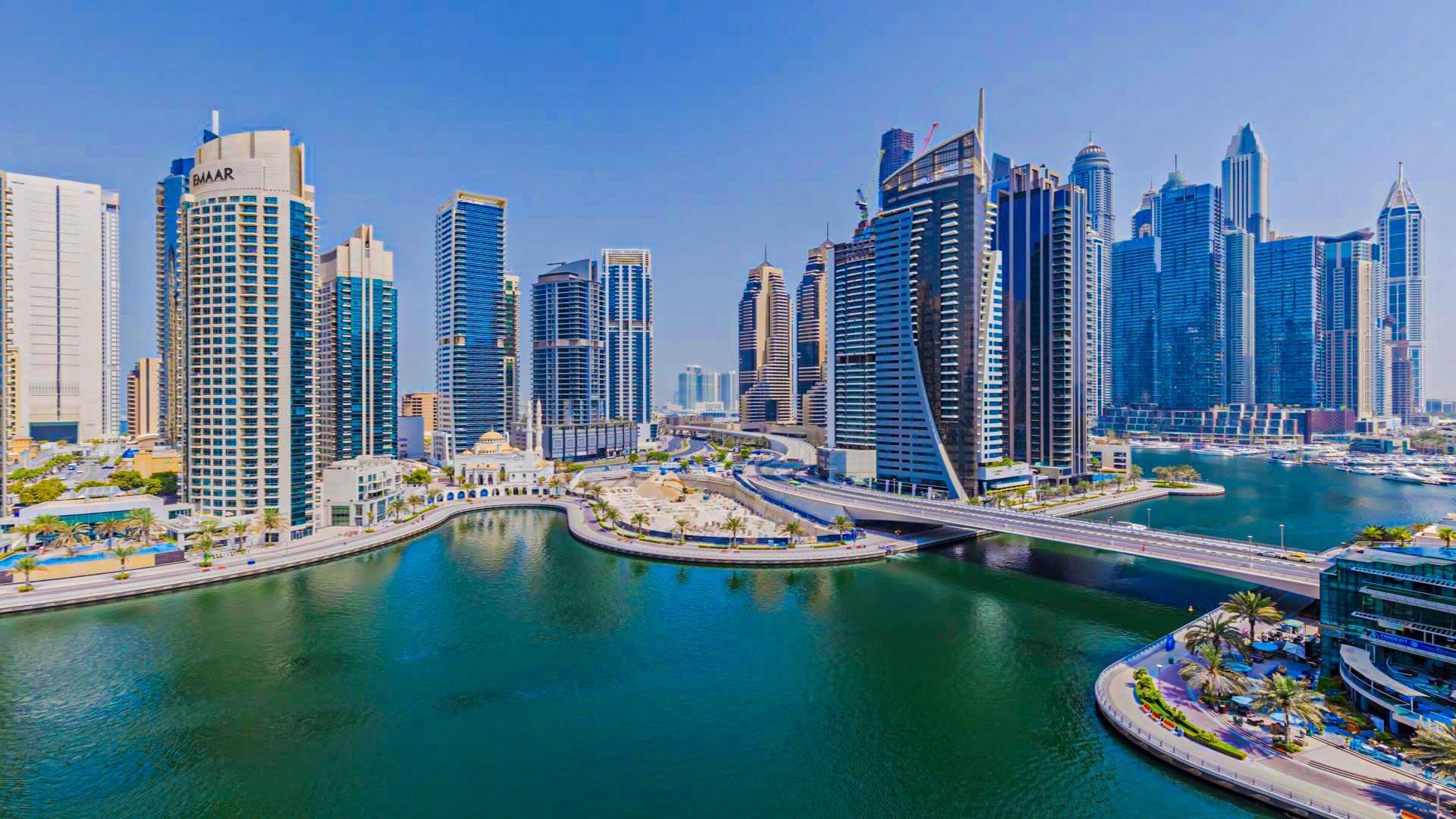
Dubai luxury real estate in 2026: the split market
Dubai luxury real estate hit a record $5.1bn in $10M+ sales in H1 2026, even as supply surges. Why the prime market decoupled from the rest.
US luxury real estate 2026: a two-speed market
US luxury real estate in 2026 is not booming or busting. It is splitting. Why the exceptional clears, the ordinary stalls, and brand decides.
Quiet luxury real estate: the 2026 brand playbook
Quiet luxury is not fading in 2026 — it is becoming the brand language of super-prime real estate. Why restraint now sells the larger home.