Miami real estate market: the 2026 split
The Miami real estate market in 2026 is two markets: ultra-luxury tops New York on wealth flight while condos carry the world's top bubble risk.
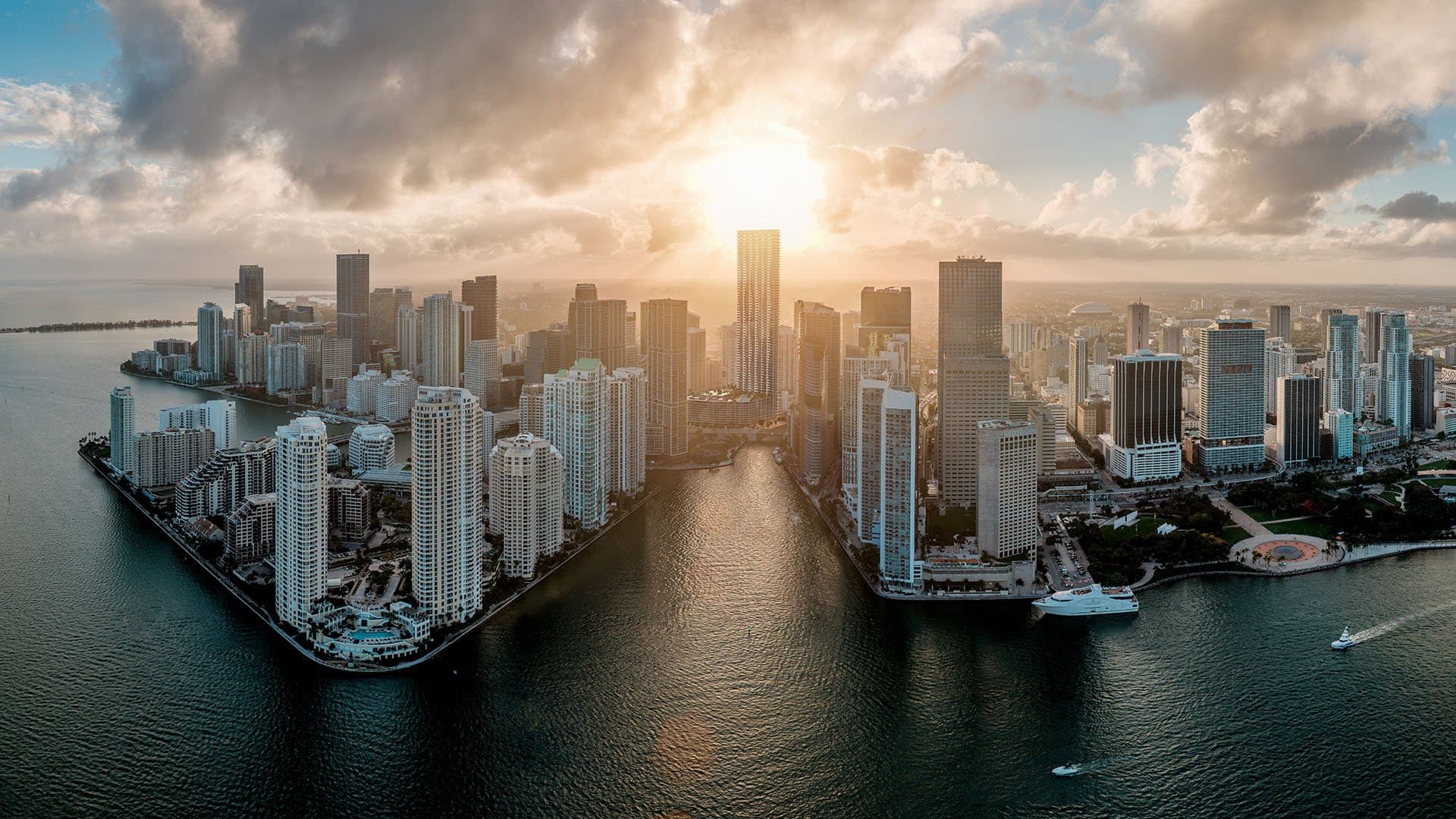
The Miami real estate market in 2026 refuses to give a single answer. On July 24, Bloomberg reported that Miami's ultra-luxury home sales overtook New York and the San Francisco Bay Area, powered by a continued flight of wealth to South Florida. The same week, the UBS Global Real Estate Bubble Index still ranked Miami the most at-risk housing market on earth, with a bubble score of 1.73 — above its 1.5 high-risk threshold and ahead of Tokyo (1.59) and Zurich (1.55).
Both are true at once. Miami is not one market having a good year or a bad one. It is two markets moving in opposite directions under the same ZIP codes — and understanding the split is the difference between buying an appreciating asset and inheriting someone else's liability.
What is happening in the Miami real estate market in 2026?
The Miami market has bifurcated. At the top, scarcity-driven luxury and international capital are pushing single-family and $1M-plus sales to record highs. In the middle, an aging condo stock is being repriced downward by special assessments, soaring insurance costs, and rising inventory. Location no longer explains value on its own; the building — and its balance sheet — now does.
In today's Miami, two identical addresses can move in opposite directions. One is scarcity; the other is a special assessment waiting to be voted on.
Why is Miami luxury booming while condos struggle?
Because the two segments answer to different buyers. The luxury tier runs on wealth migration and cash, largely indifferent to mortgage rates. Miami's luxury market posted a 21% jump in sales and a 15.6% rise in dollar volume year-over-year in Q1 2026, according to the David Siddons Group, while the $1M-plus segment led the market with sales up more than 20%. That demand is concrete: it is filling a branded-residence pipeline of more than 50 branded towers now rising across the city.
- Cipriani Residences Miami — the Brickell tower topping South Florida's new luxury AI-visibility index.
- Nobu Residences at 619 Brickell — the hospitality brand extending into for-sale living.
- Breitling-branded Brickell tower — planned by Partners Group, a signal that even watchmakers now sell square footage.
- Palm Tree Residences Miami — a downtown debut betting on lifestyle branding.
The through-line: at the top, buyers are not purchasing shelter. They are purchasing a brand, a passport hedge, and scarcity — none of which a rate cut or a rate hike changes much.
Free resource
In a market of 50 branded towers, what makes a buyer choose yours?
When every address carries a name, the brand platform is the product. See how to build one that a global buyer believes before the sales gallery opens.
Download the guide →The other Miami: the condo reckoning
Beneath the trophy towers sits a very different market. The broad Miami market is roughly flat — Redfin puts the median sale price near $652,000, essentially unchanged year-over-year — but the condo segment is under real pressure. Post-Surfside safety legislation forced reserve funding that arrives as sudden special assessments; insurance premiums have surged; and inventory is climbing in submarkets like Doral, where more listings now meet lower condo prices.
This is why the UBS bubble score matters. It is not calling a crash so much as flagging a valuation stretched thin against fundamentals. The clearest tell for a buyer is an older oceanfront building whose HOA fees look suspiciously low for its age — almost always deferred maintenance and future liability, not a bargain. Value in Miami is now decided at the building level, not just the block.
| Luxury Miami | Condo Miami | |
|---|---|---|
| Demand driver | Wealth flight, scarcity, brand | Local end-users, financing-sensitive |
| 2026 direction | Records, +20% in $1M-plus | Flat to falling, repricing risk |
| Rate sensitivity | Low (cash buyers) | High |
| Hidden risk | Overpaying for a name | Assessments and insurance shocks |
Is Miami real estate a good investment in 2026?
It can be — if you buy the right Miami. The scarcity-and-brand tier has structural tailwinds that migration keeps feeding, while the generic condo tier carries balance-sheet risk that no location can offset. Even the base case is cautiously constructive: MIAMI Realtors and RWorld project South Florida existing-home sales rising about 3% in 2026 and 3.6% in 2027, after four straight years of decline. Recovery, not rocket fuel.
For developers and brokerages, the strategic takeaway is sharper than the forecast. In a market splitting into winners and liabilities, positioning is what moves a unit from the vulnerable pile to the scarce one. That is a brand and positioning problem before it is a pricing one — the better-branded tower absorbs while the better-located one waits.
Frequently asked questions about the Miami real estate market
Are Miami housing prices dropping in 2026?
The broad market is roughly flat — Redfin reports a median near $652,000, essentially unchanged year-over-year. But averages hide the split: luxury single-family prices are rising by double digits while parts of the condo market are falling under assessment and insurance pressure.
Why is Miami considered the world's biggest housing bubble risk?
The UBS Global Real Estate Bubble Index gave Miami a score of 1.73, the highest of any city studied and above its 1.5 high-risk threshold. The score reflects prices stretched against local incomes and rents, not a guaranteed crash.
Is it a good time to buy property in Miami?
It depends on the segment. Scarce, well-located, or credibly branded property has genuine demand support from wealth migration. Generic older condos carry real risk from special assessments and rising insurance, and demand careful due diligence at the building level.
Why are people still moving to Miami?
Tax advantages, lifestyle, and the ongoing relocation of capital and companies to South Florida — the same "wealth flight" that pushed Miami's ultra-luxury sales past New York and the Bay Area in 2026 — continue to draw high-net-worth buyers even as the broader market cools.
Miami in 2026 is not a market you can summarize in one number. It rewards the buyer who reads the building, not the headline — and it punishes the one who mistakes an average for an answer.
Next step
In a split market, the better-positioned address wins — brand is what puts you on the right side of the line.
Talk to TBO →Related reading: explore the real estate market hub and more studies and guides on the TBO blog.
Cover image: MILLION Luxury