Branded residences are moving downmarket in 2026
Branded residences grew from 323 schemes in 2015 to 910 in 2025. Growth is now midscale and rental. Does the 33% price premium survive that scale?
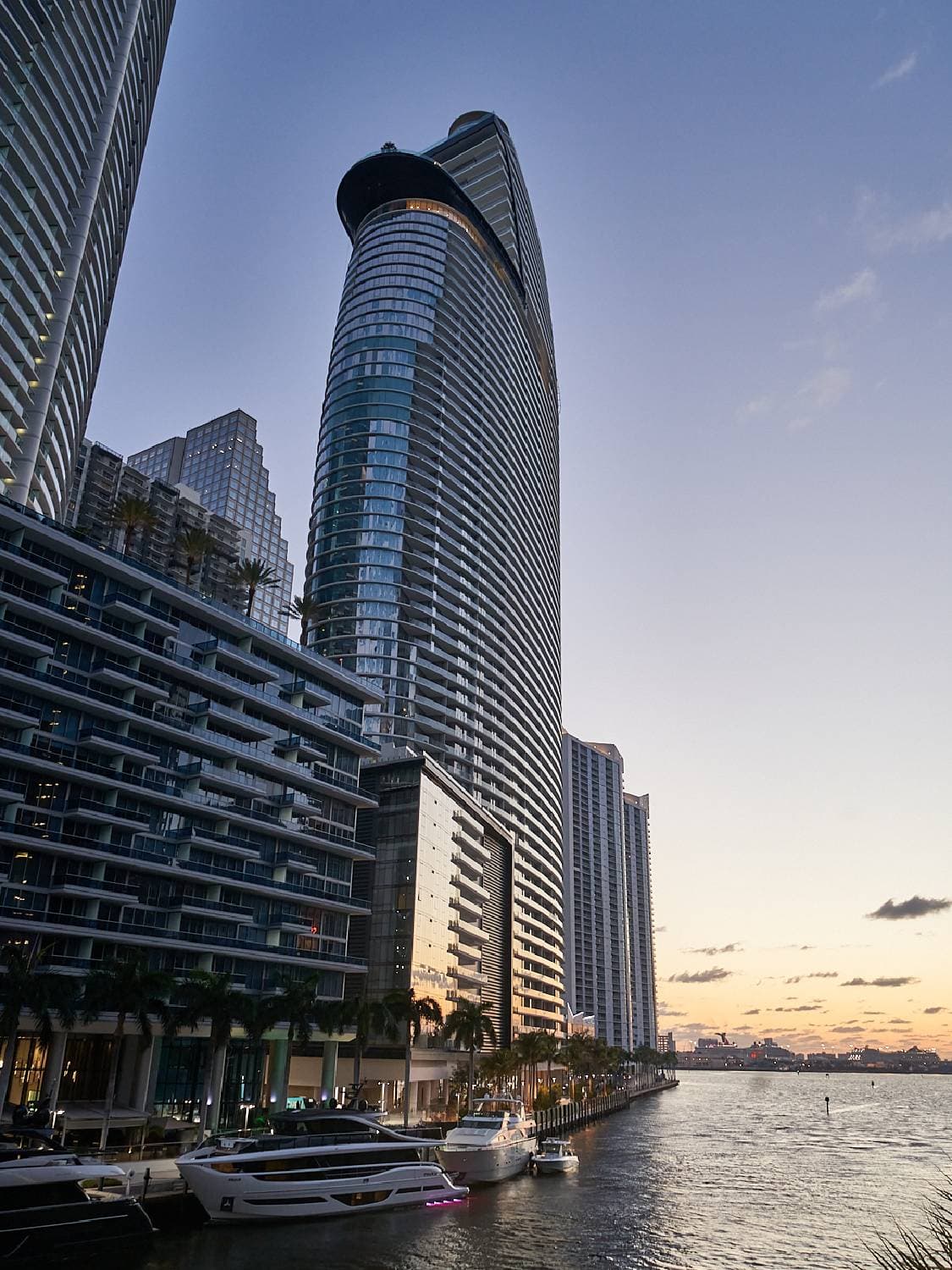
For twenty-five years, the branded residence was a scarcity product. A hotel operator lent its name to a tower, buyers paid roughly a third more than they would have paid next door, and the arithmetic worked because there were so few of them. In 2015 there were 323 schemes worldwide. By the end of 2025 there were 910, an increase of 182% in a decade, according to ArentFox Schiff's analysis of the sector.
That growth is usually reported as a success story. It is also a pricing problem. A premium built on scarcity does not survive abundance automatically, and the newest entrants in the category are not competing at the top. They are competing below it.
What is a branded residence?
A branded residence is a private home sold with a consumer brand attached, most often a hotel operator, where the brand licenses its name and typically provides services, standards and management. The buyer pays a premium over a comparable unbranded property. The developer pays licensing and management fees, and gains faster absorption and access to the brand's global buyer base.
The structure has been remarkably stable. What has changed is who qualifies for it. North America alone now holds 260 completed projects and 116 under development, with 37 of 50 US states hosting at least one scheme. A category that began in a handful of resort markets is now a normal feature of secondary American cities.
Does the price premium still hold?
On average, yes, but unevenly. Savills research on branded residence premiums puts the global average at roughly 33% over comparable unbranded stock. The distribution is the interesting part: resort locations achieve about 39%, while urban markets average 30%. Nine percentage points separate a beach from a boulevard.
That gap is not about brand strength. Marriott, Four Seasons and Aman operate in both. It is about what the brand actually has to deliver in each setting. In a resort, the operator supplies something the buyer cannot assemble alone: staff, food and beverage, spa, security, rental management, an ecosystem. In a dense city, much of that is available on the street for free. The premium tracks operational difficulty, not logo recognition.
| Metric | Figure | Source |
|---|---|---|
| Schemes worldwide, 2015 | 323 | ArentFox Schiff |
| Schemes worldwide, 2025 | 910 | Savills / ArentFox Schiff |
| Year-on-year growth, 2025 | +19% | Savills |
| Average global price premium | 33% | Savills |
| Resort premium / urban premium | 39% / 30% | Savills |
| Midscale segment growth, 2024 | +24% | ArentFox Schiff |
The brand is moving down the price ladder
The clearest signal is not in the luxury pipeline. It is in the midscale segment, which grew 24% in 2024, and in two decisions taken by the two largest hotel companies in the world.
Marriott is entering branded apartment rentals, with W the first brand to add branded rental units, as reported by Skift. Hilton launched Apartment Collection through a partnership with Placemakr, adding up to 3,000 units to roughly 10,000 apartment-style units it already operates, according to Hotel Dive. Chris Silcock, Hilton's president of global brands, described homestyle stays as the fastest-growing segment domestically and globally.
Read those two moves together and the direction is unmistakable. The brand is no longer reserved for the buyer who can pay a 33% premium on a purchase. It is being offered to the tenant who pays a smaller premium on a monthly rent. The economics are different, the volume is far larger, and the exclusivity that justified the original premium is being spent to buy that volume.
A brand that appears at every price point stops being evidence of quality and becomes evidence of distribution. Distribution is worth a lot. It is not worth 33%.
Free resource
What a brand platform has to answer before a tower is named
If the premium follows operational difficulty rather than the logo, the brand decision has to be made at product level. This guide covers the questions that come before naming and identity.
Download the guide →Where the next 900 schemes are going
Geography explains part of the compression. Miami and Dubai remain the two deepest markets by completed and planned projects, and both are now dense enough that a brand alone no longer signals scarcity to a buyer walking the waterfront. Aston Martin, Porsche, Bentley, Missoni and half a dozen hotel operators occupy the same few square kilometres.
Asia is where the volume argument is clearest. C9 Hotelworks, in its Asia Branded Residences Market Review 2026, projects branded stock reaching roughly 17% of total market share in the region this year, an increase of about 3,300 units over standalone developments. Thailand alone has surpassed THB 205 billion, close to USD 6.4 billion, giving it the largest share of launched supply in Asia. These are not trophy markets. They are volume markets with brands attached.
Beyond that, the pipeline is moving into Portugal, Greece, Vietnam and East Africa, markets where the local comparable is not a competing branded tower but an unbranded one. In those places the premium still does what it was designed to do, which is to import trust where a buyer has no way to assess a developer. That is the honest function of a licensed brand, and it has a shelf life: it lasts until the local market produces developers whose own names carry the same assurance.
Are branded residences a good investment?
They have historically outperformed comparable unbranded stock on resale and rental yield, particularly in resort markets and in cities with constrained luxury supply. The risks are structural rather than cyclical: management agreements can expire before ownership does, service charges compound, and a residents' association can hold power to terminate the brand relationship.
That last point deserves more attention than it gets. A branded residence is the only asset class where a buyer pays a premium for something the seller does not permanently own. ArentFox Schiff flags exactly this mismatch, along with the difficulty of financing co-located schemes where the hotel component must remain viable for the residential component to keep its brand. The premium is real, and it is contractual, and contracts end.
Which brands are still buying scarcity
The most interesting defenders of the premium are not hotel companies at all. Automotive and fashion houses have entered the category on the opposite logic: Porsche, Bentley, Aston Martin and Pininfarina; Fendi, Armani and Versace; Nobu and Cipriani in food and beverage. These brands cannot scale a residential portfolio without damaging the parent business, which is precisely why their schemes hold price.
Aston Martin's Miami tower works as a branded residence for the same reason the car works as a car: there will not be one in every city. The hotel groups face the opposite mandate. Their business model rewards keys, coverage and loyalty enrolment, and Hilton Honors alone counts more than 235 million members. Growth is the point. Scarcity is the cost.
For developers, the practical question is no longer whether to attach a brand. It is which kind of brand problem to buy:
- Operator brands deliver absorption speed, an international buyer pipeline and service infrastructure, at the cost of a premium that erodes as the operator scales.
- Non-hospitality brands deliver scarcity and cultural distinction, at the cost of thinner operational substance and a narrower buyer pool.
- Proprietary brands, built by the developer, deliver a margin that is not shared and an asset that does not expire, at the cost of having to earn recognition rather than license it.
The third option is the one the market has spent two decades avoiding, and the one the numbers now argue for. When 910 schemes compete and midscale is the fastest-growing tier, licensing a name is no longer differentiation. It is table stakes. Knight Frank's guidance on how to build a luxury branded residence is consistent on this: brand partnership works when the operational promise is real. More on brand strategy for developers sits in our real estate branding hub, alongside the wider TBO editorial blog and our brand positioning work for developers.
Frequently asked questions
What is the difference between branded residences and serviced apartments?
Branded residences are sold to individual owners who hold title, with a brand licensed to the scheme. Serviced apartments are typically rented, held by a single owner or operator, and let on short or medium terms. The recent hotel-group launches blur this line by applying brands to rental stock.
How do branded residences work for developers?
The developer signs a licensing and management agreement, pays fees tied to sales and ongoing operations, and builds to the brand's standards. In exchange, the scheme gains price premium, faster absorption and access to the brand's distribution. Margin depends on whether the premium exceeds the total fee load.
Are branded residences worth it for buyers?
In resort markets with genuine service infrastructure, the premium has historically been supported by resale performance and rental yield. In dense urban markets, where the same services are available independently, the case is weaker and the premium narrower, at around 30% versus 39%.
Is the branded residence premium shrinking?
The global average has held near a third, but composition is shifting toward lower price points and rental products. As midscale and branded rentals grow, the blended premium is likely to compress, with resort and scarcity-led schemes retaining the strongest pricing power.
Next step
If a licensed name no longer differentiates a tower, the brand has to be built into the product before it is written on the facade.
Talk to TBO →Cover image: CNA Luxury