Energy efficiency and house value: the 1.6% problem
Energy efficiency adds 1.6% to a home price while new rules add thousands in cost. That gap is a narrative problem, not an engineering one.
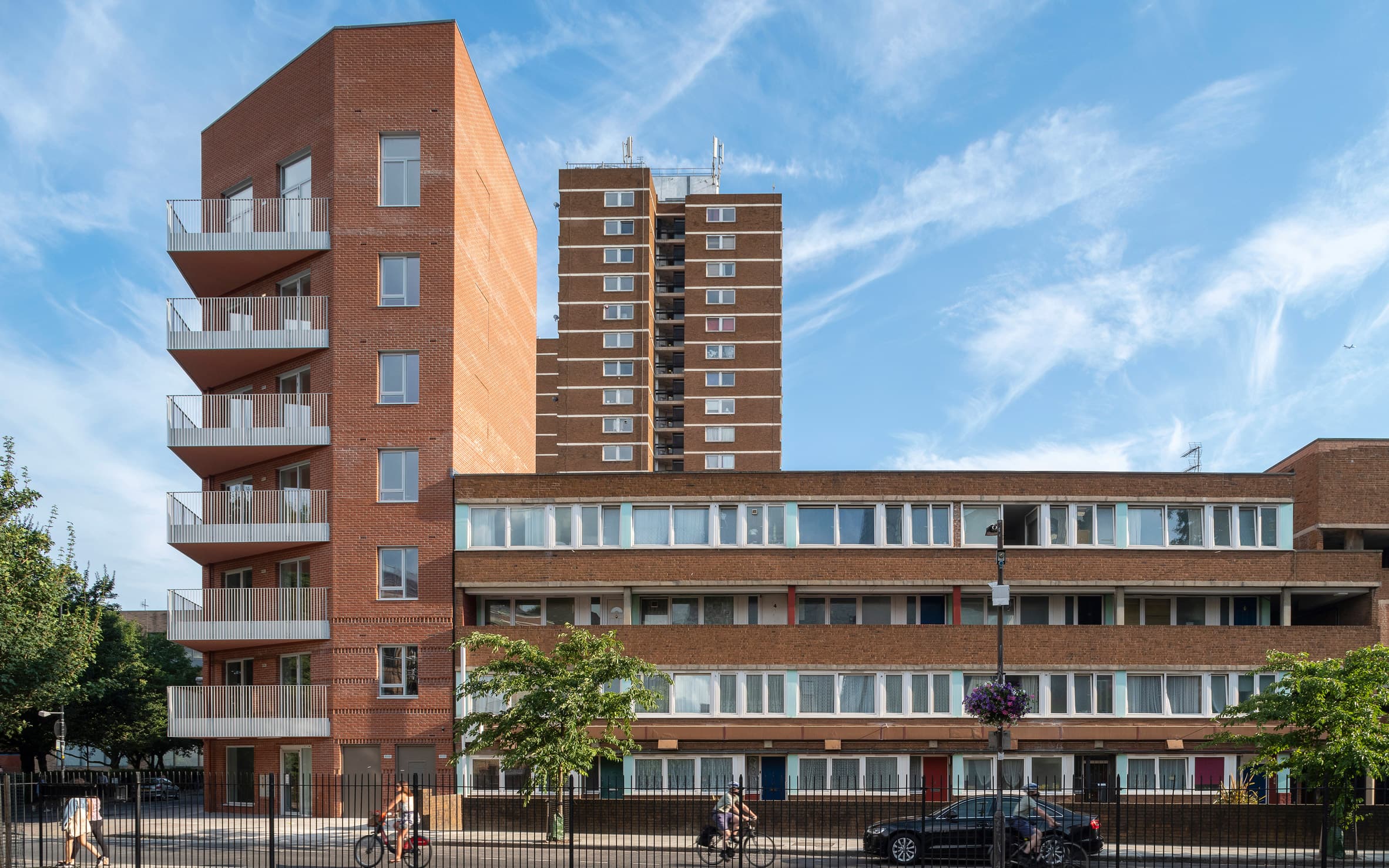
On 15 October, at Old Billingsgate in London, the Royal Institute of British Architects will hand the Stirling Prize to one of six buildings. The shortlist announced in July is worth reading as a market document rather than a taste document. It puts 157 social homes in Coulsdon, on the southern edge of Croydon, in direct competition with a Renzo Piano tower beside Paddington Station. It rewards a 1970s theatre wrapped in new brick rather than demolished. And it says something uncomfortable about energy efficiency and house value: the buildings the profession now honours are the ones the market still barely pays extra for.
The six shortlisted projects are A house at Fairmead in Epping Forest by Sergison Bates; BEAM in Hertford by Bennetts Associates; Lion Green Road by Mary Duggan Architects with RUFF Architects; Paddington Square by Renzo Piano Building Workshop with Adamson Associates; Pembroke, Mill Lane in Cambridge by Haworth Tompkins; and the River Wing at Clare College, Cambridge, by Witherford Watson Mann. Dezeen reported the list on 16 July, and the full citations sit on the RIBA awards page. Four of the six carry environmental engineering by the same practice, a fact Max Fordham noted about its own portfolio. Performance is no longer a footnote in British architecture. It is the shortlist.
Does a higher EPC rating increase house value?
Barely. Nationwide analysis published in June 2026, drawn from English Housing Survey data, found that a property rated A or B commands roughly 1.6% more than a comparable home rated D. On a 400,000 pound house that is about 6,400 pounds, spread across a rating gap that can cost far more to close. Buyers say efficiency matters. Prices say it matters slightly.
The same research carries two figures that complicate the picture further. Some 53% of owner-occupied housing stock in England is now rated A to C, against 21% a decade earlier. And only 22% of homeowners cite raising property value as their main reason for making green improvements, with just 7% doing the work to prepare a sale. As the trade press summarised it, people are retrofitting for bills and comfort, not for resale.
Now set that against what regulation is about to require.
| Item | Figure | Source and date |
|---|---|---|
| Price uplift, EPC A or B vs D | +1.6% | Nationwide, June 2026 |
| Average cost per home, Future Homes Standard | 4,350 pounds | UK government response, March 2026 |
| Cost range per property | 1,550 to 5,160 pounds | UK government response, March 2026 |
| Carbon reduction vs 2013 standards | at least 75% | Future Homes Standard |
| Regulations in force | 24 March 2027 | Building Regulations Amendment 2026 |
A developer reading that table sees a cost that is certain, dated and legislated, sitting opposite a value uplift that is small, contested and slow. This is the central tension in British housing delivery going into 2027, and it is not primarily a technical one. The engineering is solved. The pricing of the engineering is not.
Free resource
When performance is mandatory, the brand carries the value
Our brand platform guide covers how development companies build a position that survives the moment every competitor meets the same standard.
Download the guide →What is the Future Homes Standard?
It is the English building regulation that makes new homes low carbon by default. The government published its response in March 2026 and the amended Building Regulations come into force on 24 March 2027, with a transition period running to March 2028. New homes must emit at least 75% less carbon over their life than homes built to 2013 standards, becoming zero emission as the grid decarbonises.
In practice, as Pinsent Masons set out in its analysis, compliance means solar panels equivalent to roughly 40% of ground floor area and a high efficiency air source heat pump or a heat network connection. Fossil fuel heating cannot comply. Higher risk buildings follow in September 2027. Schemes with building control documents submitted before 24 March 2027 that start on site before March 2028 may proceed under current rules, which explains the rush of applications now moving through English planning departments.
Regulation sets the floor for what a building must do. It does nothing about what a building is understood to be worth. Between those two lines sits every pound of margin a developer will make after March 2027.
Why the Stirling shortlist is a leading indicator
Prize juries are not market analysts, but they are early. What the shortlist honours in 2026 is close to what the regulation will demand in 2027 and what buyers will eventually assume by default: fabric that works, existing structures kept rather than cleared, density arranged around shared ground.
Lion Green Road is the clearest case. A scheme of 157 social homes on a difficult sloping site in Coulsdon, delivered for a London borough, standing alongside a Renzo Piano commercial landmark on the same list. Ten years ago that pairing would have read as a category error. BEAM makes the same argument from a different direction: Bennetts Associates kept a defunct 1970s theatre and wrapped it, rather than starting from an empty plot. The carbon already spent on a building is the cheapest carbon a developer will ever have.
None of this reaches the buyer automatically. That is the gap the 1.6% figure describes. A home can be built to a standard the profession celebrates and still be sold with the vocabulary of 2015: square footage, finishes, proximity to a station.
The gap is a communication failure, not a valuation failure
There is useful evidence for treating this as a message problem. Research from the Behavior in the Wild group found that models trained on real audience behaviour outperform conventional aesthetic metrics at predicting whether an image will actually engage anyone. Measuring how polished something looks does not tell you what it will do. Applied to housing: a rendering of a well insulated home is not an argument for paying more for insulation. The finish is visible. The value has to be made legible.
For developers pricing schemes that complete after 2027, several things follow.
- Quantify the running cost, not the rating. An EPC band is an abstraction. An annual energy bill against a comparable older home is a number a buyer can act on.
- Name the specification. Heat pump, fabric performance and solar capacity are product features, and unnamed features cannot be valued.
- Treat compliance as a floor, not a story. After March 2027 every competitor meets the same standard, so the standard stops differentiating on the day it becomes universal.
- Sell the retained structure. Reuse currently reads to many buyers as compromise. It is closer to provenance, and it is priced as compromise only while nobody explains it.
- Build the brand before the mandate lands. Positions established while a claim is still unusual are worth more than positions announced when it is compulsory.
More market analysis sits on the TBO blog, and our work with development companies is described under services. The wider theme of where design, regulation and value meet is collected in the trends hub.
The mandate reaches the existing stock too
New build is only half the exposure. Under the Warm Homes Plan, privately rented homes in England must reach EPC C by 1 October 2030, with a spending cap of 10,000 pounds per property. The National Residential Landlords Association reported in January 2026 that the earlier 2028 deadline for new tenancies was dropped, softening the timetable without changing the destination.
Put the numbers side by side and the asymmetry is hard to miss. A landlord may be required to spend up to 10,000 pounds to move a property from D to C. A buyer of an A or B rated home pays roughly 1.6% more than for an equivalent D. The obligation is denominated in pounds and the market response is denominated in basis points.
This is the strongest argument for treating performance as a brand asset while it still reads as a choice. Once every new home in England complies by law, compliance stops being a distinction, and attributes that everyone shares do not command a price. The window in which building better is still legible as a decision closes on 24 March 2027.
Frequently asked questions
When does the Future Homes Standard come into force?
The amended Building Regulations take effect on 24 March 2027 in England, with higher risk buildings following on 27 September 2027. A transition applies to schemes whose building control documents were submitted before 24 March 2027 and which begin construction before 24 March 2028.
How much does the Future Homes Standard add to build cost?
The government estimated an average of 4,350 pounds per property, with a range of roughly 1,550 to 5,160 pounds depending on dwelling type. Compare that with the 1.6% price uplift Nationwide measured for A and B rated homes over D rated equivalents, and the commercial question becomes clear.
Is retrofit better than new build for carbon?
For embodied carbon, usually yes, because the structure already exists and its emissions are already spent. The trade off is operational performance, which is harder and more costly to reach in an older building. The Stirling shortlist suggests the profession increasingly resolves that trade off in favour of keeping what stands.
Why do buyers say efficiency matters but not pay for it?
Because stated preference and revealed preference diverge when the benefit is deferred and hard to verify at the point of sale. A buyer can see a kitchen. They cannot see a U value. Until the saving is expressed as a number they recognise, it is discounted to close to zero.
Next step
After March 2027 every competitor will meet the same standard. What your buyers understand about it is the only variable left.
Talk to TBO →Cover image: Dezeen
You may also like

Real estate branding: the complete guide
What real estate branding is, components, process, timelines, cost and return, with real TBO cases. The guide for development brands that sell.
Before the next launch, you need a brand platform
Why every serious developer needs a brand platform before the next launch, and how to build yours. Free guide from TBO.
Is your brand ready for the next launch? 5-minute diagnostic
Twelve questions, four dimensions, five minutes. Assess if your developer runs as a system or by improvisation. Get a per-dimension report with action plan.