Mass timber in 2026: momentum meets the math
Mass timber is topping out record towers and heading into foreclosure in the same year. What 2026 reveals about the economics of building in wood.
In late July 2026, the world's tallest timber tower topped out in Sydney. Atlassian Central, the technology company's new headquarters, reached its full height as what Dezeen billed the tallest hybrid timber building on earth. It was a clean symbol of a decade of momentum: engineered wood had climbed from novelty to skyline.
A few weeks earlier, in Milwaukee, the story ran the other way. The Edison, a 378-unit project marketed as the tallest mass timber building in America, headed toward foreclosure. That contradiction is the real headline of 2026. The engineering case for mass timber has never been stronger, and its balance sheet has never looked shakier. Both things are true at once, and developers now have to hold them together.
What is mass timber?
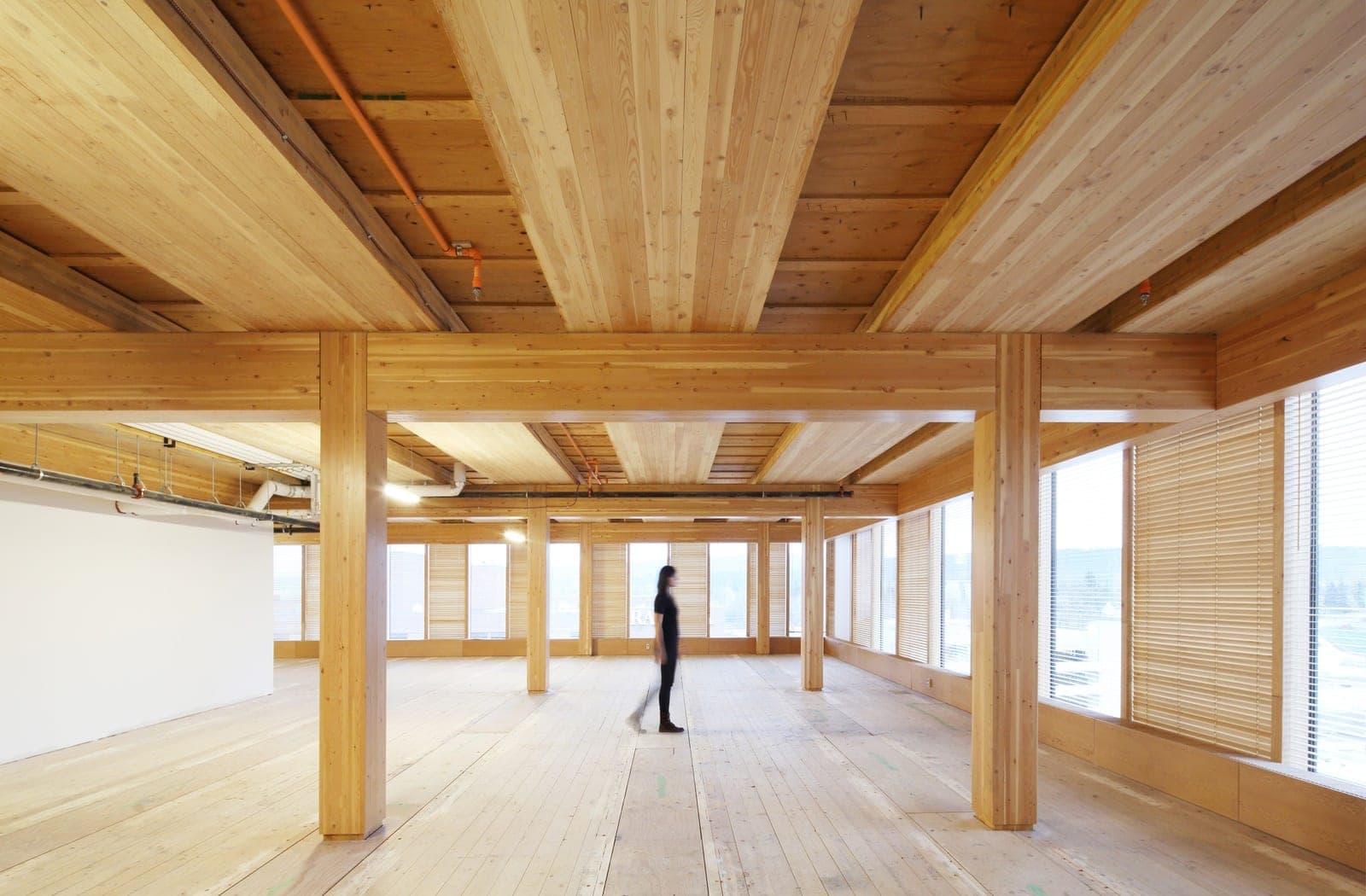
Mass timber is a family of engineered wood products, most commonly cross-laminated timber (CLT), in which layers of lumber are bonded into panels and beams strong enough to replace steel and concrete in the structure of a building. It is not the stick framing of a suburban house. It is a load-bearing system that lets architects build towers in wood, with the timber often left exposed as the finished surface.
The appeal is not romantic. It is measurable, and that is why the category grew. The problem is that the numbers that make timber attractive and the numbers that make it financeable point in different directions right now.
Why did America's tallest mass timber tower head to foreclosure?
The Edison is a case study in how a strong building can meet a weak balance sheet. According to Multifamily Dive, developer Neutral saw construction pause in September 2025 under cost pressure, and by October the project faced a reported 25 million dollar funding gap. In June 2026, contractor C.D. Smith Construction sought 11.3 million dollars in unpaid bills and moved to foreclose.
The trigger was not the wood itself. It was the money around the wood. The United States imports roughly a third of its lumber, about 85% of it from Canada, and in August the Commerce Department more than doubled duties on Canadian lumber from 6.74% to 14.63%. Layer inflation and tight construction financing on top of a tariff shock, and a project priced in a cheaper world stops closing. Mass timber did not fail structurally in Milwaukee. Its capital stack did.
Is mass timber more expensive?
On the sticker, often yes. On the schedule, frequently no. The honest answer is that mass timber trades a higher material and design cost for savings that show up elsewhere, and whether it pencils depends on how a developer values speed and weight.
The efficiency case is well documented. Data compiled by Zurich shows mass timber projects can be built about 25% faster than comparable concrete structures, with 90% less construction traffic and 75% fewer workers on site, drawing on the Ascent tower in the same city as the Edison. The panels weigh roughly one-fifth of comparable concrete, which shrinks foundations and helps on seismic sites. Faster build means earlier revenue and less interest paid during construction, the line item that quietly sank the Edison.
| Dimension | Mass timber vs concrete |
|---|---|
| Build speed | About 25% faster |
| On-site labor | About 75% fewer workers |
| Structural weight | About one-fifth as heavy |
| Carbon footprint | Up to 40% lower when sustainably sourced |
| Financing risk | Higher, sensitive to lumber prices and tariffs |
Mass timber's engineering has already won the argument. What it has not yet won is the argument with the lender, and 2026 is where that gap became visible.
What are the downsides of mass timber?
Three real frictions sit under the enthusiasm, and none of them are about whether the building stands up.
- Cost volatility: because so much lumber is imported, timber budgets are exposed to tariffs and commodity swings in a way a concrete budget is not.
- Insurance capacity: underwriting is still thin. Zurich North America alone accounts for an estimated one-fifth of available capacity for mass timber projects, a sign the market has not fully priced the risk.
- Code and permitting: the 2021 International Building Code allows mass timber towers up to 18 storeys with encapsulation, but local adoption is uneven, and some jurisdictions still treat it with suspicion.
On fire, the fear is mostly outdated. Mass timber chars on the outside at predictable rates, forming an insulating layer that protects the structural core, which is how these buildings meet fire-resistance codes in the first place. The harder problems are financial and regulatory, not physical.
What is the lifespan of a mass timber building?
Properly detailed and kept dry, a mass timber building is designed to last as long as a conventional one, on the order of a century or more. The decisive variable is moisture management during construction and across the roofline. Wood that stays dry endures. The engineering risk is water, not time, and it is a detailing problem with known solutions rather than a flaw in the material.
That durability, paired with a carbon story, is why the long arc still points up. The building sector accounts for roughly 37% of global energy-related carbon emissions, and sustainably sourced mass timber can cut a large structure's footprint by up to 40%. As Science reported, the material is poised to reshape construction. Zurich's own projection has annual US mass timber projects rising from roughly 750 in 2025 to around 5,000 a year by 2035.
Free resource
A timber building still needs a story buyers can price
Sustainable structure is an asset only if the market understands its value. This guide shows how to build the brand platform that lets a development command it.
Download the guide →What 2026 means for developers
The lesson of the Edison and Atlassian Central is not that mass timber is a bet won or lost. It is that the material has matured faster than the financial system around it. The engineering, the carbon case, the speed and the growth curve all favor wood. The tariffs, the thin insurance market and the interest-rate sensitivity all punish a project that assumes cheap capital.
For developers, that argues for treating a timber project as a communication and positioning challenge as much as a construction one. A building that is faster, lighter and lower in carbon deserves a narrative that lets buyers and lenders price those advantages, rather than seeing only a higher line on the bid. You can follow the wider design and innovation debate on our trends hub, read more on the TBO journal, or see how we help developers position projects through our services.
Frequently asked questions
Is mass timber safe in a fire?
Yes. Mass timber chars on its surface at a predictable rate, forming a protective layer that shields the structural core. This behavior is what allows the buildings to meet fire-resistance codes, and it is why tall timber towers are permitted at all.
How tall can a mass timber building be?
The 2021 International Building Code permits mass timber towers up to 18 storeys in the United States with proper encapsulation. Hybrid timber and steel systems, like Sydney's Atlassian Central, can go higher by combining materials.
Why is mass timber financing risky right now?
Because timber budgets are exposed to lumber tariffs and commodity swings, and because insurance capacity for the category is still thin. When capital tightens, as it did in 2025 and 2026, projects priced in cheaper conditions can stall.
Is mass timber better for the environment?
Generally yes, when the wood is sustainably sourced. It stores carbon, requires fewer emissions to produce than steel or concrete, and can cut a large building's carbon footprint by up to 40%.
Next step
If your development competes on design and sustainability, the story you tell decides whether the market pays for it.
Talk to TBO →Cover image: Naturally Wood
You may also like
Dubai real estate 2026: the crash moved to 2027
Dubai's 2026 handover wave slipped into 2027. What corrected was the resale layer, not the market, and the real test now has a date.
Data centers are outbidding home builders for land
Data centers are outbidding home builders at up to 50x the county land median. What that does to housing supply, and what residential developers can still control.
ROAD to Housing Act: the chassis rule matters most
The 21st Century ROAD to Housing Act carries 56 provisions. The one that changes a real cost is a chassis rule, not zoning reform.