Real estate AI in 2026: 92% piloted, 5% delivered
JLL found 92% of occupiers and investors launched AI programs and only 5% hit their goals. That gap explains why the giants are now building in-house.

The most important number in commercial real estate technology this year is not a funding total. It is a ratio.
According to the JLL Global Real Estate Outlook, 92% of corporate occupiers and 88% of investors have initiated AI programs, running an average of five use cases at once. Of those, only 5% report achieving most of their program goals. Ninety-two percent started. Five percent arrived.
The industry has spent two years treating AI adoption as a procurement question: which tool, which vendor, which integration. The 2026 data says it was never a procurement question. It was a data question, and the firms with the most capital figured that out first.
Why do most real estate AI pilots fail?
They fail on foundations, not on models. JLL reports that 60% of investors still lack a unified technology strategy across their real estate functions, 70% of occupiers have no change management framework for AI, and 50% are not sufficiently resourced in digital and AI talent. A pilot succeeds in a controlled slice and then meets an organization that cannot feed it.
JLL gives the 2026 condition a name: AI pilot fatigue. It describes what happens when the experiments were the easy part and scaling them hits an implementation wall built from fragmented systems, unowned data and no governance.
Real estate is unusually exposed here. It is an industry where the same asset carries a different identifier in the lease system, the accounting system, the appraisal file and the broker deck. Every one of those inconsistencies was survivable when humans reconciled them. None of them is survivable when a model is asked to.
The giants stopped buying and started building
In May 2026, two announcements landed on the same day. Anthropic launched a $1.5B joint venture, the Claude Partner Network, with Blackstone and Goldman Sachs among its backers. OpenAI announced Deployment Co., a $10B joint venture including Brookfield, TPG, Bain Capital, Advent, SoftBank and Dragoneer, with explicit focus on real estate portfolio companies. Bisnow reported the moves as the beginning of the end for plug-and-play proptech.
What Blackstone and Brookfield are building internally is not exotic: underwriting, portfolio management, risk analysis. It is precisely the layer that a generation of proptech companies sold as software. Brendan Wallace, CEO of Fifth Wall, put the shift plainly, noting that the technological, financial and human capital barriers to building your own stack are collapsing.
The counterintuitive part is the timing. Venture funding for proptech hit $16.7B in 2025, a 68% increase, with AI-native companies capturing $4.5B of it. Capital is flooding into a category at the exact moment its largest customers are deciding to build rather than buy.
The money is chasing the interface while the buyers are securing the data. Whoever owns the record wins; whoever owns the screen is renting.
The vendors that read this correctly are repositioning fast. Dealpath and Crexi are arguing they are systems of record and trusted data layers, not applications, offering security, compliance and governance that a family office or REIT will not want to operate in-house. That is the right argument. It is also an admission that selling features is over.
There is an asymmetry worth naming. Venture capital is priced on the assumption that software captures the value of a workflow. Blackstone and Brookfield are betting the opposite: that the workflow is now cheap and the value sits in the data the workflow touches. Both positions cannot be right. The 2025 funding cohort will settle the argument within two or three years, and the settlement will be unkind to any vendor whose product is a well-designed screen over records it does not own.
Which AI tool is best for real estate?
This is the most searched version of the question and the least useful one. No tool outperforms the quality of the data it is pointed at. A firm with clean, unified, well-governed asset data will get results from an average model. A firm with four contradictory rent rolls will get confident nonsense from the best model available.
The ranking that matters is not of vendors. It is of readiness. And the JLL numbers suggest most of the industry is competing on the wrong list.
| Layer | Who controls it | Defensible in 2026? |
|---|---|---|
| Model | Anthropic, OpenAI, and a handful of labs | No, and it is commoditizing fast |
| Interface and workflow | Proptech vendors | Weak, replicable in-house |
| Proprietary asset and behavioral data | The owner or operator | Yes, and it compounds |
| Governance and compliance | Contested | Yes, where regulation bites |
Free resource
Paid media for a development launch
Where the behavioral data on a real buyer actually gets generated: campaign structure, qualification and the metrics worth tracking in a launch.
Download the guide →The dataset nobody is curating
There is a category of proprietary data that almost every developer generates and almost none retains: how prospective buyers behave before they buy.
A 2025 survey on behavioral data representation organizes that raw material into four structures: tabular records, event sequences, dynamic graphs and text, each with its own methods and benchmarks. The framing is useful because it dissolves a false distinction. As the survey on behavioral data representation learning makes clear, a customer's behavior is data, and data has structure. Each structure exposes a different pattern of purchase intent.
Applied to real estate: the visit log, the click path, the time on a floor plan, the questions asked at the sales gallery and the sequence in which a buyer returns are not marketing exhaust. They are an event sequence and a graph, and they are the only dataset a developer owns that a competitor cannot buy. Discarding it while purchasing an AI tool to compensate is the characteristic mistake of this cycle.
Context matters here too. The National Association of REALTORS reported existing-home sales down 2.4% in June. In a market where transaction volume is soft, the marginal value of understanding why a specific buyer hesitated rises sharply. Slow markets reward firms that know their pipeline and punish firms that only know their inventory.
Will AI take real estate jobs?
The near-term evidence points to displacement of tasks rather than roles, concentrated where work is document-heavy and rule-bound: lease abstraction, comparables assembly, first-pass underwriting, and the reconciliation work that fragmented systems create. PwC and ULI have tracked this shift in Emerging Trends in Real Estate.
There is a second-order effect worth watching. As underwriting support becomes automated, the scarce skill shifts from producing analysis to interrogating it. An analyst who once spent three days assembling comparables now spends three hours, and the value of those hours depends entirely on whether they can tell when the model is confidently wrong. Firms that treat this purely as a headcount saving will get the saving. Firms that treat it as a reallocation of judgment will get the advantage.
The more interesting risk is not to brokers or analysts. It is to firms whose entire differentiation was privileged access to information that a model can now assemble in seconds. Positioning built on scarcity of data does not survive abundance of data. Positioning built on judgment, relationships and brand does.
Governance is also where the regulatory floor is rising. Data protection regimes, disclosure obligations and fair-housing scrutiny of algorithmic decisions all apply to models that touch tenant selection, pricing or valuation. That is a genuine argument for buying rather than building: the cost of getting compliance wrong is asymmetric, and it is not a differentiator when you get it right.
What to do before buying anything else
- Audit identifiers before models. If one asset has four identities across your systems, no AI investment will clear that debt. It will inherit it.
- Name an owner for the data layer. JLL found 60% of investors have no unified technology strategy. An unowned layer is an ungoverned one.
- Retain behavioral data deliberately. Visit sequences and inquiry paths are the proprietary asset in this cycle. Most firms delete them by default.
- Buy governance, build differentiation. Compliance and security are worth outsourcing. Anything that encodes how your firm underwrites is not.
- Run fewer use cases, finish them. Five simultaneous pilots with a 5% completion rate is not a portfolio strategy. It is a distribution of unfinished work.
Firms tracking structural trends in real estate and design will recognize the pattern, because it is not new. Every technology cycle in this industry has rewarded whoever controlled the underlying record and penalized whoever rented access to it. The models changed. The rule did not.
Frequently asked questions
Why do real estate AI pilots stall between test and deployment?
Because the pilot runs on a curated slice of data and the deployment runs on the real estate portfolio. JLL reports 70% of occupiers have no change management framework for AI and 50% lack sufficient digital talent. The blocker is organizational readiness and data consistency, not model capability.
Is proptech software still worth buying in 2026?
Yes, selectively. Buy where the vendor provides governance, compliance and a genuine system of record that would be expensive and risky to operate internally. Be far more cautious with tools that only wrap a general-purpose model in a workflow, since that layer is now cheap to replicate.
What does a data moat mean in real estate?
It means proprietary information that competitors cannot purchase: your transaction history, your underwriting decisions and outcomes, your tenant and buyer behavior over time. Public listing data is not a moat because everyone has it. The record of how your own market responded to your own assets is.
Which AI tool is best for real estate?
There is no defensible answer at the tool level, because performance is bounded by data quality rather than by vendor. The productive question is which of your decisions is currently made with incomplete information, and whether the data required to improve it already exists inside your organization.
Ninety-two percent of the industry started. Five percent finished. The gap between those two numbers is not a technology problem waiting for a better model. It is an inventory of decisions nobody made about data, ownership and governance, now coming due all at once.
Next step
The data your launch generates about real buyers is the only asset a competitor cannot buy.
Talk to TBO →Cover image: Work Design Magazine
You may also like

Dubai real estate 2026: the crash moved to 2027
Dubai's 2026 handover wave slipped into 2027. What corrected was the resale layer, not the market, and the real test now has a date.
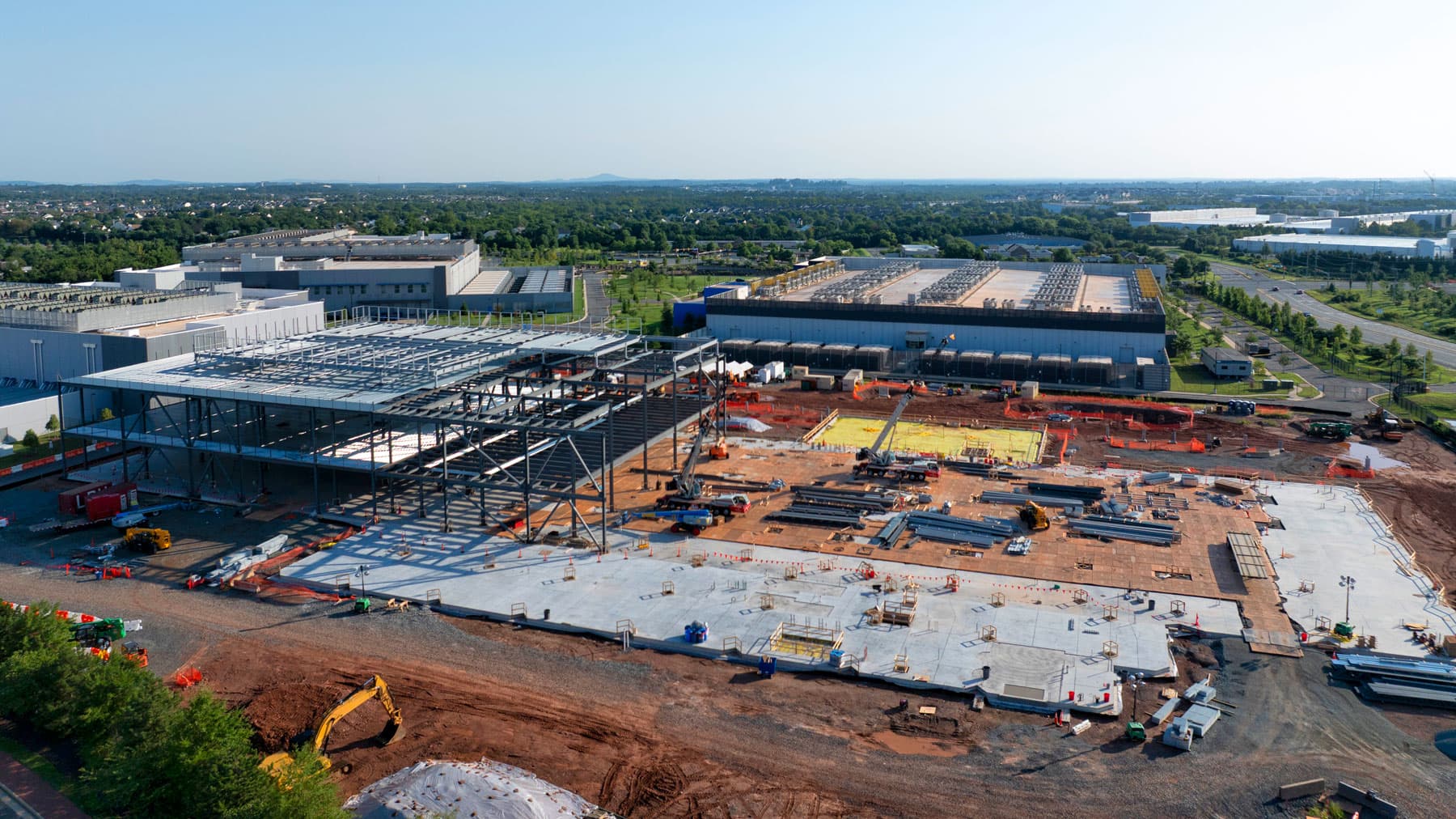
Data centers are outbidding home builders for land
Data centers are outbidding home builders at up to 50x the county land median. What that does to housing supply, and what residential developers can still control.
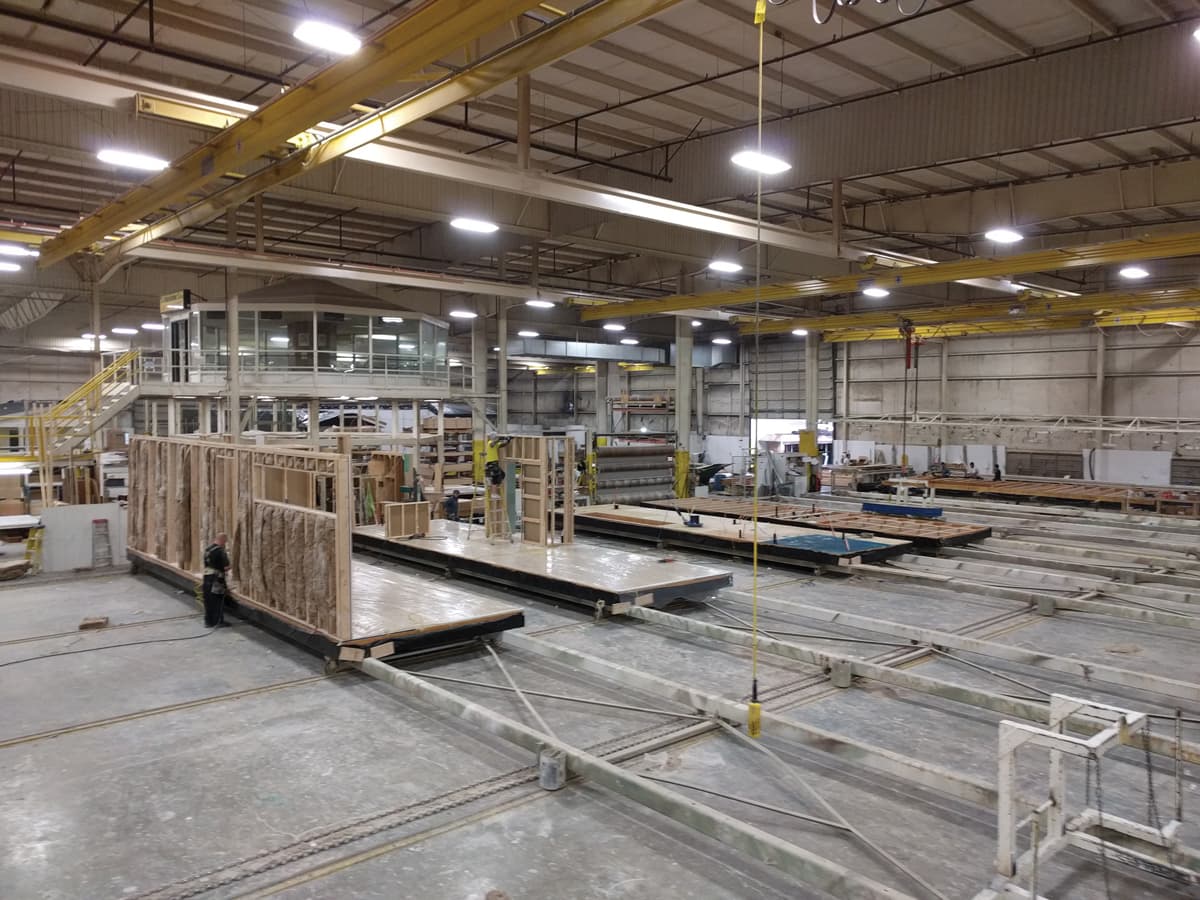
ROAD to Housing Act: the chassis rule matters most
The 21st Century ROAD to Housing Act carries 56 provisions. The one that changes a real cost is a chassis rule, not zoning reform.